China-Taiwan Rivalry: Power Projection in the Strait
 usanasfoundation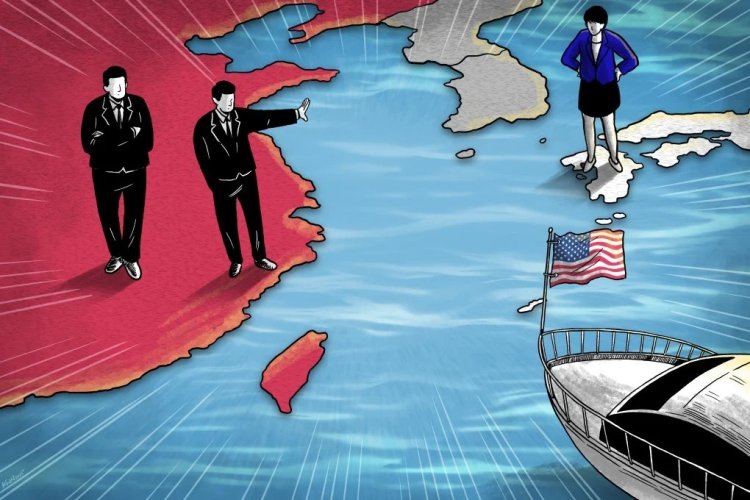
Analysis
By Nikita Anand
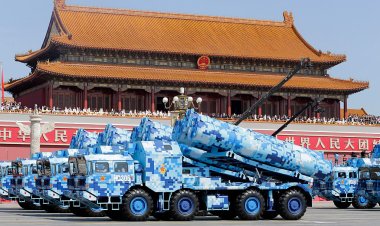
At the end of 2025, we saw the geopolitical tensions rising with China challenging the status quo of Taiwan by implementing a military blockade. On 29th December 2025, the People’s Liberation Army initiated “Justice Mission 2025”, which led to Taiwan being surrounded by extensive military drills. China launched this exercise after carefully noting the vulnerabilities of Taiwan and serving as a strategic warning to deter “separatist forces” and external interference to protect its own national unity and thwart any push for Taiwan’s independence. China launched the exercise by establishing five maritime and airspace restricted zones, which were later expanded to seven, further tightening China’s grip on the region.
This expansion solidified the “Justice Mission 2025” as the largest Taiwan-focused military drill ever held, creating severe regional disruptions. Taiwan’s transport minister reported that over 100,000 international and 6000 domestic passengers have been affected by these sudden restrictions. This action has been viewed by the international observers as a serious violation of International Civil Aviation Organization regulations, which require at least one week of prior coordination for flight changes, thereby disregarding public safety and established international norms. The mission disrupted and affected people's daily routines and lives not only significantly but also in smaller ways. Fishermen are unable to fish, which disrupts their livelihood and results in substantial economic losses.
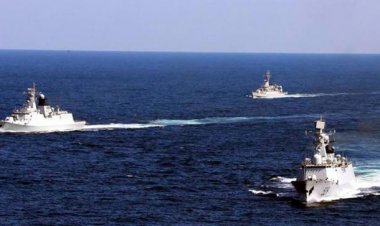
In response to this, the Taiwan Ministry of Defense has criticized the drills for undermining the region’s stability and peace. Taiwan deployed Rapid Response Exercises and placed the military on high alert. The scale at which the PLA’s army has been acting up was seen to be unprecedented, as within 24 hours, Taiwan tracked 130 PLA aircraft, with 90 crossing the median line. Total activity included 89 sorties of aircraft and drones, 67 of which entered Taiwan’s Air Defense Identification Zone (ADIZ). Simultaneously, 14 PLAN ships and 14 Chinese Coast Guard ships operated around the Matsu and Wuqiu Islands, supported by a four-ship amphibious task group positioned in the Western Pacific.
It has been viewed that the situation escalated, especially after the U.S announcement of an $11 billion weapons package for Taiwan. This prompted China to impose sanctions against 20 U.S. defense companies and 10 high-level executives. The other reason was China’s anxiety following Japan’s evolving defence posture. Japanese Prime Minister Sanae Takaichi’s statement that the Japanese Self-Defense Forces “could get involved” if military action is taken against Taiwan signaled a major threshold for Beijing. This triggered China's fears about the building of a U.S.-Japan-Taiwan trilateral defence pact. In response to this, on 29th December, it was also observed that Chinese military aircraft entered and flew between Okinawa Island and Miyako Island into the Pacific Ocean, leading to a prompt action by Japan’s Air Self-Defense Force. Aircraft transited through the southwest of Japan, then towards the Pacific to conduct surveillance activities. This area between Okinawa and Miyako is closely monitored by Japan as it gives China access to the wider Pacific. China is seen doing such activities often in that area.
Taiwan has mentioned that it will defend its national sovereignty and strengthen its own defense system by planning to spend $40 billion. And building a dome-like air defense system to guard against threats. At the same time, Taiwan, to make its people prepared for an attack and showcase its power to China, has conducted military exercises of its own.
Amidst these rising tensions, “Justice Mission 2025” has drawn intense criticism from the international community. Australia strongly opposes the exercises and it can lead to a great risk of accidents, and such differences should be managed through dialogue. And US State Department spokesperson Tommy Pigott stated, “We urge Beijing to exercise restraint, cease its military pressure against Taiwan, and instead engage in meaningful dialogue. A recent QUAD meeting held in Beijing on 30th December, with the commitment to a free and open Indo-Pacific. It has been widely interpreted as a collective response, signalling that China’s unilateral military posturing against Taiwan is being closely scrutinized as a destabilizing force. This moment highlighted a broader global sentiment that such maneuvers run counter to shared norms and collective interests. The international community continues to emphasize the urgent need for restraint and stability, condemning the escalation of military pressure at a time when the global order remains fragile.
Recently, we have been seeing a major shift in China’s posture towards Taiwan, from a political one to a military-dominated and high-intensity operational drill. The year 2027 is critical as the PLA has been directed to be capable of invading Taiwan, which has made these frequent military involvements very normal. Exercises like Justice Mission 2025 at the end of the year increasingly lead to island blockades and “cold start” operations before the international allies intervene. A full-scale war would affect a 10 trillion dollar economy, which is 10% of the GDP, due to the disruption in Taiwan’s semiconductor industry, which produces 90% of the world’s most advanced chips. At the same time, the backlash that China is currently facing from other nations shows that its involvement in a full-scale war would lead to consequences of an unimaginable scale. It is difficult to launch a full-scale invasion, especially due to international acceptance. China will continue to expand its military exercises in the region, showcasing its dominance and flexing its power in front of other nations.
Disclaimer: This paper is the author's individual scholastic contribution and does not necessarily reflect the organization's viewpoint.