A Turbulent Global Risk Environment
 usanasfoundation
Analysis
By Anusreeta Dutta
The world order today is like the weather: it changes all the time, overlaps, and gets harder to predict. The idea that threats grow one at a time, can be neatly categorized, and then dealt with through separate policy responses has quietly fallen apart. The present time is characterized by the prevalence, simultaneity, and interconnectedness of threats facing states, institutions, and societies, rather than the existence of risk (which has always been present).
We live in a world where risks are always changing. Economic shocks have political effects, climate disasters change security rules, and new technologies move faster than governments can keep up with them. The end result is not one big disaster but a state of constant strategic tension.
For much of the post-Cold War period, global threats were viewed in very linear terms. Financial crises caused economic problems. Wars were security issues. Climate change was a long-term environmental concern. That compartmentalization no longer holds. Nowadays, dangers cascade rather than arise in isolation.
A regional conflict can affect energy markets, resulting in inflation, political upheaval, and democratic backsliding abroad. A climate-related crisis can overwhelm governmental capacity, increase migratory pressures, and destabilize entire regions. A technological advancement, whether in artificial intelligence, cyber capabilities, or surveillance, can significantly impact military equilibria, labor markets, and civil liberties. Unpredictability and systemic fragility are two things that define the current situation.
Geopolitics is back, but in a different way
Great-power competition is back at the center of world events, but it's not as strict as it was during the Cold War. Instead, the world is going through a period of unstable, fragmented multipolarity, where power is spread out, alliances change, and rules are more often questioned. States are reconsidering how much they depend on shipping routes, semiconductor makers, rare earth resources, data infrastructure, and even energy providers. This has led to a lot of rules aimed at bringing jobs back to the US, making friends with other countries, and lowering risk.
These strategies may help protect against attacks, but they also make things weaker. Broken supply chains can make things more expensive and less efficient. Trade blocs can make political differences worse. Smaller and growing economies are at risk of getting stuck between two economic worlds that don't agree, with few options for moving forward.
The global economy used to be a great way to keep things stable, but now it's causing political problems. Miscalculation is more frequent in this scenario. Diplomatic signals can be readily misunderstood. Deterrence is complicated by cyber and hybrid threats that operate below the level of traditional warfare. Escalation hazards are no longer limited to battlefields; they also occur in financial institutions, digital infrastructure, and information environments.
Geoeconomic Turn
The combination of economics and security is likely the most fundamental trend driving the global risk landscape. Trade, investment, supply chains, and technology are no longer viewed as objective areas regulated purely by efficiency. They are now clearly strategic tools.
Instead of picking sides, states are hedging. There are both economic alliances and strategic conflicts. Along with export controls and sanctions, trade agreements are worked out. Even though trust in global institutions is going down, cooperation on security is going up.
This makes things strange: more involvement but less stability.
Climate as a risk multiplier
Climate change is no longer on the periphery of geopolitical analysis. It is a risk multiplier, which exacerbates existing vulnerabilities rather than creating wholly new ones.
Extreme weather occurrences put a strain on public finances, affect food systems, and challenge disaster response capabilities. Water stress worsens regional tensions. Rising temperatures have an impact on worker productivity, health consequences, and military readiness. Climate shocks can be the tipping point that separates fragile regimes from stable ones.
Climate risk is especially dangerous because it can't be changed and affects people in different ways. People who are least to blame often have to pay the most, which makes things worse and makes it harder for countries to work together. The switch to cleaner energy is necessary, but it also raises geopolitical issues about important minerals, access to technology, and competition between industries.
Gap in Governance, Speed, and Technology
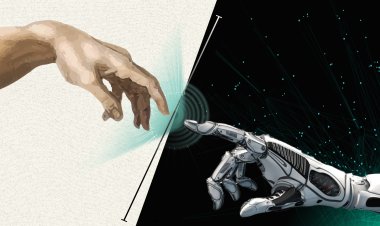
The pace of technological change has outstripped the ability of political systems to manage, understand, or fully comprehend its effects. Cyber warfare, digital surveillance, autonomous systems, and artificial intelligence are all changing power in ways that are not being handled well right now.
The most important thing is speed. More and more decisions, whether they are about the military, money, or information, are being made quickly, with little room for debate. Corrections take longer to spread than false information. Before people can respond, automated systems do. This makes a gap in governance because high-impact technologies work in low-trust environments, often across borders, where it is not clear who has the power to make rules.
From Crisis to Managing Risk
One of the most worrying things about the current global climate is how normal the crisis has become. More and more, governments are focusing on putting out fires in the short term instead of making plans for the long term. The range of policies shrinks. Strategic patience is running out.
In the short term, this kind of government may be necessary, but it won't last. In a risk environment that changes quickly, you need more than just resilience; you also need anticipation. This means being able to see weak signals, invest in institutional capacity, and keep strategic coherence even when things are uncertain. Democracies have a harder time with this because political cycles are short, and people don't like long periods of unrest. But if used correctly, legitimacy, transparency, and adaptability can be strategic advantages in these kinds of organizations.
Conclusion: Managing risk, not getting rid of it
The most important thing to remember about the current situation is that global risk can't be gotten rid of, only managed. Stability today doesn't mean that there are no shocks; it means that the system can handle them without breaking down.
In a world where risks are always changing, countries and organizations that are flexible, diverse, and aware of their own strategic strengths do better. It punishes being too dependent, thinking too rigidly, and not adapting quickly enough.
The goal going forward is not to bring back a time when things were more predictable, but to build economic, political, and institutional frameworks that can work even when things are still unpredictable. In that sense, turbulence isn't just a passing phase. It is the new stage for world politics.
Disclaimer: This paper is the author's individual scholastic contribution and does not necessarily reflect the organization's viewpoint.
Anusreeta Dutta is a columnist and climate researcher with experience in political analysis, ESG research, and energy policy.