Book Review: The Jihad Game: Inside Pakistan’s Dark War
 usanasfoundation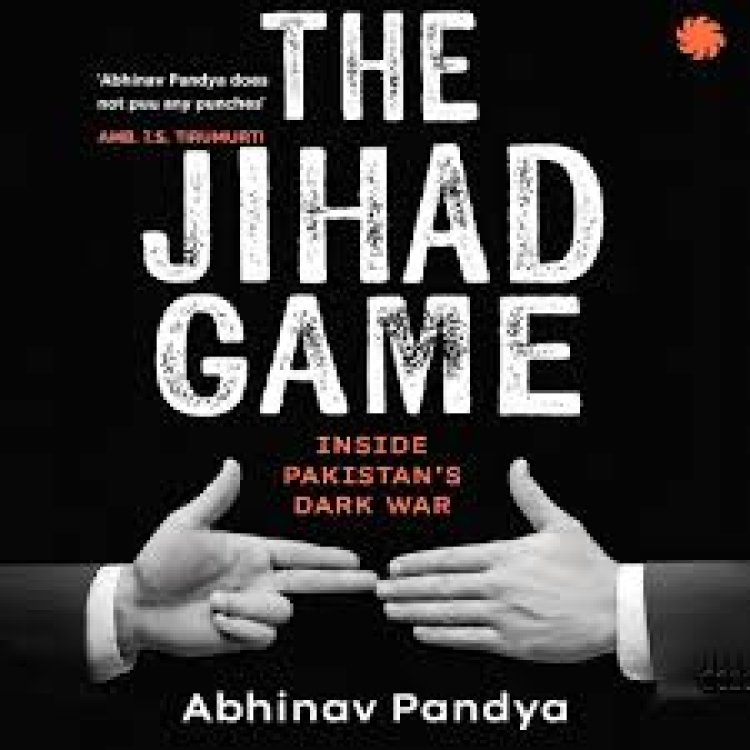
Book Review
By Preeti Khenta
The Jihad Game: Inside Pakistan’s Dark War by Dr Abhinav Pandya is a meticulously argued study of state-sponsored Jihadism in South Asia. Dr Pandya dismantles the narrative and takes the reader into this concealed architecture of violence. The book exposes how jihadist violence has been systematically nurtured, weaponized and sustained by Pakistan. The book is set against the background of the Pahalgam Attack on 22nd April 2025 in Kashmir, perpetrated by Pakistani terrorists. In response, India launched Operation Sindoor and destroyed the terrorist camps in Pakistan. The book is divided into three sections. The first part delves in to how 1979 is a landmark year in the global jihad, three key developments that were the Russian Invasion of Afghanistan, Ayatollah’s Khamenei’s Islamic Revolution in Iran and the siege of holy mosque in Mecca which laid the groundwork of a roll out of mujahideen from Pakistan and Afghanistan which eventually culminated into the formation of different jihadist terrorist organization around the globe. Pandya’s book then discussed how the 1971 war defeat by Pakistan led to Zia’s dilemma of how to bleed India through 1000 cuts. He started with a three-stage plan to destabilize Kashmir through proxy war, psychological warfare and insurgency and replicated the Afghan Jihad model. Pandya’s book gave a broader historical context of the jihadist mobilization rather than treating it as a single incident or anxiety. This allows Pandya to show continuity and offers a structural narrative about how strategic doctrines ossify and outlive the immediate political incidents that originate them.
Pandya traces the architecture of a long–running shadow war on how Pakistan’s military and intelligence ISI cultivated the terrorist organizations as an instrument of state policy and strategic depth.
The second part of the book explores the formation of separatist organisations in Kashmir. Pandya then explored the Jamaat-e-Islami, the fountainhead of the radicalization in Kashmir, and how it is entrenched in the civilian society. Pandya’s book then looks into the Hizbul Mujahideen, Laskar-e-Taiba and Jaish-e-Mohammed’s terror network, its operations, ideology, financing, its fighters and how the whole network operated in Kashmir. The author doesn’t mention the motives but rather focuses on the mechanics of the ecosystem that sustains the militancy- recruitment networks, radicalization, cross-border safe havens, ideological grooming, terror financing and the role of informal patronage that ties the terrorist organizations to the Pakistani security establishment. Dr Pandya demonstrated that militancy and violence are a manufactured asymmetry: a deliberate, decade-long strategy by Pakistan to use terrorist organizations as tools of influence, coercion, and territorial disruption, rather than spontaneous and sporadic violence caused by internal factors.
The third part of the book deals with the contemporary proxy war and Kashmir in the Modi Era. After Burhan Wani's death, the valley went through a turbulent phase of homegrown militancy that culminated in the Pulwama Fidayeen attack. Dr Pandya also discussed his time as a Security Advisor to the then-Governor Satyapal Malik and how the Abrogation of Article 370 happened during this time. He argued in the analytical chapters that conventional responses such as military reprisal, border closures, and cessation of trade are necessary to counter Pakistan, but insufficient. He suggested that India needs a prolonged multi-layered strategy which combines robust intelligence cooperation, disruption of terror financing networks, outreach to the Kashmiri population at a grassroots level, better governance and a relentless international campaign to delegitimize the narrative of Pakistan while being mindful of the democratic constraints: counterterrorism policies must respect the civil liberties and should not repeat the cycle of repression by the government and radicalization by the Jamaat and other extremist groups. This is a more nuanced policy to both hawkish simplifications and naïve optimism about the militancy dilemma.
The book's forte is its swiftness and narrative clarity; hefty information is unpacked with logical sequences, which are substantiated with historical episodes and contemporary incidents. Technical theme – terror financing, proxy warfare, and intelligence tradecraft are deciphered in a straightforward language without dumbing down. This allows the layman reader to understand the intricacies well, while it also functions well for an audience of policy makers, intelligence and security officials and students of security studies.
Kashmir expert, Dr Pandya’s analysis is corroborated with archival sleuthing and field-focused reporting. He blended the open-source documents, news reports, with his documentary work, which includes on-the-ground vignettes and interviews of former militants and handlers and security officials. Those human facets are essential as they not only formed the abstract policy but also avoid the trap of reducing the actual suffering of the Kashmiri civilians into a mere component of a strategic thesis. He particularly excels in the mechanics of the “game” – the incentives, institutional incentives and the incompetent bureaucracy which keeps this shadow war alive. He explains how strategic goals were achieved without overt escalations by the role of deniability, plausible cover and the use of proxies. These mechanics elucidate why violence often recommences even after periods of high diplomatic pressure. This is an important insight which expects linear cause and effect in geopolitics.
For the policymakers, security officials and the students of security studies, The Jihad Game offers how, in practicality, the doctrines of strategic depth and asymmetric warfare function. And how they can leverage state behavior beyond immediate military outcomes. This not only makes the book pertinent not only to South Asia specialists but also to a global audience.
Dr Abhinav provides a set of pragmatic recommendations: they recognize geopolitical constraints while holding on to the sustained, multi-pronged responses such as better HUMINT network, international pressure and economic sanctions on Pakistan and robust counter-narrative campaigns. Hence, the concluding chapters of the book are a roadmap – urgent, realistic and politically attuned.
In a nutshell, The Jihad Game: Inside Pakistan’s Dark War is an ambitious, well-researched and timely contribution literature on Kashmir and terrorism. He offers an explanatory framework and a practical set of tools rooted in the political and institutional realities of the region. It is a necessary read for anyone who wants to understand the realities of contemporary asymmetrical warfare in Kashmir.
Get your copy of the book here. Click the link below.
https://www.amazon.in/Jihad-Game-Inside-Pakistans-Dark-ebook/dp/B0G5XQXMQW
Disclaimer: This book review is the author's individual scholastic contribution and does not necessarily reflect the organization's viewpoint.