Dawah as Strategy: How Islamist Movements reshape Societies without Seizing Power
 usanasfoundation
Analysis
By Salah Uddin Shoaib Choudhury
Majority of the people in the world, who are getting troubled at the growing rate of activities of Islamists and jihadists, are generally ignoring the fact that organizations like Tablighi Jamaat, as well as Jamaat-e-Islami, which is an offshoot of the Muslim Brotherhood, as well as other Islamic NGOs, are advancing the agenda of Islamic conquest under the garb of “dawah”. Most of the people in the world, including the United States, Britain, EU nations and India though know the names of Hamas, Al Qaeda, Islamic State, Lashkar-e-Taiba, Jaish-e-Muhammad and few other Islamic terrorist groups, only few of them know the hidden network behind the terrorist entities and how “dawah” has been a old-strategy to all of these group in ideological infiltration that operates in plain sight, mostly pretending to be innocent groups of preachers. Most of them, failing to decode the hidden truth beneath “dawah”, consider such activities as innocent religious works, although the agenda lying inside this project is a strategic “invitation” that builds loyalty, spreads ideology, and fuels terrorist networks across the world.
Originally presented as a religious “invitation” to faith, “dawah” has evolved into a powerful organizational tool for advancing political Islam, with the notorious agenda of establishing a caliphate throughout the world by actualizing the agenda of Islamic conquest in the “non-Muslim” nation. Entities such as Jamaat-e-Islami and the Muslim Brotherhood have weaponized “dawah” to spread extremist ideology by using Tablighi Jamaat as the vessel and build global influence, and reshape societies according to the principles of Sharia law.
To many research scholars and counterterrorism experts, while “dawah” can simply mean sharing Islam, extremist movements like Jamaat-e-Islami and the Muslim Brotherhood have turned it into a global system of recruitment and control - using charities, schools, and media to spread radical ideas and expand their reach.
Jamaat-e-Islami, which has succeeded in establishing roots in a number of countries under various disguises, has strong bases in Pakistan and Bangladesh. Jamaat is known as the offshoot of the Muslim Brotherhood, which was founded by Maulana Abul Ala-Maududi. One of the many quotes of Maududi (1903-1979),
Both the Muslim Brotherhood and Jamaat-e-Islami are covertly and overtly expanding their network in some countries, including the United States and India, by forming alliances with local political parties, NGOs and even think-tanks.
Much of the global debate on Islamist extremism remains entombed in a comforting deception: that danger announces itself through violence. Explosions, assassinations, and black flags are easy to recognize. What is far harder - and far more inconvenient - is acknowledging the slow, lawful, and socially implanted process through which political Islam expands its reach. That process is called dawah.
Often translated innocently as “inviting people to faith”, dawah has, over decades, been repurposed by Islamist movements into something far more consequential. It has become a method of social engineering - one that reshapes norms, captures institutions, and quietly reorders loyalties long before any confrontation with the state becomes necessary.
This is not conjecture. It is noticeable across continents, cultures, and political systems - provided one is willing to look past the comforting language of “religious outreach” and examine outcomes rather than intentions.
From invitation to infrastructure
At its theological core, dawah is neither sinister nor controversial. Every faith invites. The problem begins when the invitation mutates into organization, and organization into an ideological discipline.
Groups such as the Muslim Brotherhood and Jamaat-e-Islami did not invent dawah - but they perfected its use as a system. Schools, charities, women’s study circles, student organizations, media outlets, financial cooperatives, even disaster relief efforts - all become nodes in a single ideological network.
The objective is not immediate conversion. It is alignment. Dawah builds emotional loyalty before it demands political obedience. It normalizes a worldview in which Islam is not merely a faith, but a total governing framework - social, legal, economic, and moral.
By the time political demands surface, resistance already feels like betrayal.
Maududi and the ambition that never shrivelled
No understanding of modern Islamist strategy is complete without confronting the ideas of Abul A’la Maududi, the founder of Jamaat-e-Islami. Maududi was not a fringe cleric. He was a systematic thinker with a global horizon.
His claim was simple and uncompromising: Islam was not meant to coexist permanently with secular governance. It was meant to replace it everywhere.
When Maududi spoke of world revolution, he did not mean chaos. He meant order - his order. Democracy was acceptable only insofar as it obeyed divine sovereignty. Human legislation was legitimate only when it echoed religious command. Anything else was rebellion against God.
One does not need to agree with Maududi to recognize his influence. His ideas outlived him - and continue to animate Islamist movements across South Asia and beyond.
Jamaat-e-Islami and the discipline of patience
Unlike jihadist groups that chase spectacle, Jamaat-e-Islami practices patience. It builds banks instead of bombs. Universities instead of militias. Publishing houses instead of training camps.
This is why dismissing Jamaat as merely a “political party” or a “religious organization” misses the point. It is neither - and both. It is a civilizational project, operating within existing systems while quietly preparing to outgrow them.
Where violence is employed, it is usually outsourced or justified later. Jamaat’s strength lies elsewhere: in legitimacy, respectability, and institutional endurance.
This model has proven remarkably adaptable - from Pakistan and Bangladesh to diaspora communities in the West.
Dawah and the spectrum of Islamization
Islamization does not advance in straight lines. It moves along a spectrum between human will and divine will.
At one end, religion informs personal ethics but leaves governance to civic reasoning. At the other end, divine injunctions dominate law, politics, and culture.
Islamist movements use dawah to push societies incrementally toward the latter. The shift is subtle. Legal structures may remain unchanged, but social enforcement grows stronger. What the law permits, society begins to punish informally.
This is how states become Islamic without ever formally declaring themselves so.
When society becomes the enforcer
One of dawah’s most effective achievements is the privatization of enforcement. Once norms are internalized, the state no longer needs to coerce. Families do it. Communities do it. Employers do it. Neighbors do it. Dissent becomes socially costly. Silence becomes rational. This is why Islamization so often appears “organic” to outside observers. It is not imposed - it is cultivated.
Pakistan: where dawah and jihad converged
Pakistan’s trajectory offers a cautionary example of what happens when dawah networks intersect with state power.
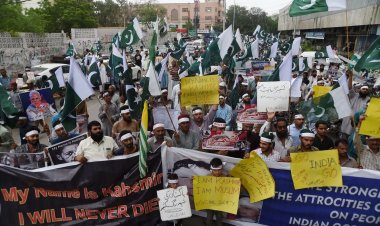
Initially conceived as a homeland for Muslims rather than a theocracy, Pakistan gradually drifted as Islamist ideologues, military institutions, and foreign conflicts reinforced one another. Mosques multiplied. Madrasas expanded. Charities became ideological pipelines.
Jihad did not emerge suddenly. It matured inside a society already conditioned to accept religious absolutism as virtue. By the time militancy erupted, the intellectual groundwork had been laid.
Charity as camouflage
Perhaps the most dangerous evolution of dawah has been its entrenchment within the humanitarian sector. Organizations presenting themselves as relief providers often maintain ideological or operational links with extremist networks. Funding flows from Western governments, international bodies, and corporate philanthropy - frequently with little scrutiny of downstream partnerships. This is not accidental. Charity offers moral immunity. It discourages questions. And it allows ideological movements to operate beneath the radar of counterterrorism frameworks designed to detect violence, not persuasion.
Women and the private sphere
Another frequent blind spot is the role of women-focused dawah. Islamist movements invest heavily in female outreach - not to empower dissent, but to shape domestic authority. Through study circles and lifestyle instruction, women become transmitters of ideology to children and enforcers of conformity within households. This strategy yields generational dividends. It is slow. And it is devastatingly effective.
Bangladesh: a contested future
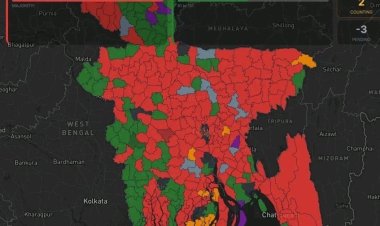
Bangladesh occupies a precarious place on the Islamization spectrum. Founded on secular and linguistic nationalism, it has nonetheless experienced growing Islamist pressure through social movements, charities, and ideological rehabilitation of groups once discredited by history.
Dawah in Bangladesh rarely presents itself as revolutionary. It presents itself as corrective - protecting values, restoring morality, resisting Westernization. That framing makes it politically difficult to challenge, even when outcomes erode pluralism and civic freedom.
Digital dawah and the borderless ummah
In the 21st century, dawah has fully entered the digital domain. YouTube sermons, Telegram channels, TikTok clips, and WhatsApp groups now perform functions once limited to mosques and madrasas. This algorithmic dawah has three advantages:
· It bypasses state regulation
· It radicalizes privately and incrementally
· It internationalizes ideology instantly
A young listener in London can absorb the same ideological framing as one in Lahore or Dhaka - creating a borderless Islamist consciousness. What is particularly alarming is how extremist ideas are often introduced indirectly - through discussions on identity, injustice, masculinity, modesty, or victimhood - before escalating toward political absolutism.
The caliphate today does not need territory first. It needs followers who think in caliphate terms. Dawah supplies that cognitive architecture.
Why the West keeps misreading the problem
Western policymakers persist in drawing a false distinction between “non-violent Islamism” and terrorism. This separation may be administratively convenient, but it is intellectually dishonest. Non-violent Islamism supplies the narratives, legitimacy, and human capital upon which violent movements depend. Dawah is not an alternative to jihad. It is its precondition.
Naming the invisible war
Islamist expansion in the modern era does not resemble medieval conquest. It prefers patience to force, persuasion to coercion, and institutions to battlefields. Dawah is its primary instrument. Ignoring this reality does not protect pluralism. It merely postpones its erosion. Societies that fail to recognize ideological infrastructure will continue defending borders while surrendering civic space. By the time violence appears, the argument has already been lost.
Disclaimer: This paper is the author's individual scholastic contribution and does not necessarily reflect the organization's viewpoint.