Emerging security concerns over suspected Lashkar-e-Taiba movements into Bangladesh
 usanasfoundation
Analysis
By Salah Uddin Shoaib Choudhury
South Asia’s counterterrorism landscape has entered a new and complex phase, marked not by spectacular attacks but by quiet logistical movements, legal travel, and the strategic exploitation of diplomatic and commercial openings. Recent developments surrounding the resumption of direct air connectivity between Pakistan and Bangladesh warrant careful scrutiny - not as isolated events, but as part of a broader pattern of adaptive behavior by Pakistan-based jihadist networks.
Information emerging from informed sources suggests that individuals suspected of links to Lashkar-e-Taiba (LeT) and Jaish-e-Mohammad (JeM) may have entered Bangladesh via a commercial Karachi–Dhaka flight on January 30, 2026. While these movements do not in themselves constitute proof of operational intent, they raise serious counterterrorism and intelligence concerns that merit attention from Indian, Bangladeshi, and international security agencies.
The Karachi–Dhaka air link as a strategic variable
On January 30, 2026, Bangladesh Biman flight BG-342 landed in Dhaka from Karachi, marking a significant milestone: the resumption of direct air travel between the two countries after nearly 14 years. Publicly, this was framed as a confidence-building and people-to-people initiative. From a security perspective, however, newly restored routes have historically represented windows of opportunity for non-state actors, particularly transnational jihadist groups.
Counterterrorism history - from Afghanistan to Southeast Asia - demonstrates that militant organizations closely monitor changes in travel regimes. New routes often involve transitional security protocols, incomplete risk profiling, and limited historical passenger-data baselines, making them attractive for low-visibility reconnaissance and logistical insertion.
Suspected LeT-linked passengers and documentary indicators
According to security-linked sources familiar with the matter, multiple passengers aboard BG-342 came under scrutiny following post-arrival assessments. Among these, at least three individuals were flagged due to documentary and travel-pattern indicators consistent with known Lashkar-e-Taiba operational behavior.
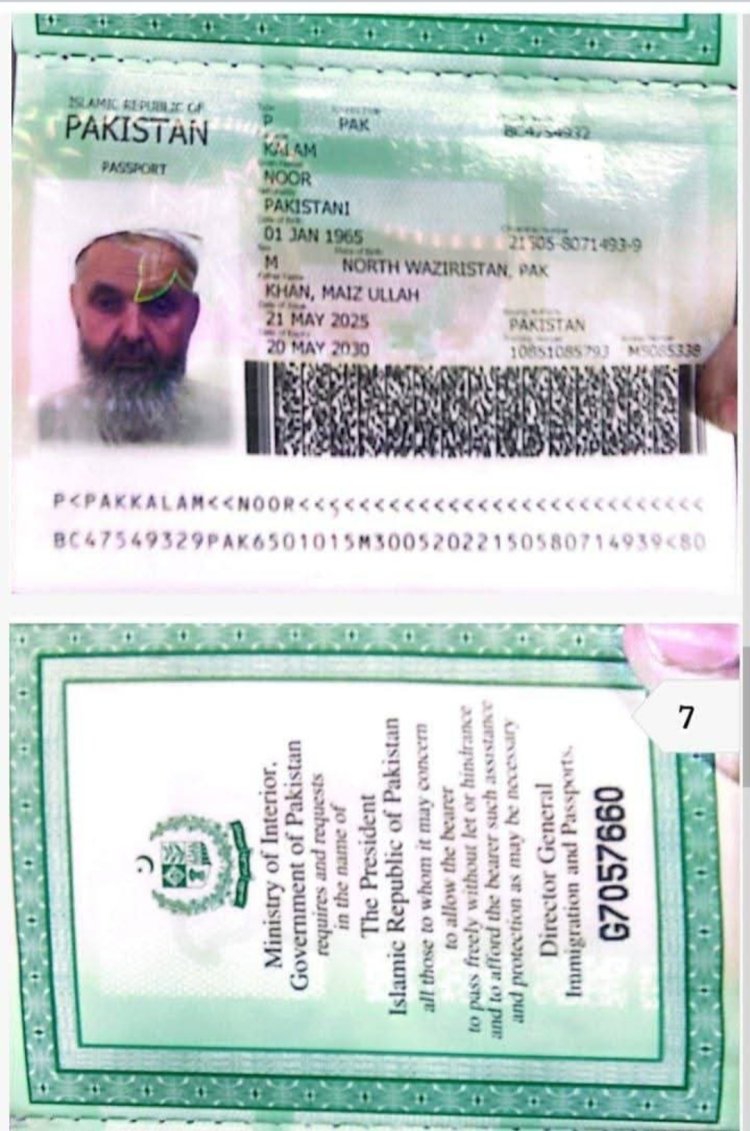
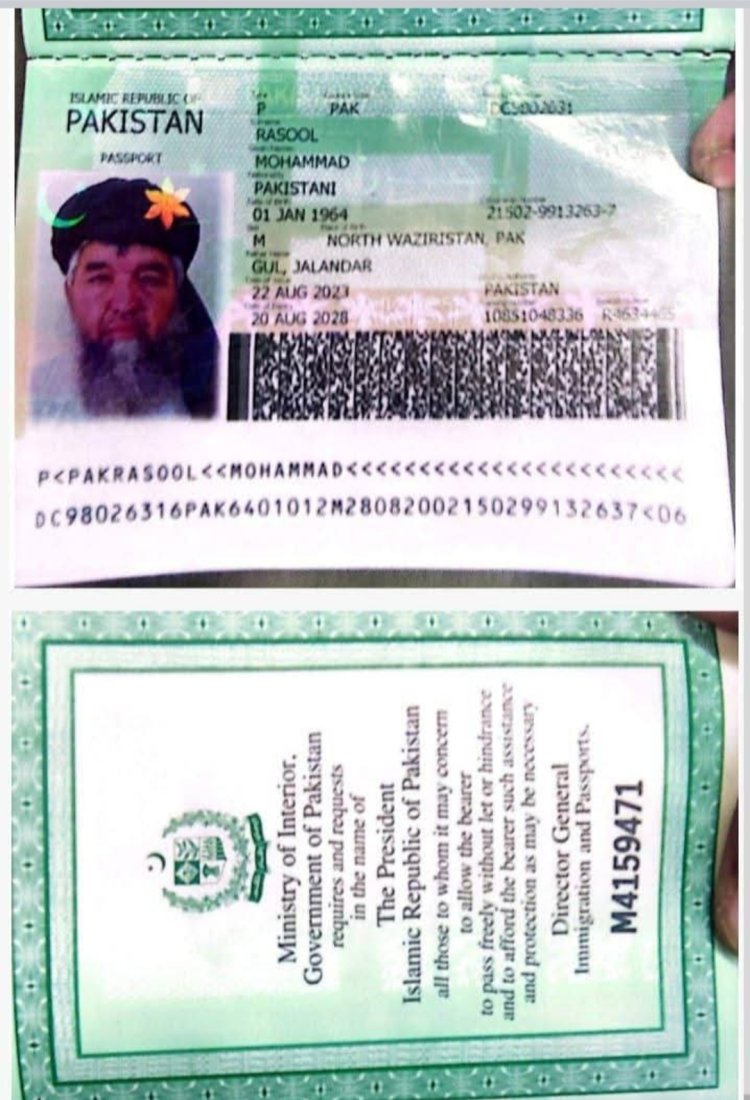
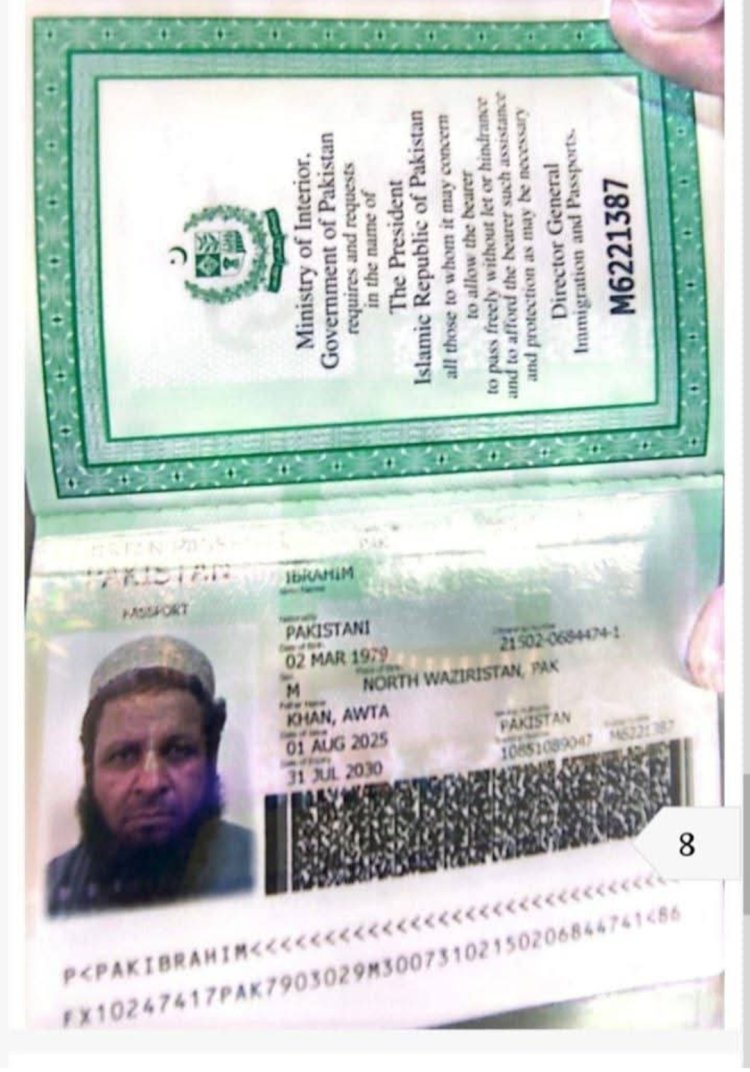
Copies of their passports - now available for expert examination—have raised questions related to:
· Travel frequency and sequencing involving Pakistan
· Timing aligned with restored connectivity
· Profiles inconsistent with declared civilian or commercial objectives.
While no judicial determinations have been made, such indicators are routinely used by intelligence agencies worldwide to trigger secondary vetting, surveillance, or inter-agency coordination.
Why Lashkar-e-Taiba remains a strategic threat
Lashkar-e-Taiba is not merely a militant group focused on Kashmir; it is a strategically cultivated jihadist asset with global reach. Designated as a terrorist organization by the UN, the United States, India, the United Kingdom, and the European Union, LeT has demonstrated:
· Capability for complex, multi-site attacks (Mumbai 2008)
· Overseas recruitment and radicalization networks
· Long-term logistical planning
· Institutional resilience despite sanctions.
Crucially, LeT’s operational doctrine emphasizes patient infiltration, sleeper-cell activation, and geographic diversification - not constant violence. From this perspective, Bangladesh’s geographic location, maritime access, and proximity to India’s eastern flank make it a potentially attractive secondary theatre, even if not an immediate operational target.
The ‘Stranded Pakistanis’ movement: a parallel concern
Running parallel to these developments is another issue that deserves careful analysis. During the same period of resumed air connectivity, a large number of individuals identifying as members of the ‘Stranded Pakistani’ community reportedly traveled from Bangladesh to Pakistan.
According to a credible source, these individuals were received upon arrival by mid-level officers linked to Pakistan’s Inter-Services Intelligence (ISI) and transported to undisclosed locations. While the stated purpose of these visits remains unclear, security analysts caution that displaced or marginalized communities are often targeted by extremist recruiters, particularly when identity, grievance, and belonging intersect.
It is important to stress that collective suspicion must be avoided. However, intelligence history suggests that militant ecosystems frequently exploit precisely such vulnerabilities for indoctrination, logistics, or auxiliary support roles.
Alleged ISI facilitation networks and the ‘Dhaka Cell’
Of particular concern are references to an ISI-linked facilitation network operating inside Bangladesh, often described in intelligence circles as a “Dhaka Cell”. Such cells - wherever they exist - typically do not conduct attacks themselves. Their function is subtler and more strategic:
· Identifying sympathetic or vulnerable individuals
· Facilitating documentation and travel
· Establishing safe channels for communication and movement
If verified, the existence of such a network would represent a serious breach of regional trust and pose long-term challenges for Bangladesh’s internal security architecture.
From an Indian intelligence perspective, the significance of these developments lies not merely in the identities of the individuals involved, but in the operational architecture being tested. Lashkar-e-Taiba has historically functioned as a patient, intelligence-aware organization that prioritizes logistics, reconnaissance, and legal movement long before kinetic action. The use of restored civilian air routes, legitimate travel documents, and low-profile entry points is consistent with LeT’s long-established doctrine of plausible normalcy. For agencies such as RAW and IB, this raises immediate questions regarding route-mapping, passenger profiling thresholds, and cross-border document validation protocols, particularly in relation to eastern India and the Bay of Bengal corridor.
Equally relevant for the National Investigation Agency (NIA) is the possibility that Bangladesh could be leveraged as a permissive transit or facilitation environment, rather than a primary theatre of attack. Previous LeT-linked cases investigated by Indian authorities have demonstrated that operational planning often spans multiple jurisdictions, with recruitment, financing, travel, and execution deliberately separated to frustrate attribution. If even a fraction of the suspected movements currently under scrutiny are validated, this would warrant proactive joint vetting mechanisms, shared watchlists, and deeper financial-intelligence coordination between India and Bangladesh - well before any criminal threshold is crossed.
A post-FATF environment and renewed confidence
These developments are also unfolding in the aftermath of Pakistan’s removal from the FATF grey list in October 2022. While Islamabad officially fulfilled technical compliance requirements, numerous analysts argue that structural enforcement gaps remain, particularly regarding terrorist facilitation rather than financing alone.
Militant organizations often interpret such delistings as political breathing space, emboldening them to test operational boundaries. The timing of suspected movements through civilian air routes should therefore be viewed within this broader strategic context.
For India, the implications are multidimensional.
Eastern flank sensitivity: Any expansion of LeT’s logistical footprint beyond Pakistan’s western borders introduces new variables into India’s threat matrix, particularly concerning the Northeast and coastal security.
Transit and staging risks: Bangladesh could be exploited not as a target, but as a transit or staging environment, complicating attribution and response.
Intelligence coordination imperative: These developments reinforce the need for deepened intelligence cooperation between India and Bangladesh, particularly in passenger vetting, document verification, and financial-intelligence sharing.
Why early scrutiny matters
Counterterrorism failures are rarely sudden. They are usually preceded by ignored signals, dismissed anomalies, and bureaucratic hesitation. Early scrutiny of suspicious movements - especially those involving known jihadist ecosystems - is not alarmism; it is preventive security practice.
Think tanks, intelligence agencies, and policymakers must therefore treat such developments not as accusations, but as risk indicators requiring structured assessment.
The suspected movement of LeT-linked individuals into Bangladesh via a restored civilian air route may ultimately prove benign. However, history cautions against complacency. Jihadist organizations thrive in gaps - between diplomacy and security, between intention and proof, between silence and action.
For India and its regional partners, the appropriate response is neither panic nor denial, but sustained vigilance, intelligence-led inquiry, and transparent inter-agency engagement. In an era where terrorism increasingly hides behind legality and normalcy, early attention is the strongest form of defense.
Disclaimer: This paper is the author's individual scholastic contribution and does not necessarily reflect the organization's viewpoint.
Salah Uddin Shoaib Choudhury is an award-winning journalist, writer, and Editor of the newspaper Blitz. He specializes in counterterrorism and regional geopolitics.