Old Guard, New Titles: Institutionalizing Military Rule In Myanmar And The Shadow Of Beijing And Moscow
 usanasfoundation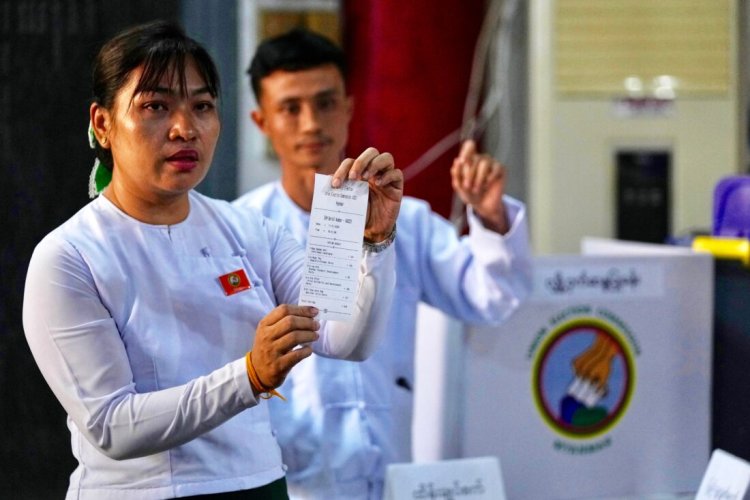
Analysis
By Lt Col Ujjual Abhishek Jha (Retd)
A new government was formed in the Republic of the Union of Myanmar on 10 April 2026, with Senior General Min Aung Hlaing elected as the President, ensuring an added hold of the Myanmar Army (MA) within the existing constitutional framework. The new government is formed following the conduct of general elections held in three phases in December 2025 and January 2026, widely seen as MA’s attempt to gain constitutional legitimacy. The highlight of this change, five years after the military’s transfer of power on 01 February 2021, is the rise of Senior General Min Aung Hlaing to the presidency along with the well-managed distribution of portfolios of executive, legislative and financial powers among a core group of loyalists and retired military officers.
Government Framework
The formation of a new government is based on the 2008 Constitution of Myanmar, which authorizes the military to play a leading role in national politics. The orders of the president on 10 April 2026, announced the establishment of the core organs of the state: the Union Government, the National Defence and Security Council (NDSC), the Financial Commission, the Union Advisory Council, the Union Supreme Court and the Union Constitutional Tribunal. The present framework designates NDSC as the primary authority for defence and security, while the Union Government oversees the administrative and economic sectors.
National Defence and Security Council (NDSC)
In accordance with Section 201 (Chapter V) of the Constitution of Myanmar, the NDSC was reconstituted on 10 April 2026 as the highest executive authority. The composition of the 11-member council (except Nan Ni Ni Aye, all 10 members are active or retired military officers) ensured that active and retired military officers hold an absolute majority in any major decision-making.
The Union Government
The Union Government, formed vide Announcement 1/2026, consists of 34 personnel, including the President, two Vice Presidents and 31 Union Ministers.
Core Group Leadership
The newly formed administrative set-up is dominated by an inner circle that combines traditional military hierarchy with a specialized focus on intelligence, finance and diplomatic re-engagement with non-Western powers. The ‘Core Group’ also ensures the unopposed authority of Min Aung Hlaing even while assuming a civilian role (as a president).
President Min Aung Hlaing: Embedding Hegemony
The appointment of Min Aung Hlaing as the president fulfills a long-standing objective of formally securing the status of executive head. He resigned as Commander-in-Chief on 30 March 2026, although he remains the highest decision-maker by being Chairman of NDSC, the Financial Commission, and the Union Government. His inaugural speech prioritized democracy, peace and federalism, although one-third of his cabinet are under international sanctions. Also, as the Chairman of the Financial Commission, he directly controls budgetary allocations, ensuring loyalty rewards through state patronage.
Vice-President Nyo Saw: Economic Pillar
U Nyo Saw is first Vice-President (VP1), is a critical part for the survival/ revival of the government. He retired as Quartermaster General (general rank officer) and previously served as the Chairman of the Myanmar Economic Corporation (MEC) since 2014. He is the key to generating the MA financial network and oversees 19 subsidiaries involved in mining, banking and communications. His role as head of the committee importing fuel from Russia underlines his importance in bypassing Western sanctions and ensuring the military’s operational capacity. His appointment as VP1 provides a constitutional platform for managing national planning, investment and protecting the interests of Min Aung Hlaing as well as the military elite.
General Ye Win Oo: Intelligence Controlled Military
The appointment of General Ye Win Oo as Commander-in-Chief (C-in-C)is a momentous shift from MA's traditional approach, as he is the first Military Intelligence head to reach the top of the military hierarchy. He is an alumnus of the Officer Training School (OTS-77) (another shift from the regular pattern), rather than the Defence Services Academy and is a well-established loyalist to Min Aung. During the military transfer of power, he led the raid to detain Aung San Suu Kyi. As the C-in-C, he is unlikely to create his own independent power centre that can challenge the president.
Vice-President Nan Ni Ni Aye (VP2): Ethnic and Gender Representation
Nan Ni Ni Aye, the first woman to hold the VP2 in Myanmar, obliging the symbiotic representation of ethnic population to claim inclusiveness. She belongs to the Kayin (Karen) ethnicity from the military-backed Union Solidarity and Development Party (USDP). Her appointment as VP2 is primarily to improve the MA image among the ethnic population and the international community.
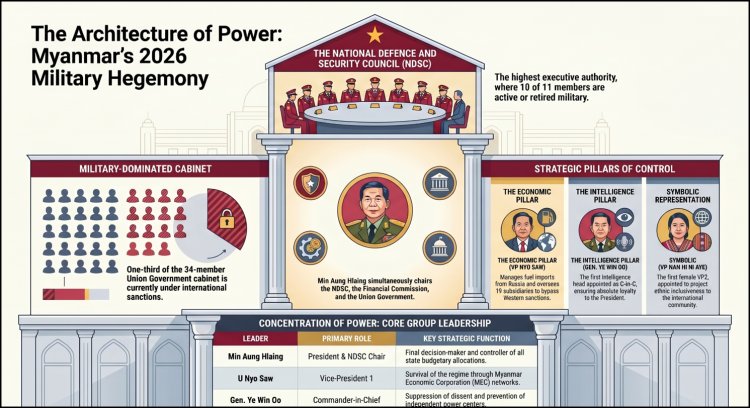
Figure 1 - Representative AI image of the Myanmar Government Framework
Analysis of Newly Formed Government
Leadership
The newly formed government appears to have a military-civil structure; however, the actual power is retained by military personnel, either active or retired.
- Union Government (Executive) – There are 34 newly elected members, of which 12 are generals (active or retired), and 8 are middle rank retired officers, making approximately 58% of the cabinet having a direct military background.
- National Defence and Security Council (NDSC) – Of the 11 members of NDSC, 10 are active or retired military personnel except Nan Ni Ni Aye (VP2), implying near-complete military control on the highest decision-making body of the country (two legislative speakers, Khin Yi and Aung Lin Dwe, are former generals).
- Legislative Control: The USDP, a military-backed political party, achieved a major victory in the 2025-2026 elections, thereby ensuring military supremacy in the The USDP's seat share, along with 25% reserved seats for active military personnel, implies that the military establishment controls approximately 86% of the seats in the national legislature.
- Financial Commission: Aimed for Regional Control - The Financial Commission is chaired by Min Aung Hlaing and includes the chief ministers of all 14 regions and states. Analysis of many of these chief ministers shows that they are mostly retired military officers or USDP strong supporters, implying centralized control over regional budgets.
Geopolitical Alignments
Driven by a need for economic and political survival, the cabinet deepens its ties with major regional players to a tighter alignment with powers that have remained neutral regarding the MA actions.
Pro-China Alignment
The appointment of U Tin Maung Swe as Union Minister for Foreign Affairs is the most prominent indicator of a tilt toward Beijing. Tin Maung Swe served as Myanmar’s ambassador to China until late 2025 and was instrumental in warming bilateral relations post February 2021. China has welcomed the formation of the new government, with a special envoy of President Xi Jinping attending the inauguration and Ma Jia, Chinese ambassador, being the first foreign diplomat to meet President Min Aung Hlaing. The primary interests of China are the China-Myanmar Economic Corridor (CMEC) and the Kyaukphyu deep-sea port, which provide a strategic outlet to the Indian Ocean. Tin Maung Swe is expected to fast-track these projects in exchange for continued Chinese support at the UN Security Council. Another China-leaning figure is Dr Charlie Than, an industrialist, who has worked closely with Chinese state firms on various projects.
Russia Aligned
Russia has become a loyal friend of Myanmar and a major source of high-tech military hardware. U Nyo Saw (VP1) heads the committee for Russian fuel imports and manages financial ties that allow the regime to source oil and fertilizers despite sanctions. General Mya Tun Oo (Transport & Digital Development) is a frequent visitor to Russia’s Eastern Economic Forum and a key person for expanding direct flight routes between the two countries and implementing the “Mir” bank card system in Myanmar to facilitate sanctions-evading transactions. Dr. Kan Zaw (Finance & Investment) co-chairs the Intergovernmental Russian Myanmar Commission on Trade and Economic Cooperation. He co-signed the Russia-Myanmar Investment Promotion and Protection Agreement in early 2026 with President Putin’s ratification.
Inferences for Myanmar
The formation of the new government indicates long-term military entrenchment rather than political reconciliation.
Digital Authoritarianism and Surveillance – An important development in the new government is the implementation of the Person Scrutinization and Monitoring System (PSMS). The PSMS is under the Ministry of Digital Development and Communications, controlled by Gen Mya Tun Oo, integrates Chinese-made AI cameras with national identity and biometric databases. This system allows the regime to track political opposition and resistance members across checkpoints, hotels and transport hubs.
Persistent Internal Conflict and Territorial Fragmentation - In spite of the formal transition, the control of the new government is fragmented. The internal conflict continues with Ethnic Armed Organizations (EAOs) and the Arakan Army (AA) still controlling a considerable portion of Rakhine and Chin states. The ongoing conflict has led to a collapse in rural governance and internal displacement of civilians. The internal legitimacy of the newly formed government is likely to be challenged in EAO stronghold areas, primarily in Rakhine, Chin, Kachin, Karen States and Sagaing Region.
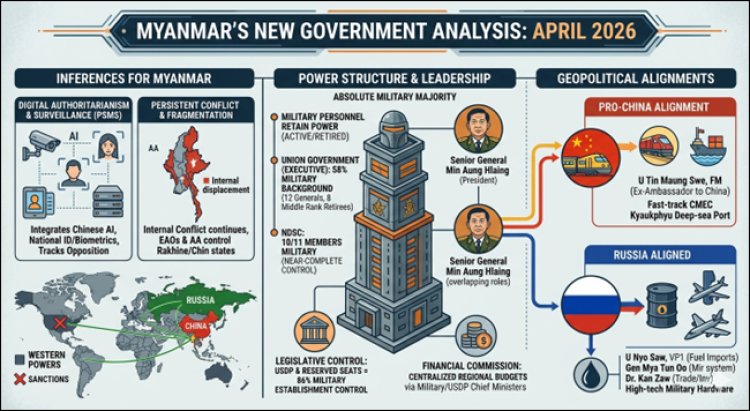
Figure 2 - Representative AI image of the Analysis of the New Myanmar Government
Impact on India
The formation of a new government in Myanmar offers India a strategic opportunity where high risks can provide higher gains, in a landscape where multi-modal infrastructure projects and border security of India are facing a dual challenge of MA and EAOs. The Chinese leaning of a bloc in the Myanmar government and the increasing presence of China in Myanmar may create long-term security concerns for India.
The Indian government's decision to fence the 1,643 km border with Myanmar and suspend the Free Movement Regime (FMR) has triggered opposition in the states of Mizoram, Manipur and Nagaland. In addition, the Myanmar-based Indian Insurgent Groups, in the backdrop of ongoing conflict, are leading to an impetus on illegal activities as well as an insurgency scenario.
The balanced approach of India towards Myanmar has led to the necessity of engaging the MA and EAOs. The possible pro-India centres can be U Tin Maung Swe (Foreign Affairs), who, despite being pro-China, is likely to present an independent and non-aligned foreign policy, Dr Kan Zaw (Finance), who is supervising development of trade routes and General Ye Win Oo, who manages the intelligence and border security coordination with India.
Conclusion
The formation of a new government under President Min Aung Hlaing signifies the institutionalization of the military's transfer of power on 01 February 2021. The assumption of civilian face and reallocating loyalists into key appointments, the MA has created a dual structure to sustain international sanctions and maintain control over Myanmar’s security and finance. The emergence of General Ye Win Oo, former intelligence head and the deployment of advanced surveillance technology indicate a new era of digital totalitarianism in Myanmar. For the international community, the new government has presented a design for permanent military dominance without any clear path for the restoration of democracy. For China and Russia, the new government is reliable. The transition necessitates a dual-track policy for India: diplomatic engagement with Myanmar and efforts to counter Chinese influence.
Disclaimer: This paper is the author's individual scholastic contribution and does not necessarily reflect the organization's viewpoint.
Lt Col Ujjual Abhishek Jha (Retd) is an Intelligence veteran and Geopolitical Risk Analyst with over two decades of experience in Military Intelligence and National Security operations across sensitive theatres of the North East, Punjab and Gujarat borders.