India’s Stakes in the Middle Eastern War
 usanasfoundation
Analysis
By Dr Abhinav Pandya
India refrained from officially taking sides in the Israel, US and Iran war and remains an observer, focused on securing the passage of its ships through the Strait of Hormuz. However, New Delhi has significant stakes in the outcomes of this war and the future trajectory of geopolitics in the Middle East.
Indian strategic experts, mainstream media and former diplomats, riddled with deep-rooted anti-Western bias- Cold War legacy, and obsessed with the narrative of civilisational ties with Iran, have expressed views that tilt towards Iran. They portray the US and Israel as imperial Western powers and the Iranian regime as a lone actor leading the oppressed and resilient Iranian society against an unjust aggression.
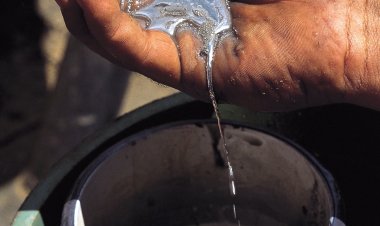
Most of the analysts focus on the adverse effects on India’s energy security. India imports 85 per cent of its crude oil requirements, roughly five million barrels per day. The Middle East remains one of the key destinations for Indian imports, despite recent efforts by India to diversify its petrochemical basket. Qatar and UAE supply 42.22 and 11.11 per cent of India’s Liquefied Natural Gas imports, respectively. In addition to disrupting India’s energy security, the blockade of the Strait of Hormuz will also impact India’s massive fertiliser imports from the region, about 63 per cent of its total nitrogen fertiliser imports and 32 per cent of its DAP fertilisers, leading to inflationary pressures that affect the Indian economy across the board. Further, war-induced devastation and uncertainties in the Middle East will adversely affect the nine million-plus Indian diaspora of the six Gulf countries. The war can disrupt India’s massive foreign exchange earnings from inward remittances, amounting to about USD 50 billion.
Though most analysts focus on the adverse effects on India’s energy security, the real nature of this war’s impact extends far beyond economics and trade into the domains of geopolitics and security. This war-induced strategic disruptions and realignments in the Middle Eastern security architecture will have long-lasting impacts on South Asian security. First and foremost, contrary to widely-held pro-Iran attitudes in India’s thinktank circles and power corridors, the Iranian regime’s Kashmir policy has not comforted India. Tehran equated Kashmir with Palestine, projecting it as one of the global conflict theatres. Secondly, either directly or through its proxies, Tehran has encouraged extra-territorial and extra-constitutional loyalties and Islamist tendencies among the Indian Muslims. Thirdly, the regime has been critical of India’s Hindu-nationalist leader Modi’s abrogation of Kashmir’s special status, strengthening ties with Israel and the citizenship amendment laws of 2020, to curb illegal Muslim migration, mostly from its South Asian neighbours, a major security headache for India. Iran’s then foreign minister, Jawad Zarif, criticised Delhi’s 2020 communal riots over the Citizenship Amendment Act as an “organised wave of violence against Muslims.”
The 1979 Iranian revolution provided a standard template to an array of global terrorist groups, including the Pakistan-supported Sunni groups of Kashmir. Iran-supported terror outfits like Hamas have maintained robust ties with Kashmir-centric terror outfits, such as Lashkar-e-Toiba and Jaish-e-Mohammad. After the October 2023 attacks, influential Hamas leaders like Nazi Zaheer visited Pakistan and Pakistan-Occupied Kashmir several times. Further, most of the South Asian Muslims, already under the strong influence of global jihadism, support Iran in the ongoing war. In the past, South Asian terror groups and a large number of lay Muslims celebrated the Taliban’s return and the rise to power of former Al Qaeda terrorist, Ahmed Al Sharaa, in Syria. Hence, the Iranian regime’s survival, Israel’s weakening and degrading of the American strategic and military footprint in the Middle-East, will embolden the global Islamist groups, including their South Asian affiliates and South Asia’s local Jihadist groups, psychologically and strengthen them materially. Given that India faces an existential threat from Islamism, internally and externally, the strengthening of Islamist forces will be one of the most pressing security concerns.
Further, if the war escalates, unleashing disruption and chaos in the Gulf countries, it will create fertile conditions for transnational terrorist groups like Al-Qaeda and Islamic State to expand in these countries, which hitherto maintained a tight check on Islamic extremism, thereby providing them with a better resource base and supporting constituency. Such a scenario will have a ripple effect, inevitably strengthening the South Asian terrorist groups in terms of men, money, ideology and weapons.
Finally, changes in the Middle East’s regional security architecture will also adversely affect India. The US and Israel’s strategic setbacks, in addition to enhancing Iran’s stature, will empower a range of anti-India forces, including Turkey, China and Pakistan. Israel, weakened and engaged on multiple fronts, will find it challenging to help India as it did in the Kargil War and Operation Sindoor. Iran’s massive destruction from the US-Israeli bombing will likely create space for Ankara, India, another adversary and Pakistan’s defence partner, thereby strengthening its position in the regional power calculus.
Besides Gulf countries, which realise the limits of the US’s ability to be the net security provider in the region, may enhance their outreach to anti-India powers, such as Islamabad, Beijing, Tehran and Moscow. Further, Pakistan’s ongoing mediation efforts will enhance its standing in the region. For the US, struggling to sustain its eminence in the region, Pakistan will be much more useful vis-à-vis India, weakening Washington’s position to take an objective view and assist New Delhi in any future India-Pakistan war. Additionally, Pakistan has other powerful allies, such as Turkey, Azerbaijan and China. Prevailing security uncertainties following the Iranian attacks on Gulf countries will widen the scope of the Pakistan-Saudi strategic mutual defence agreement. As of this writing, talks are underway to include Egypt and Turkey. This axis, along with China and Qatar, in addition to empowering Islamist forces in South Asia, will be antithetical to India’s broad strategic and military interests in the region and will strengthen Pakistan’s diplomatic and military standing. Hence, India risks being isolated and facing its adversaries as they consolidate into a formidable bloc.
Disclaimer: This paper is the author's individual scholastic contribution and does not necessarily reflect the organization's viewpoint. The article was first published in The National Interest.