Praying for Mali
 usanasfoundation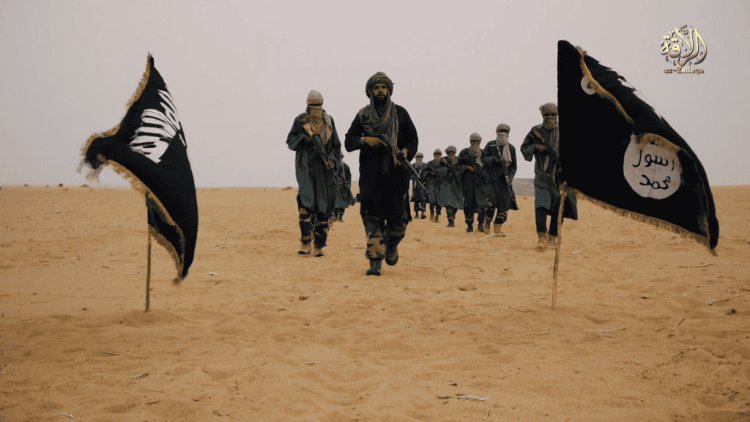
Analysis
By Peter Knoope
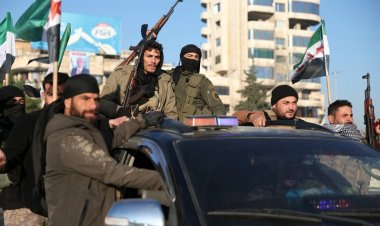
In Mali, threatening developments are rapidly unfolding. The organisation that refers to itself as Jama'a Nusrat ul-Islam wa al-Muslimin (better known as JNIM) is rapidly taking over the country. JNIM is closely linked to Al-Qaeda (AQ). The capital of Mali is under siege while I am writing this piece. It is unknown what will happen next. But the situation doesn`t look reassuring. On the 25th of April, a well-orchestrated series of attacks shook the West African landlocked country. JNIM teamed up with the Tuaregs. The Tuaregs are the herdsman living in the most Northern, Sahelian region of Mali. The Malian Minister of Defence was killed by the terrorists in these attacks. A large part of the country is now under the control of JNIM and the FLA. They are heading for the mining areas and may control the resources of the country very soon.
But this didn`t start on the 25th of April of this year. On the contrary. It has been building up over the last 15 years. But even before 2011, AQ was present and active in the northern part of the country. In a certain sense, it was pushed into northern Mali by the Algerians. At the time, AQ in Algeria was known under the name AQIM (Al Qaeda in the Maghreb). It emerged after the attacks in New York on 9/11 2001as an affiliate of the global Mujahedin. The Algerian army was effective in the sense that it made life for AQIM pretty hard in the country. So AQIM was forced at a certain moment to operate from the Malian side of the border. Here, it suddenly and unexpectedly found a partner in the independence movement now known as the Azawad Liberation Front (FLA). This is a coalition of separatist forces seeking to establish their own country in Northern Mali named Azawad. During the Arab Spring, many of the Tuareg fighters, who were previously employed by Gaddafi in Libya, returned to North Mali to join the fight for Azawad. AQIM and the Tuareg FLA became brothers in arms. It strengthened both.
Even though their agendas differ tremendously their strategic cooperation turned them into a force to reckon with. At the time, the French responded. The French Operation Serval had counter terrorism as their primary mission. The French army sought to prevent Mali from going down the path of Syria and Iraq. Even in 2012, Mali came close to a victory of the combined forces of the terrorists and the Tuareg. In those days, Bamako was on the verge of being overrun by these rebel forces for the first time. Eventually, the UN brought in a peacekeeping force (United Nations Multidimensional Integrated Stabilization Mission in Mali, MINUSMA) to make sure this wouldn`t happen.
However, the situation has hardly stabilized in the country. The terrorists gained more space year after year. Their position was strong, especially in the north. The north is a part of Mali that is hard to govern. Northern Mali is an arid, sparsely populated, and volatile region dominated by the Sahara Desert. But from the north, they moved southwards with time. After some time, the government of Mali decided to put their faith in the hands of the Russians. Inspired by the Wagner group and promises of military support from Moscow, they blamed both the French and the UN for being inadequate. The opposition to the presence of the French and the UN was sprinkled with an anticolonial rhetoric. Both the UN peacekeepers and the French army were framed as neocolonial powers. The Russians were openly and wholeheartedly feeding the conspiracy theory that the UN and the French were supporting terrorists in the first place, simply to have an excuse to invade Mali.
With time, the French and the UN came under increasing pressure; the Russians took up positions in the military and in the government. The ultimate outcome of this process was the departure of both the UN and the French. Initially, the Russian presence was through the Wagner group under the leadership of the infamous Mr. Prigozhin. After he died in a plane crash, the Wagner group was transformed into a part of the Russian army under the name Africa Corps. The individuals that formed the Russian military units in Mali stayed the same. These Russians are widely known for their human rights violations.
The departure of the UN and the French did not lead to an improvement in the security situation. On the contrary, JNIM's influence expanded every year. Not only in Mali. It is a force to reckon with throughout West Africa. Neighbouring Burkina Faso, for instance, is heavily affected. On top of that, there is a constant expansion of ISIS and Boko Haram in the same West African region. There is periodic strategic cooperation between the Islamic State in the Greater Sahara (ISGS) and JNIM. Today, these terrorist organisations call the shots from Mali to Northern Cameroon, a stretch of 3000 kilometres. In many countries in the region, Russian forces and other military advisors play an important role. The West African governments put their trust and their security in the hands of these advisors.
This week, JNIM and FLA are advancing in Mali. It is disturbing, and I feel for my friends in the country. They ask me to pray for them. The future looks grim. So far only the Algerians have found a local answer to their own terrorist threat in the country. They exported it to Mali. But none of the West African countries seems to be able to get the responses right. Despite, or maybe because of, the interventions from Moscow. All in all, these responses have relied solely on hard power.
It is time to admit that counter terrorism is a complex topic. Hard measures alone do not have the desired impact. On the contrary. They alienate the people from the authorities and create animosity that leads to more traction for violent actors. Soft power to win hearts and minds is an important ingredient of any counter terrorism approach. And to win hearts and minds, one needs to know what does the trick. Winning hearts and minds cannot be done based on assumptions. Never. It can only be done if the government knows what the real grievances are and how these existing grievances are exploited by the brokers of violence. The dynamics of the exploitation are locally and even time-wise specific. Only proper research can unveil these dynamics.
Today's governance structures have failed to find the correct, effective mix of hard and soft power. This is true for the whole region. But it is most urgent for Mali. The emergence of a terrorist run State in West Africa should keep all governments awake at night. Because Mali may serve as a focal point from where more terrorism can spread. According to an article by Reuters. Today, they are heading for the mining areas of Mali. They may occupy that zone soon. It will give them the necessary funds to expand and to increase their influence across other parts of Africa. So far, they have lived on kidnapping for ransom. Their long-term agenda is to move west and southwards. Once they get to the coast, they will control the ports of West Africa. They will control the ports, the sea, and everything in it. Piracy in the Atlantic may be next.
It should remind us of the darkest hours of Daesh and the caliphate. JNIM is clever enough not to give its territory in Mali the same name. But it is clearly the objective to establish such a state based on the AQ ideology. And there is no indication that they will stop once they have taken Bamako. So far, no Malian Army, no Russian Wagner, nor African Corps has found an effective recipe to put a halt to them. Many thought that this issue would evaporate after the military defeat of Daesh in Syria and Iraq. West Africa shows that they were wrong. Many experts have warned that a military defeat in Iraq or Syria did not mean that the ideology and the ambitions were defeated as well.
Very much like in the case of Daesh, JNIM is not just an African problem. This same issue pops up in different regions. It is like a waterbed. You push on one side and it rises on the other. I`m struck by the fact that the developments in Mali doesn`t hit the headlines. The `international community` has other issues to be concerned about. But it is not going to go away by ignoring what happens in Bamako. We urgently need all the available brainpower to come up with approaches that work. Mali could very well be the starting point for something big. For now, I pray.
Disclaimer: This paper is the author's individual scholastic contribution and does not necessarily reflect the organization's viewpoint.
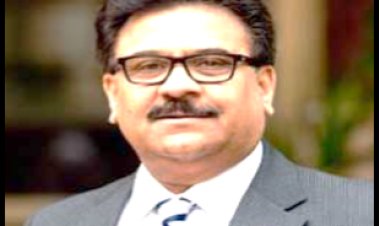
Peter Knoope is a New Delhi-based independent expert with around 35 years of experience in diplomacy and international cooperation. He currently holds fellowships at four institutions in the areas of human security, conflict and terrorism prevention, peacebuilding, and justice (based in The Hague and Cape Town, South Africa). Through his fellowships, he has, inter alia, carried out analyses of drivers of radicalisation and designed and delivered training programmes to prevent radicalisation and conflicts in a variety of countries, including Sudan, Yemen, Iraq, Nigeria, and Cameroon. He has also provided advisory services on conflict resolution and gender-specific approaches in Europe and Sub-Saharan Africa, targeting politicians, national and local authorities, and practitioners. His publications include ‘The lone wolves’ legion’ on Terrorism, colonialism, and capital, and `Negotiating Gender in Central Asia`, published by the George Washington Institute