The Kurdish Question in Syria: Power, Governance, and the Al-Sharaa Factor
 usanasfoundation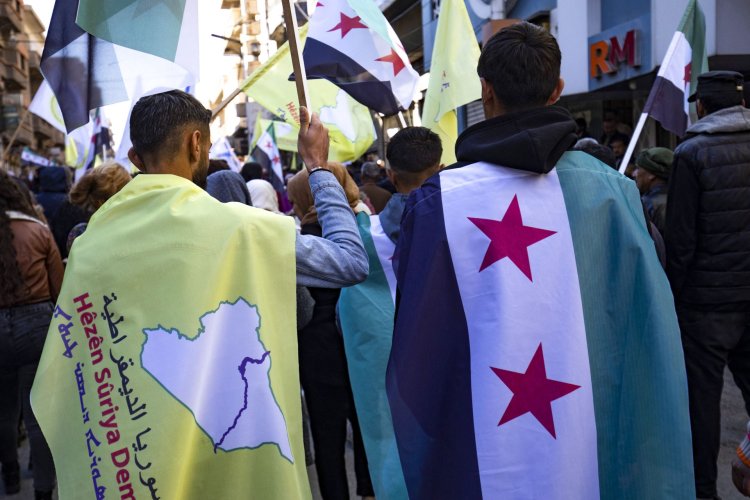
Analysis
By Preeti Khenta
In January 2026, the clashes between the Syrian Government forces and the Syrian Democratic Forces resulted in Damascus acquiring a large part of the territory previously controlled by the Democratic Autonomous Administration of North -East Syria (DAANES). When the war against ISIS was focused on Iraq in 2014, it was clear that it was going to be the end only after destroying their sanctuary in Syria. The US desperately needed someone in Syria who was willing to fight. A local multi-ethnic group in the country’s northeast – the Syrian Democratic Force (SDF)- stepped forward. At a cost of over 11,000 dead fighters and uncounted civilians, the predominantly Kurdish SDF defeated ISIS and impeded its re-emergence as a worldwide threat. However, the current administration under Trump has now backed the al-Sharaa government in its efforts to reunify the country under a central authority.
The Loss of Control
In December 2024, following the fall of Bashar al-Assad, Ahmed al-Sharaa, the leader of the Islamist militia Hay’at Tahrir al-Sham (HTS), posed a significant concern for the Kurdish-dominated Syrian Democratic Force (SDF) due to the organization’s ties to Turkey. Turkey has strongly opposed the autonomous administration in northeast Syria by the Kurdish SDF. The SDF Kurdish is primarily composed of forces from the People’s Protection Units (YPG), a militia attached to the Democratic Union Party (PYD), which is an offshoot of the Turkey-based Kurdistan Workers Party (PKK). The PKK party has long been designated as a terrorist organization, leading to the perception that the Kurdish elements within the SDF are nothing more than an extension of the PKK rather than an independent entity.
Syria’s president al-Sharaa has expressed a strong preference for maintaining the central authority and opposed the regional autonomy, which resulted in the clashes with the Druze community in the southern governorate of al-Suwayda, in July 2025. In an effort to keep the country under a central command, al-Sharaa and the SDF reached an agreement in March 2025 aimed at reintegrating the northeast region and other parts of Syria. However, al-Sharaa has lost its faith in the credibility of the negotiation process after the SDF leader Mazloum Abdi was unable to persuade his base to reach a compromise.
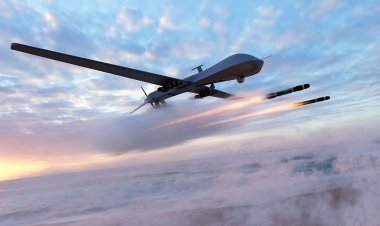
In early January 2026, the agreement had fallen apart, and small-scale exchanges of fire had taken place between the two sides. On January 5, SDF drones targeted the government police vehicles in Aleppo, exacerbating the already tense situation. Subsequently, the SDF started losing the territory and was compelled to withdraw from Aleppo on January 10. The withdrawal resulted in the loss of control over the eastern governorates of Deir Ezzor and Raqqa following its Arab units defected to the national government. SDF forces have lost 80% of the territory that they held at the start of the year. The remaining territory is now limited to the northeast cities of Qamishli and Hasaka as well as the town of Kobane, which is closer to Turkey’s border. These cities have more Kurds than any other parts of the territories that were controlled by DAANES, and PYD has controlled them for a longer period.
The Agreement
After the negotiations between the SDF and the al-Sharaa government, a comprehensive 14-point integration deal and a comprehensive agreement have been reached and are being implemented despite some violations. The SDF has committed to halting the hostilities across northeastern Syria, and the SDF brigade will be incorporated as a whole unit into the Syrian Army. Additionally, the SDF unit will be incorporated into a division affiliated with the Aleppo governorate. The Al-Sharaa government is also integrating strategic areas, including Raqqa, Deir ez-Zor and Hasakah governorate, key border crossings and oil and gas fields. Moreover, the DAANES institutions and security provisions will be transferred to the governance of Damascus.
While integrating this, the al-Sharaa government had made provisions to secure civil and educational rights for the Kurds and allowed displaced Kurds to return to their homes. A decree has been issued by the al-Sharaa government to recognize Kurdish political and cultural rights. Article 6 of the decree states: “State media and educational institutions are committed to adopting an inclusive national discourse and any discrimination or exclusion based on ethnicity or language is legally prohibited.”
However, the Syrian government has left a small territory for DAANES. Initially, there was an agreement to incorporate Kurds into the Kurdish Brigade as a unified unit. However, this demand has since been turned down. Additionally, they have also refused to incorporate Kurdish female fighters associated with YPG, despite their crucial role in defending Kurds and religious minorities against ISIS.
Loosing US Support
The US support has been waning for the SDF. The Kurdish SDF fighters, along with the US defeated the ISIS and suffered heavy casualties in the fighting. However, now the US has clearly taken sides with the al-Sharaa government in Damascus. On February 20, 2026, US President Donald Trump said that al-Sharaa, “who I essentially put there, is doing a phenomenal job. He is a rough guy; he is not a choir boy…[But Syria is] coming together well, and thus far [al-Sharaa] has been very good to the Kurds.”
The Trump administration is also pursuing policies which are weakening the SDF's leverage over the US, and they also want al-Sharaa to succeed as the leader of the unified Syria. Recently, the US have transferred thousands of alleged IS members held in SDF detention camps out of Syria and into the facilities in Iraq and the remaining ones are placed under Syrian government control. Furthermore, the last 2000 troops stationed in Syria have also withdrawn, marking the end of their decade-long military presence in Syria. In recent months, US CENTCOM has already conducted airstrikes on IS targets in Syria. The US has also encouraged the al-Sharaa government to formally join the anti-IS coalition. This development underscored the growing importance of partnering with the Syrian government at the expense of its long-standing ties with the SDF.
What's left for the Kurdish SDF
The central government is trying to penetrate the northeast region. In early February, al-Sharaa deployed a contingent of interior ministry forces to Qamishli and Hasaka as part of the strategic agreement. The economic standing of DAANES has been negatively affected by the loss of Deir Ezzor oil fields to the central government. The SDF revenues, derived from selling the oil on the black market, generated an estimated $1 billion in a year.
Although Syrian Kurds have been critical of the SDF in the past, the lack of alternative options has reportedly led many to support the SDF’s efforts since it has consolidated its presence and regrouped in its core territory. The SDF has made some political gains; they have travelled to the World Economic Forum in Davos this year, and the Prime Minister of Iraq’s Kurdistan Region, Masrour Barzani, publicly declared his support for Syria’s Kurds. In February 2026, SDF leader Mazloum Abdi was able to travel to the Munich Security Conference and met with Senior officials from the West. This is the first time they have been given such an opportunity outside of Syria, putting them on the world stage.
Given the various challenges and recent developments, the future seems increasingly uncertain. The stateless Kurds are now being granted citizenship because of the new decree issued by the government. Images circulating on social media depict the designation “Syrian Arab” in the nationality field of application forms intended for stateless Kurds and those previously deprived of citizenship. The Kurds are torn between rejecting it for fear of repeating a painful past or accepting it out of concern that refusal might jeopardise a rare chance at legal recognition.
With uncertainties looming from all directions, including the reemergence of IS, the violent clashes between the al-Sharaa government, and the SDF as well as the withdrawal of the US troops, the Kurds, who have long sought autonomy, now feel betrayed as their aspirations for self-governance seem to be systematically disregarded.
Disclaimer: This paper is the author's individual scholastic contribution and does not necessarily reflect the organization's viewpoint.