Why the Iran Operation Benefits India by Deterring Would-Be State Sponsors of Terror
 usanasfoundation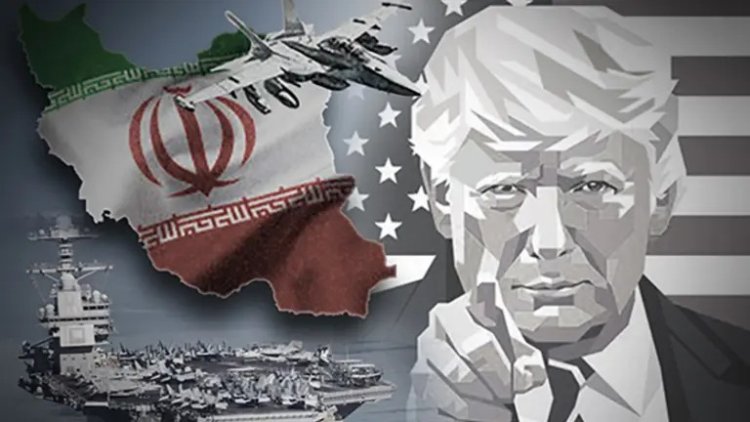
Opinion
By Sierra Knoch
The United States military dominance over Iran goes beyond guaranteeing American security. While many analysts focus on the economic effects of the Iran operation in Asia, a less talked-about consequence is the deterrence for would-be state sponsors of terror in the region. Operation Epic Fury is no isolated action. It sends a clear message: state sponsorship of terrorism carries real costs. For India, a nation that has long borne the brunt of Islamic terrorism, this operation delivers strategic dividends even if it has caused short-term economic hardships. By demonstrating U.S. resolve and weakening Iran’s network of enablers, it deters would-be state sponsors like Pakistan, Qatar, and Turkey while simultaneously constraining China’s regional assertiveness. The result? A more secure environment for India to counter terrorism and border threats without the shadow of unchecked proxy wars.
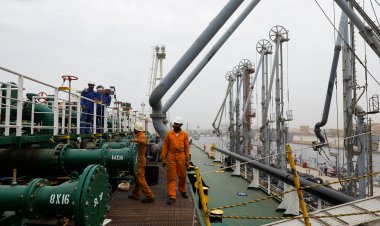
The operation’s immediate effects were economic and military. U.S. naval forces effectively disrupted Iran’s ability to threaten global energy flows through the Hormuz Strait, a chokepoint vital to Asia’s oil supply. China, heavily reliant on Iranian and Gulf crude, found itself cornered. Reports confirm Beijing began importing significant volumes of U.S. oil to supply Asian markets amid the crisis—up to 600,000 barrels daily—undermining its own strategic autonomy and exposing vulnerabilities in its energy security. This not only weakens a key adversary in India’s neighborhood but also highlights the limits of the China-Iran-Pakistan axis that has long challenged New Delhi.
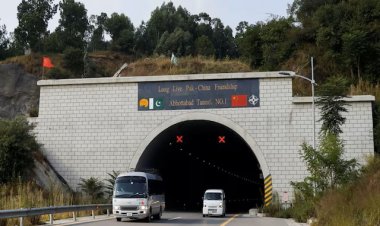
Pakistan stands out as the clearest beneficiary of deterrence. Long accused of harboring and supporting terrorist groups to advance its goals in Afghanistan and against India, Islamabad has faced repeated international rebuke. At the UN Human Rights Council, Pakistan was openly shamed as “another state sponsor of terrorism” after it condemned Israeli strikes on Hamas targets in Qatar while ignoring its own record. Pakistan’s military-intelligence establishment backs groups like the Afghan Taliban, the IRGC and the Haqqani network, driven largely by ideology and Islamic extremism modeled and encouraged by the Islamic Republic of Iran. In the past, U.S. aid cuts and diplomatic pressure brought little change because Pakistan views these proxies as vital insurance. The Iran operation changes the calculus. Iran has long leveraged the sectarian Shia card in playing off India/Pakistan relations. When the world’s superpower enforces consequences on one sponsor (Iran), it signals to Pakistan that similar behavior—whether funding attacks in Kashmir or abetting the junta’s bombing campaign in Myanmar/Burma—risks isolation, sanctions, and lost leverage. India, which has endured decades of Pakistan-backed terrorism, gains breathing room as potential sponsors weigh the price of defiance. When diplomatic consequences, public rebukes at the UN, and cutting off aid didn’t work in his first term, President Trump took a different but strategic approach to Pakistan in his second term. By unleashing military dominance over Iran while at the same time drawing Pakistan into a closer relationship with the US, he cornered Pakistan into a mediation role in the Iran conflict, rather than allowing it to act as an ally for the IRGC. While their actual role as a mediator may be limited, the symbolism is powerful. Pakistan and other would-be state sponsors of terror now must choose between an alliance with the flailing regime in Iran and going down with the mullahs or aligning with US interests.
Qatar and Turkey, two other nodes in the “bad triangle” of Middle East terrorism enablers, face parallel pressure. Both have propped up the Iranian regime for distinct reasons. Qatar, geographically vulnerable and home to a major U.S. airbase, hedges by maintaining ties to Tehran while hosting Hamas leaders and leveraging Islamist networks to counter Saudi and Egyptian influence. Its support for Iran served as a strategic card against Arab rivals, even as it destabilizes the region through indirect backing of extremism. Now, after the Iranian regime showed its true colors by launching indiscriminate attacks and missiles at civilian targets across the Gulf States, Qatar, UAE, and Saudi Arabia were united under the leadership of the US and are finally seeing that neutrality and backroom deals towards Tehran will never save them from the evil terrorist regime. They, too, must choose between the future and the past in the Middle East, with US alignment and security backing representing the future, while the defeated Islamic regime represents the past. Turkey, under President Erdogan, aligns ideologically: Erdogan’s Islamist worldview frames Iran’s theocrats as “brothers” in a civilizational clash against the West, despite Sunni-Shia divides. Ankara has maintained ties to Hamas and the Muslim Brotherhood and even tested NATO limits by diverging from alliance priorities on counter-terrorism. With Turkey threatening the NATO alliance as they move closer to state sponsorship of terrorism, egged on by the Islamic regime and shared ideology, President Trump’s actions to impose harsh consequences on Iran couldn’t come a moment too soon. The Iran operation stops Turkey in its tracks and redefines the risks for Ankara to pursue some of its more extreme ideas.
Expert analysis of the “bad triangle” underscores how removing or severely weakening the Iranian pillar can deter smaller players like Qatar and Turkey from providing material support to terrorism. A decisive blow to Tehran disrupts the ecosystem that sustains proxy networks, forcing these states to recalibrate. The U.S. Treasury’s recent letters to China, Hong Kong, and Oman—warning banks against facilitating Iranian illicit finance—extend this pressure to China as well, cutting off funding lifelines that could otherwise flow to terror proxies.
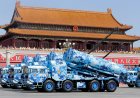
For India, the ripple effects are profound. Iran’s IRGC has long meddled in South Asia, abetting sectarian plays between India and Pakistan and even supporting junta actions in Myanmar that destabilize the broader region. A humbled Iran reduces this interference. Meanwhile, China’s economic discomfort from the Hormuz crisis limits its capacity to fuel the China-Pakistan Economic Corridor or escalate border provocations—issues India has repeatedly highlighted, including recently Beijing’s use of fake names for disputed areas. India, which has defended international waters from terrorist groups like the Houthis alone, without help from the Chinese, will see an advantage from a weakened China and the destruction of proxy groups' financing.
Critics may argue that the operation carried risks, including European reluctance to fully back U.S. efforts. Yet, NATO allies hesitated while key Arab states quietly aligned against Iranian aggression. The outcome validates the approach: a stronger deterrent posture against state sponsors ultimately protects democracies like India from the terrorism they enable.
In the end, the Iran operation is not just about containing one rogue regime—it is a masterclass in strategic signaling. By raising the costs for sponsorship of terror, it benefits India directly: fewer attacks, weaker proxies, and a more constrained China-Pakistan partnership. New Delhi should recognize this as an opportunity to deepen counter-terror cooperation with the U.S. and like-minded partners. In a world where state sponsors once operated with impunity, decisive action like this restores deterrence—and gives India the security edge it has long sought.
Disclaimer: This paper is the author's individual scholastic contribution and does not necessarily reflect the organization's viewpoint.
Sierra Knoch is an Adjunct Professor at Point Loma University.