The Fading Front: Structural Failures and the Waning Influence of the National Unity Government in Myanmar
 usanasfoundation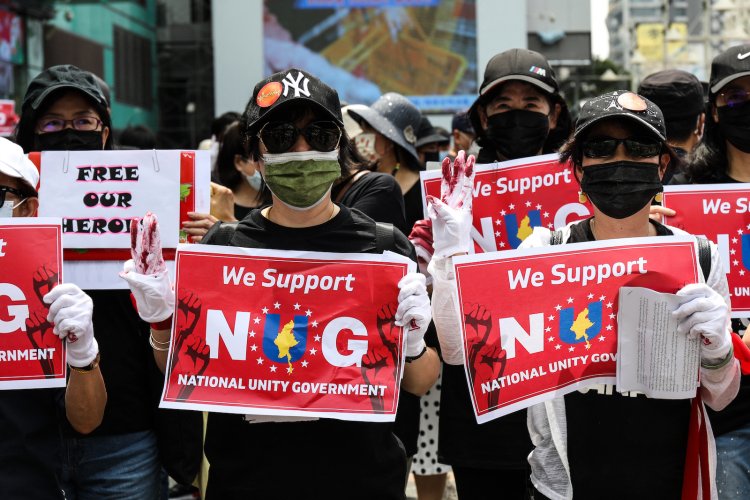
Analysis
By Lt Col Ujjual Abhishek Jha (Retd)
Introduction
With the military transfer of power on 01 February 2021, the National Unity Government (NUG) emerged as the leader of hope for a restoration of democracy in Myanmar with an aim to oust the quasi-military rule. However, five years into the conflict, the NUG is struggling to remain relevant in a growing and increasingly fragmented political and military landscape.
Background
The National Unity Government (NUG) of Myanmar is a civilian-led government-in-exile formed in April 2021 by elected MPs/ MLAs and pro-democracy supporters to oppose the State Administration Council (SAC) formed by the Myanmar Army (MA) post Military Transfer of power on 01 February 2021. The NUG was formally announced on 16 April 2021 by the Committee Representing Pyidaungsu Hluttaw (CRPH), a body of elected MPs (mostly from the National League for Democracy, NLD) who were ousted.
Aim: Formation of NUG
- To provide political leadership to the anti-MA movement, uniting the Civil Disobedience Movement (CDM), student groups, civil society and Ethnic Armed Organizations (EAOs) under a single civilian authority.
- To establish an alternative government that could claim legitimacy both within the country and internationally, challenging the SAC’s claim to power.
- To lay the foundation for a federal democracy, moving beyond the NLD’s previous focus toward a more inclusive federal union to address ethnic grievances.
- To coordinate armed resistance by creating the People’s Defence Force (PDF) and allied EAOs, to declare a “People’s War” against the MA, under the political umbrella of NUG.
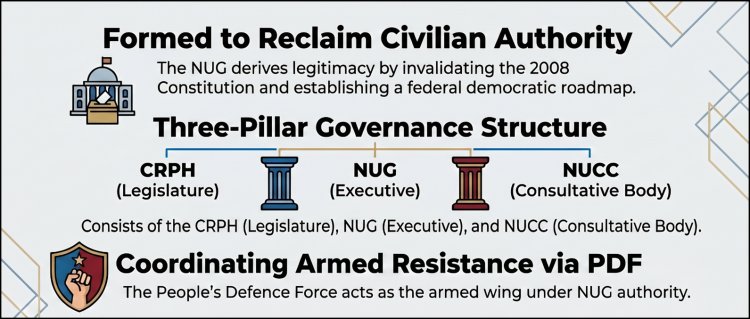
Figure 1 - Formation of NUG
Organization and Structure
The NUG is a combination of three core bodies: -
- CRPH - Acts as the interim legislature and is composed of elected MPs from the 2020 parliament, mostly NLD members. It exercises legislative and oversight functions over the NUG and the National Unity Consultative Council (NUCC).
- NUG - Functions as the executive branch, with a cabinet of ministers and deputy ministers. The cabinet is deliberately diverse, including ethnic nationalities (Karen, Kachin, Chin, Mon, etc) and women, to present its federal and inclusive vision.
- NUCC - A consultative platform that includes the luttaw (CRPH), NUG, EAOs, political parties, civil society and CDM groups, designed to be a collective decision-making body on federalism, peace and the future constitution.
People’s Defence Force (PDF)
- PDF - Formed in May 2021 to function as an armed wing of NUG to operate in coordination with EAOs and local resistance groups.
- Central Command and Coordination Committee (C3C) - A proposed military command structure intended to unify PDF and allied EAO operations under a federal army framework; however, the same could not be achieved on the ground.
Geo-Political Aspect of NUG
The USA, UK, EU, Canada and Australia had imposed sanctions on the MA-led government and had expressed support for the NUG. However, these countries/ unions did not give complete diplomatic recognition to the NUG. ASEAN did not formally recognize the NUG but acknowledged the necessity of engaging with all stakeholders, including the NUG. China engages with both the MA-led government and some EAOs at the same time, brokered ceasefires in northern Shan, but does not recognize the NUG. India and Thailand continue their ties with the MA-led government while consenting to humanitarian and limited diplomatic space for NUG representatives.
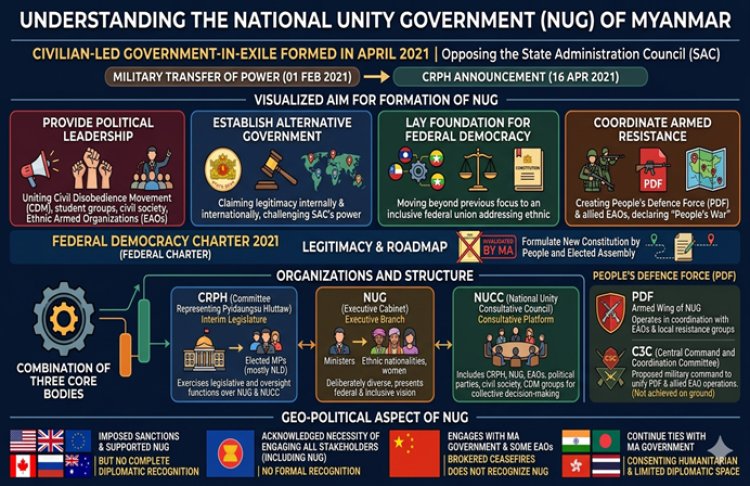
Figure 2- Overview of NUG (AI-generated image based on the above text)
NUG under the Federal Democracy Charter 2021 (Federal Charter) derives its legitimacy by invalidating the 2008 Constitution by the MA. This charter creates a roadmap for a Federal Democratic Union with an aim to formulate a new constitution by the people and their elected assembly. However, the transition from these founding principles to a functioning administrative state has been hampered by significant structural and operational barriers. An analysis of the lack of expected success of NUG is covered in the succeeding paragraphs.
Analysis: Lack of Expected NUG Success
The NUG could not achieve its core goals of ousting the MA-led government and establishing a federal democracy due to the following structural complications.
Lack of Territorial Control and Limited Administrative Capability
NUG acts as a government-in-exile without any constant territory or static capital for governance. Without territorial control and physical absence, NUG could not deliver state services. In addition, the NUG lacked the bureaucratic set-up, resources and security to build a functional state apparatus.
Inefficacy of the Core Idea of the Federal Government
The NUG government emerged as a parallel administration with the National League for Democracy (NLD) and its allies being dominant partners rather than a federal government. Although the NUG cabinet was composed of multiple ethnicities, core leadership, decision-making and legitimacy remained with the ousted NLD leaders, presenting a Bamar-dominated government-in-exile rather than a federal coalition. Prominent EAOs, such as the Arakan Army (AA), Kachin Independence Army (KIA), Ta’ang National Liberation Army (TNLA) and Myanmar National Democratic Alliance Army (MNDAA) operated independently, discarding NUG’s centralised command structure proposal. In addition, EAOs had past resentment over the exclusion of ethnic leaders and work on centralised power model. Resultantly, NUG could only emerge as one of the many stakeholders and not a central structure.
Unrealistic Planning & Narratives
NUG leaders anticipated and assured that military rule could be ousted in a shorter time frame (a month) through CDM and foreign involvement, which created a false hope amongst the people. Over-reliance on foreign intervention did not happen as expected, although the international community imposed sanctions but avoided direct military support, leading to a long war for the NUG and subsequently eroding public trust. Also, anti-MA forces are controlling 60%/ two-thirds of the country have been misleading overstatements that erode the credibility of the NUG in both the local population and internationally.
Strained Internal Dynamics
The NUG is a coalition with different visions of federalism, and disagreements exist over the idea of a negotiation or complete victory, federal structure and power‑sharing. The key NUG leaders operated from safer locations along borders or abroad, while the CDM activities or PDF fighters faced the brunt of it. This led to strained internal dynamics, with the perception of leaders being enjoying privilege and disconnected from ground fighters. This strained internal crisis led to declining morale, infighting and a loss of future path, leading to questions on the relevance of NUG.
Fighting Strategy and Military Capability
- No Effective Central Command. The NUG created the Central Command and Coordination Committee (C3C) and Articles of Federal Transitional Arrangement (AFTA) to unify PDF and EAO forces under a federal army, but these structures remained merely symbolic in nature. On the ground, most of the PDFs and EAOs operated independently, focusing on their own agendas through their own command structure and funds. The NUG declared the PDF as its military under the Ministry of defence but on the ground, many PDFs were raised, funded and commanded locally, not by the NUG.
- EAOs Maintaining Operational Independence – Key EAOs such as KIA, AA, Karen National Union (KNU), TNLA and MNDAA maintained their own command structure and did not agree to NUG’s idea of a federal Army, which is seen as an NLD extension and Bamar (majority Myanmar population) domination, making NUG Federal Army mere symbolic in nature. EAOs did not want NUG to interfere in their territory or operations except for tactical coalitions with local PDFs and operated independently.
- EAOs: Wa Self-Administered Division and Northern & Southern Shan State Maintaining Neutrality – United Wa State Army (UWSA) and Shan State Armies (North & South), three of the stronger EAOs choose to remain neutral and maintain working relations with the MA, thereby indirectly helping the MA and not helping the cause of the MA.
- Limited Capability of the PDFs - The PDFs are largely locally organised forces with limited training effective for guerrilla tactics and cannot hold ground like regular armies or fight effective conventional battles with trained regular MA. In addition, lack of proper training and ineffective central command & control led to poor discipline force spoiling the legitimacy of the NUG and alienation of locals. PDFs also got involved in imposing taxes and, at times, targeting locals to settle personal scores. The NUG did not respond to nefarious acts of PDFs, which further spoiled their authority.
- NUG Focus on Urban Centres – The strategy of NUG emphasised urban areas at high-profile locations to create a favourable narrative displaying their reach to main communication centres. In contrast, EAOs focused on rural and border areas, further leading to isolating the NUG battles. The unplanned strategy and attempts to garner support by targeting urban centres did not impact MA much and led to further downgrading of NUG’s combat power.
Limited Diplomatic Success
The over-reliance of NUG international pressure and recognition largely could not succeed. Western countries imposed sanctions on the MA-led government but did not overtly provide support in terms of military hardware. None of the country formally recognizes the NUG as Myanmar’s government, which has limited funding from international institutions. and key EAOs, sidelining the NUG. While NUG did not receive the expected diplomatic success, MA continued to receive military and economic support from Russia, China and a few ASEAN countries.
Alleged Financial Misappropriation
The NUG fund-raising depended on (NUG‑Pay), which was inadequate for large-scale war and governance. The spending of funds is opaque in nature, with a concentration of funds in a few leaders igniting allegations of misappropriation of funds. In some parts of Sagaing Region (NUG-aligned areas), NUG administrators were reportedly mismanaging revenue, leading to discontentment amongst the supportive locals and also eroding the trust of donors.
MA Resilience - The MA overcame the NUG & EAO resistance through its policies of repression, conscription and sustained external military support. The resilience of MA led to national elections in December 2025-Jaunuary 2026 created a layer of legitimacy and divided the opposition by offering limited political space to some ethnic and business elites.
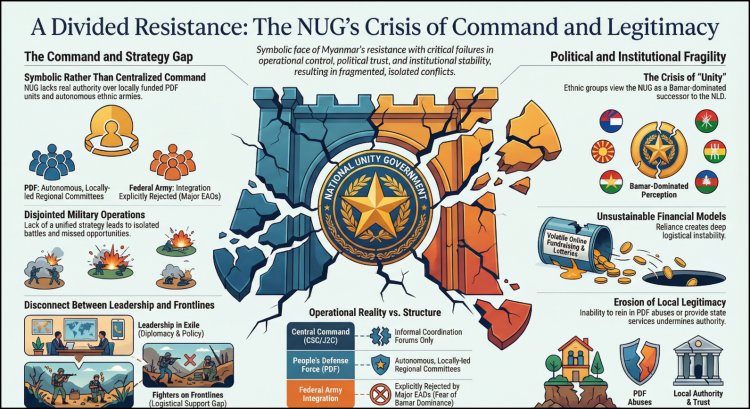
Figure 3: Overview of NUG's Limited Success
In the present scenario (as of March 2026), the NUG appears to have lost legitimacy and is unable to carry out governance. The anti-MA resistance has fragmented and led to the formation of multiple armed and political groupings, lacking any point of convergence or center of gravity. For the MA, the concerning forces presently are KIA, AA, and KNU, with much resistance from NUG/PDFs except in limited areas along the Indo-Myanmar and Myanmar-Thai borders. The NUG appears to be more of a symbolic or diplomatic actor rather than a government with authority.
Conclusion
NUG presently stands at a critical crossroads, which is not failed but under severe duress, losing political momentum and failing to achieve its core objectives of ousting the MA-led government and establishing a federal democracy. This waning can be attributed to multiple aspects, including internal conflict, strategic miscalculations, limited diplomatic success, organizational & governance constraints, and the inability to unify the anti-MA forces for concentrated resistance. In its present state, the NUG is likely to be nominal and one of many stakeholders rather than the center of the command structure, unless the NUG can bridge the gap between its Bamar-centric leadership and the diverse aspirations of the EAOs.
Disclaimer: This paper is the author's individual scholastic contribution and does not necessarily reflect the organization's viewpoint.
Lt Col Ujjual Abhishek Jha (Retd) is an Intelligence veteran and Geopolitical Risk Analyst with over two decades of experience in Military Intelligence and National Security operations across sensitive theatres of the North East, Punjab and Gujarat borders.