Afghanistan’s Shadowy Transnational Threat: The Haqqani Network of Global Jihadism and Terror Financing
 usanasfoundation
Analysis/ Forecast
By: N Khan
This analysis draws on publicly available social media material produced by Haqqani-affiliated channels and unstructured discussions with individuals possessing direct familiarity with areas historically associated with the Haqqani Network, besides extensive secondary research. The paper finds that the Network—that arose with Pakistan’s theological and military support—continues to be a greatly underappreciated international security threat by virtue of its ideology. This doctrine has birthed its formidable jihadist and terror-financing operational arms and thus helped the group to evolve institutionally into a transnational actor. The Network’s intentional avoidance of the spotlight ensures the receipt of little academic attention and policy scrutiny, despite occupying Afghan executive power and being at the nexus of the international underworld under Sirajuddin’s increasingly criminal leadership. This cycle of deflecting attention perpetuates its lethal operations that are even further scalable in the technological age, strengthening not only itself but also its allied jihadist and criminal groups. This further translates into the escalation of security challenges internationally, one example of which is the October 7 attacks on Israel in 2023—an empirical indicator demonstrating the Network’s active
logistical involvement and ideological alignment with dangerous external proxy players such as Hamas. Thus, the global threat parameters posed by a militant group that now possesses state-level immunity, such as the Haqqanis, need to be re-evaluated on a policy level.
Introduction
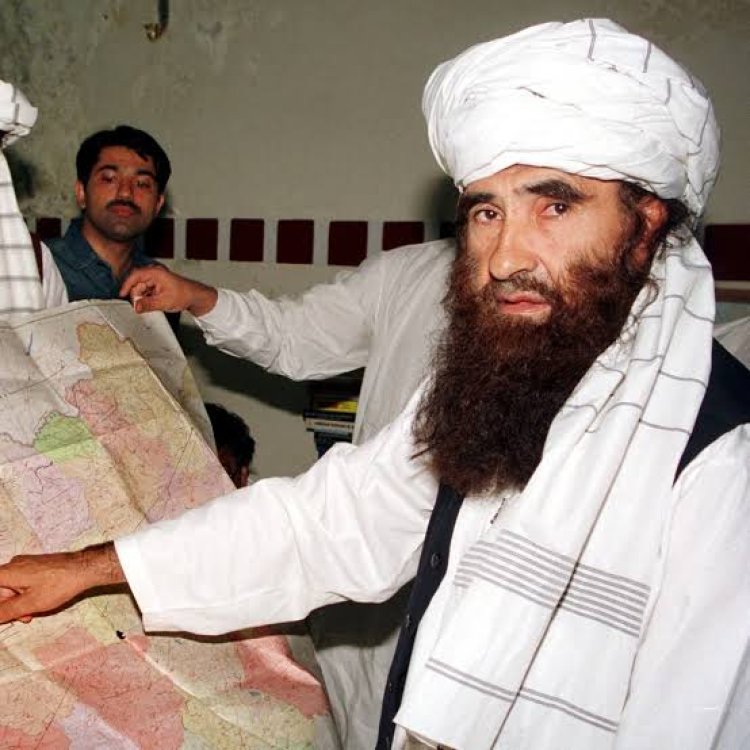
The Haqqani Network (HN), which operates as an autonomous subset of the Afghan Taliban, is arguably one of the world’s deadliest insurgent-terrorist-criminal organizations. This powerful hydra-headed entity has not only survived decades of war in Afghanistan but also proven to be exceptionally resilient both on and off the battlefield vis-à-vis international forces that were much more advanced overall. Its historically forged transnational connections and licit-illicit business empire—that both contribute to its operational and financial independence—distinguish it from other terrorist groups. Since the Haqqanis’ real occupation
is waging/facilitating jihadist violence, its ostensibly licit businesses, like the illicit trades, technically count as “organized crime.” This is because these “legal businesses” are leveraged for money laundering, and the funds directly generated by them are diverted toward terrorist financing.
Conspicuously, however, as significant as the HN stands in the area of international security, it remains significantly under-researched as a criminal-terrorist enterprise presenting an even greater global security risk now that it holds executive power in Afghanistan. Instead of global scrutiny increasing in such circumstances, the international community has allowed the Haqqanis greater freedom, as in the United States (US) Department of State removing a $10 million reward offer for leader Sirajuddin Haqqani’s arrest in 2025, although he remains a Specially Designated Global Terrorist Organisation and the Network continues to be listed as a Foreign Terrorist Organisation. The United Nations also permitted him to travel to the United Arab Emirates (UAE) and Saudi Arabia on multiple occasions in 2024 and 2025.
Currently, Sirajuddin is wanted only for “questioning” by the Federal Bureau of Investigation in connection to certain attacks. As he is also permanently appointed Afghanistan’s interior minister, this has facilitated over 20 terrorist groups to be active inside the country, a figure provided by the Afghan National Resistance Front leader, Ahmad Massoud.
The paper argues that the Network, despite being considered the world’s most powerful jihadist outfit, carefully cultivates a low profile that obscures and helps perpetuate its operations, which not only strengthen the group itself but also its allied criminal-terrorist organizations. As the HN serves as a significant node within the international underworld while enjoying Afghan executive authority, its lethal operations appear to be scalable in the digital era should the opportunity arise.
Download the PDF to access the detailed paper.
Disclaimer: This paper is the author's individual scholastic contribution and does not necessarily reflect the organization's viewpoint.