Reimagining India's Place in the World: Twelve Years of Modi-Era Diplomacy
 usanasfoundation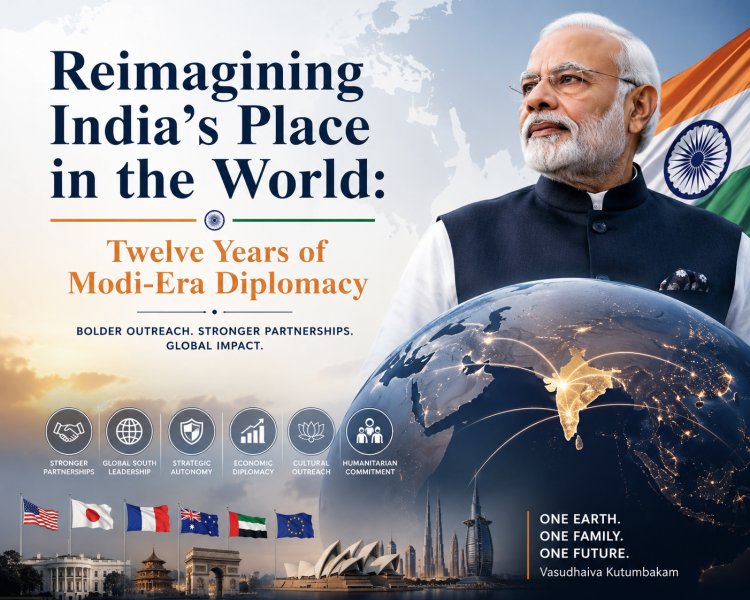
Factsheet
Compiled by: Mahima Katiyar, Research Intern
Shiwani Yadav, Research Intern
Edited by: Preeti Khenta, Associate Fellow
Prime Minister Narendra Modi has distinguished himself as the longest-serving democratically elected Prime Minister of India, having completed 12 years in office. India, under his leadership, has achieved significant milestones in foreign policy, through proactive diplomacy, strategic partnerships, and enhanced global engagement. India has strengthened its position as a leading voice of the Global South while deepening ties with major powers, including the United States, France, Japan, Australia, and key partners in West Asia. The government has also prioritized neighborhood diplomacy through the "Neighbourhood First" policy and enhanced connectivity projects across South Asia. Landmark achievements include the International Solar Alliance, growing defense partnerships, and successful evacuation and humanitarian missions worldwide. Through a combination of strategic autonomy, economic diplomacy, and cultural outreach, India has emerged as a more confident, influential, and globally respected power. Here is a detailed overview of India’s foreign policy in the Modi era.
India-Africa Relations (2014-2026)
OVERARCHING POLICY FRAMEWORK
- On 25 July 2018, while addressing the Parliament in Kampala, PM Modi laid out ten principles that would guide India’s engagement with Africa. The first two principles were particularly significant - “Africa will be at the top of our priorities,” Modi stressed. He also made clear that the development partnership “will be guided by your priorities.”
- In March 2025, India upgraded the doctrine of SAGAR to MAHASAGAR (Mutual and Holistic Advancement for Security and Growth Across Regions), announced during Modi’s visit to Mauritius. While SAGAR focused on the immediate Indian Ocean neighbourhood, MAHASAGAR extends the vision to the wider Global South, particularly Africa, covering trade, capacity building, and mutual security.
- India opened 18 new Embassies and High Commissions in Africa during 2018–2022, significantly expanding its diplomatic coverage.
TRADE & ECONOMIC RELATIONS
- India-Africa bilateral trade grew from approximately USD 4.45 billion in 2000–01 to USD 103 billion in FY 2025, a nearly twenty-fold increase.
- India-Africa trade reached USD 103 billion in FY 2024–25, representing 17% year-on-year growth, with Indian exports to Africa amounting to USD 45 billion and imports from Africa totalling USD 58 billion.
- India is among the top 5 investors in Africa, with investments of about USD 80 billion.
- Leading Indian companies, including Tata, Adani, Reliance, Mahindra, Bharti Airtel, Varun Beverages, and Jindal, have established significant presence in sectors including agriculture, mining, hospitality, telecom, IT, manufacturing, infrastructure, and energy.
- India’s Duty-Free Tariff Preference (DFTP) Scheme provides duty-free access on 98.2% of India’s tariff lines for Least Developed Countries, benefitting 33 African countries.
- Nigeria remains the largest trading partner of India in Africa.
- The Government of India has extended 190 Lines of Credit, aggregating around USD 10 billion, to partner countries in Africa. 220 projects have been completed. In addition, India has committed over USD 700 million for grant projects in many African nations.
KEY BILATERAL AGREEMENTS & MoUs
- Eight MoUs were signed between India and Rwanda. Two Lines of Credit worth USD 100 million each were extended, first to develop an industrial park and the Kigali Special Economic Zone (SEZ), and second for the development of agricultural infrastructure.
- Ties between India and Rwanda were elevated to a Strategic Partnership in January 2017.
.
- In September 2023, during India’s G20 Presidency, Nigerian President Tinubu announced that Nigeria had approved the finalization of a USD 1 billion defence deal with India, expressing interest in purchasing the Indian Light Combat Aircraft (LCA) Tejas, drones, and armoured personnel carriers.
DEFENCE & SECURITY COOPERATION
- Since February 2020, India has been organizing the India-Africa Defence Ministers’ Conference (IADMC) on the sidelines of DefExpo.
- AFINDEX (Africa-India Field Training Exercise): Joint military exercises between India and multiple African nations, with AFINDEX 2023 being a major edition.
- In April 2025, the Indian Navy and the Tanzania People’s Defence Force co-hosted AIKEYME (Africa-India Key Maritime Engagement), strengthening interoperability in anti-piracy, humanitarian assistance, and Indian Ocean security.
- India has set a goal of USD 5 billion in defence exports by 2025, with Africa expected to account for a significant portion.
- India remains a major troop contributor to UN peacekeeping missions in Africa, particularly in Congo, Sudan, and South Sudan.
COVID-19 'VACCINE MAITRI’ & HEALTH DIPLOMACY
- India donated over 24.7 million doses of COVID vaccines to 42 countries in Africa as of February 2021 and donated 150 metric tons of medical aid to 25 African countries.
- India provided medical assistance to 35 African nations on a grant basis during COVID-19, providing COVID medicines worth approximately USD 1.8 million.
- Dispatch of medicines and medical supplies as a gift was arranged to 31 African countries in the initial COVID period, even as India itself battled the pandemic.
CAPACITY BUILDING, EDUCATION & TECHNOLOGY
- ITEC (Indian Technical and Economic Cooperation): India’s flagship capacity-building program offering training, scholarships, and short-term courses to African officials and students, covering over 300 courses annually in fields including renewable energy, public administration, and entrepreneurship.
- e-VidyaBharati and e-ArogyaBharati (eVBAB) Network Project: India’s flagship project in tele-education and telemedicine for Africa, connecting Indian academic and healthcare institutions with African counterparts. 17 African countries had signed agreements under the eVBAB project.
- Digital Public Infrastructure (DPI) Outreach: African countries are exploring India’s UPI, Aadhaar-like identity solutions, and India Stack to modernize payments, identity verification, and public service delivery.
MULTILATERAL & GLOBAL GOVERNANCE WINS
- The African Union became a permanent member of the G20 on September 9, 2023. PM Modi invited the Head of the African Union, Azali Assoumani, to take his seat as a permanent member as the first session of the G20 Summit got underway in New Delhi. India had proposed the AU’s inclusion with the spirit of “Sabka Saath Sabka Vikas.”
- 39 African countries have joined the International Solar Alliance (ISA), 9 have joined the Coalition for Disaster Resilient Infrastructure (CDRI), 11 have joined the Global Bio-Fuel Alliance (GBA), and 10 have joined the International Big Cat Alliance (IBCA).
India-China Relations (2014-2026)
FOUNDATIONAL PHASE: ENGAGEMENT, COMPETITION AND BORDER MANAGEMENT
- Closer Developmental Partnership (September 2014): Formulated during President Xi Jinping’s state visit to India. The core principle was that differences over the boundary question should not affect the overall development of bilateral relations, with their economic growth processes treated as mutually reinforcing.
- The "Wuhan Spirit" (April 2018): Following the tense 73-day Doklam standoff in 2017, the 1st Informal Summit was held in Wuhan, China. The two leaders issued strategic guidance to their respective militaries to strengthen communication and build trust along the Line of Actual Control (LAC).
- The "Chennai Connect" (October 2019): The 2nd Informal Summit held in Mamallapuram (Chennai), India. It focused on civilizational ties, managing the bilateral trade deficit, and establishing a High-Level Economic and Trade Dialogue mechanism.
- The Reset Framework (2024–2025): Following a multi-year freeze post-Galwan (2020), a major diplomatic and border agreement was formalized between late 2024 and early 2025 to govern patrolled limits, restore pre-2020 patrolling rights, and systematically de-escalate specific friction zones.
TRADE, ECONOMIC, & CONNECTIVITY AGREEMENTS
- Economic ties during this era expanded dramatically in volume but faced heavy regulatory clamping by India after 2020 to minimize structural dependence on Chinese supply chains.
- Withdrawal from RCEP (November 2019): India formally announced its withdrawal from the Regional Comprehensive Economic Partnership (RCEP) negotiations in Bangkok. A primary driver was the threat of unchecked, duty-free Chinese goods flooding the Indian domestic market.
- Bilateral Trade Paradox (2024–2025): Despite strict geoeconomic screening and the Production Linked Incentive (PLI) schemes intended to decouple industries, India's trade deficit with China hit an all-time high of nearly $99.2 billion by the end of the 2024–25 fiscal year, driven by heavy Indian reliance on Chinese active pharmaceutical ingredients (APIs), electronics components, and solar equipment.
SECURITY, BORDER MANAGEMENT, & DEFENCE AGREEMENTS
- Hand-in-Hand Military Exercises: Joint counter-terrorism military exercises were conducted in 2014 (Pune), 2015 (Kunming), 2018 (Chengdu), and 2019 (Meghalaya). These exercises were suspended indefinitely following 2020.
- Buffer Zones and Patrolling Moratoriums (2020–2023): Following the Galwan Valley clash in June 2020, temporary local arrangements were negotiated to implement phased disengagement. This involved creating temporary "no-patrolling buffer zones" at specific friction points, including Galwan Valley, Pangong Tso, Gogra-Hot Springs, and PP15.
- The Landmark Border Patrolling Agreement (October 2024): A major diplomatic and military breakthrough achieved just before the BRICS Kazan Summit. This formal pact cleared the logjam in the remaining legacy friction points in the Depsang Plains and Demchok. It restored the patrolling rights of both militaries to the alignment that existed before April 2020, putting an end to the four-year military standoff.
CIVILIZATIONAL, SUB-NATIONAL, & PEOPLE-TO-PEOPLE AGREEMENTS
- Kailash Mansarovar Yatra Additional Route (2014): An MoU was executed to open an additional, safer vehicular route for Indian pilgrims traveling to Tibet via the Nathu La Pass in Sikkim, augmenting the existing arduous trek through Lipulekh Pass.
MULTILATERAL & REGIONAL COMPACTS
- AIIB Membership (2016): India formally joined the China-led Asian Infrastructure Investment Bank (AIIB) as a founding member. India maintained its position as the bank's second-largest shareholder and its largest borrower for infrastructure funding throughout the 2014–2026 window.
- Full SCO Membership (June 2017): India was formally admitted as a full permanent member of the Shanghai Cooperation Organization (SCO) at the Astana Summit, co-managed under Chinese and Russian leadership.
- The BRICS Expansion (2024): Working alongside China and other core members, India ratified the expansion of the BRICS grouping to include new permanent members (Egypt, Ethiopia, Iran, and the UAE), reshaping the platform's role within Global South geopolitics.
India- East Asia Relations (2014-2026)
FOUNDATIONAL POLICY SHIFT: LOOK EAST → ACT EAST
- In November 2014, PM Modi announced the Act East Policy (AEP) at the 12th ASEAN-India Summit in Nay Pyi Taw, Myanmar, a decisive transformation from the earlier “Look East Policy” (1991), signalling a shift from aspirational intent to concrete action.
INDIA-ASEAN (BLOC-LEVEL RELATIONS)
- 2014: AEP announced at the 12th ASEAN-India Summit; India announced a ₹500 crore Project Development Fund for manufacturing hubs in the CLMV (Cambodia, Laos, Myanmar, Vietnam) countries.
- 2015: PM Modi announced a $1 billion Line of Credit for ASEAN connectivity projects at the 13th ASEAN-India Summit.
- 2015 (July): ASEAN-India Trade in Services Agreement and Investment Agreement entered into force, completing the ASEAN-India FTA architecture alongside the Trade in Goods Agreement (in force since 2010).
- 2022: ASEAN-India relationship elevated to a Comprehensive Strategic Partnership (CSP), the highest level of engagement.
- October 2024 (19th East Asia Summit, Vientiane, Lao PDR): PM Modi declared that ASEAN-India trade had nearly doubled to over $130 billion in ten years. A regular mechanism for ASEAN-India Cyber Policy Dialogue was announced.
- ASEAN is India’s 4th largest trading partner; bilateral trade grew from ~$65 billion (2014) to over $130 billion (2024).
- India gifted INS Kirpan (missile corvette) to Vietnam in 2022, the first-ever transfer of a military vessel by India to another country.
INDIA-JAPAN
- September 2014 (Modi’s visit to Japan): Bilateral ties upgraded to Special Strategic and Global Partnership; Japan announced ¥3.5 trillion ($35 billion) investment over 5 years; Tokyo Declaration adopted.
- 2015 (December): Landmark Civil Nuclear Cooperation Agreement announced after six years of negotiations. It entered into force on July 20, 2017, enabling US firms GE and Westinghouse (with Japanese partners Hitachi and Toshiba) to participate in India’s nuclear programme.
- 2018: The Implementing Arrangement for Deeper Cooperation between the Indian Navy and the Japan Maritime Self-Defense Force (JMSDF) was signed.
- Malabar Naval Exercise: Japan became a permanent member of the Malabar Exercise (alongside India and the US) from 2015 onwards, a key trilateral maritime security framework.
- August 2025 (15th India-Japan Annual Summit, Tokyo): PM Modi and PM Ishiba announced Japan’s target to invest ¥10 trillion ($67 billion) in private investment into India over the next decade.
- Mumbai-Ahmedabad High Speed Rail (MAHSR): Ongoing flagship project; JICA has disbursed multiple tranches of ODA loans, including a ¥100,000 million (₹6,000 crore) Tranche 3. Faces delays due to land acquisition.
INDIA-SOUTH KOREA (ROK)
- May 2015 (Modi’s visit to Seoul): Bilateral relations elevated to a Special Strategic Partnership; seven agreements signed covering economic issues; South Korea committed $10 billion investment in India’s infrastructure. Modi engaged Hyundai, Samsung, LG, and other Korean conglomerates to boost investment under Make in India.
- PM Modi announced bilateral trade target to increase from $27 billion to $50 billion by 2030; proposed a Korean Industrial Township in India; sectors of cooperation framed as “chips to ships, talent to technology, environment to energy.”
INDIA-VIETNAM
- 2016: India-Vietnam relations upgraded to Comprehensive Strategic Partnership (CSP) (from Strategic Partnership of 2007).
- Bilateral trade target set at $25 billion by 2030. Vietnam officially joined India’s Indo-Pacific Oceans Initiative (IPOI). 13 agreements signed covering digital payments, rare earth minerals, pharmaceuticals, education, banking, and culture.
- Operation Sadbhav (September 2024): Following devastation by Typhoon Yagi, India delivered 35 tonnes of emergency relief supplies to Vietnam under India’s First Responder doctrine.
INDIA-PHILIPPINES
- BrahMos missile deal: The Philippines agreed to purchase BrahMos supersonic cruise missiles from India, a landmark defence export.
- 14 MoUs signed across various sectors; Plan of Action for 2025–2029 adopted to guide cooperation under the elevated Strategic Partnership. The Philippines is India’s Country Coordinator for ASEAN (till July 2027) and held the ASEAN Chair in 2026.
INDIA-SINGAPORE
- September 2024 (Modi’s visit to Singapore): First visit in nearly six years. Modi visited the AEM semiconductor facility signalling India’s interest in semiconductor supply chains.
INDIA-MALAYSIA
- September 2019 (Diplomatic friction): India-Malaysia ties were strained when Malaysian PM Mahathir Mohammad spoke at the UNGA criticising India’s actions in Jammu & Kashmir post-revocation of Article 370. India responded by reducing palm oil imports Malaysia is a major palm oil exporter to India.
- 11 agreements and MoUs signed covering defence cooperation, semiconductors, digital technologies, health, and energy. A framework agreement on semiconductor collaboration was a major highlight.
- PM Modi described the India-Malaysia partnership as “IMPACT” India-Malaysia Partnership for Advancing Collective Transformation. Malaysia is India’s 3rd largest trading partner in ASEAN, with bilateral trade of ~$20 billion.
- India and Malaysia co-chair the Counter-Terrorism Working Group under ADMM-Plus for 2024–2027.
INDIA-MYANMAR
- Myanmar is India’s only ASEAN neighbour (sharing 1,643 km border) and a critical land bridge for the Act East Policy connectivity to Southeast Asia.
- November 2014: PM Modi visited Myanmar; discussions on India-Myanmar-Thailand Trilateral Highway, Kaladan Multimodal Project, direct air links, oil and gas cooperation.
- July 2019: India and Myanmar signed a landmark Defence Cooperation Agreement during Senior General Min Aung Hlaing’s visit to India. Regular bilateral exercises: IMBEX (Army) and IMNEX (Navy).
- India was a signatory witness to Myanmar’s Nationwide Ceasefire Agreement ceremonies, reflecting engagement with Myanmar’s peace process.
- February 2021: Myanmar military coup, India faced a dilemma: maintaining pragmatic engagement with the junta (State Administration Council/SAC) while managing refugee inflows and border instability in NER states (particularly Mizoram, Manipur).
- India’s NER states, Mizoram, Manipur, Nagaland, saw refugee inflows from Myanmar post-coup, complicating border management. India faced tensions between humanitarian concerns and strategic infrastructure interests.
- Ongoing internal conflict in Myanmar (Chin, Rakhine states) significantly stalled the Kaladan Multi-Modal Transit Transport Project (connecting Sittwe port in Rakhine to Mizoram via inland waterways and road) and the India-Myanmar-Thailand Trilateral Highway, both flagship connectivity initiatives of the Act East Policy. As of 2026, these remain incomplete.
- Rupee-Kyat settlement mechanism operationalised in May 2024 to facilitate bilateral trade, bypassing dependence on third-party currencies.
- May–June 2026 (President Min Aung Hlaing’s first Official Visit to India choosing India over China for his first foreign visit as President): Joint Statement issued; both sides stressed completion of Kaladan Project and IMT Trilateral Highway; ICCR scholarships for Myanmar students to be enhanced from 36 to 100 from 2026; discussions on critical minerals, border security, energy, mining, and pharmaceuticals. Modi framed Myanmar as central to Neighbourhood First, Act East, and MAHASAGAR (Mutual and Holistic Advancement for Security and Growth Across Regions) policies.
- Security complication (June 2026): Even as Modi-Min Aung Hlaing talks were underway, India and Myanmar security forces exchanged artillery fire along the border, underscoring the volatile ground reality despite diplomatic engagement. (The Diplomat)
INDIA-INDONESIA
- Indonesia is India’s 2nd largest trading partner within ASEAN (after Singapore) under the Modi years.
- India and Indonesia share the India-Indonesia Coordinated Patrol (IND-INDO CORPAT), a regular bilateral naval exercise.
- Indonesia is a key partner under India’s Indo-Pacific Oceans Initiative (IPOI), which India launched in 2019.
INDIA-THAILAND & BIMSTEC
- BIMSTEC (Bay of Bengal Initiative for Multi-Sectoral Technical and Economic Cooperation): India has been an active driver of BIMSTEC revival under Act East Policy. BIMSTEC connects South and Southeast Asia (India, Bangladesh, Bhutan, Nepal, Sri Lanka, Myanmar, Thailand). BIMSTEC Charter adopted in 2022.
- India-Thailand bilateral trade has grown steadily; both countries connected via the IMT Trilateral Highway project.
INDIA’S INDO-PACIFIC ARCHITECTURE (East Asia Dimension)
- Indo-Pacific Oceans Initiative (IPOI): Launched by PM Modi at the East Asia Summit in November 2019. A non-treaty, open platform for Indo-Pacific cooperation on maritime security, marine ecology, maritime resources, capacity building, and resilience. Vietnam joined IPOI in May 2026.
- Quad (Quadrilateral Security Dialogue): India, US, Japan, Australia. Revived at the senior officials’ level in 2017; elevated to the Leaders’ Summit in 2021 under the Biden administration. PM Modi attended Quad Leaders’ Summits in Washington (2021), Tokyo (2022), Hiroshima (2023), Wilmington (2024). Quad covers vaccine delivery, critical technology, infrastructure, maritime domain awareness, and climate.
- ASEAN Outlook on the Indo-Pacific (AOIP): India has consistently endorsed ASEAN Centrality and the AOIP as complementary to its IPOI throughout the Modi years.
- Indo-Pacific Economic Framework for Prosperity (IPEF): India joined IPEF (launched by the US in May 2022), covering fair economy, resilient economy, and clean energy, but India has not joined the trade pillar of IPEF.
- India-South Korea: Defence agreement (2019); cooperation in naval shipbuilding deepened in the 2026 Joint Strategic Vision.
- India provided defence-related Lines of Credit to multiple ASEAN partners, including Vietnam ($500 million, $100 million for guard boats), for security capacity building.
KEY ISSUES & FRICTIONS UNDER MODI YEARS
- India-ASEAN Trade Deficit: Widened from ~$5B (2010–11) to ~$43.57B (2022–23); India demanded AITIGA review from 2019 onwards; review ongoing as of 2026.
- RCEP Non-Membership: India’s opt-out in 2019 left it outside the world’s largest FTA; consequences include partial exclusion from ASEAN-centred supply chain integration.
- Myanmar Coup (2021): India’s strategic dilemma, engaging the junta vs. democratic values; refugee inflows; Kaladan and IMT projects stalled; India-Myanmar border security incidents.
- India-Malaysia Palm Oil Dispute (2019–2020): Following PM Mahathir’s UNGA remarks on Kashmir, India restricted Malaysian palm oil imports; relations were restored after Mahathir’s exit.
- China Factor Across East Asia: China’s BRI, CMEC (China-Myanmar Economic Corridor), assertiveness in South China Sea, a consistent shadow over India’s Act East engagement. India’s partnerships with Vietnam, the Philippines, Japan, and South Korea are explicitly framed in the context of balancing Chinese influence.
- Chinese Goods Transhipment via ASEAN: India’s concern that ASEAN nations serve as transhipment routes for Chinese goods entering India duty-free is central to AITIGA review.
- IPEF Trade Pillar Abstention: India opted out of IPEF’s trade pillar, limiting its full integration into the US-led Indo-Pacific economic framework.
- IMT Trilateral Highway delays: Ongoing security situation in Myanmar’s Chin and Rakhine states has prevented completion of this flagship Act East connectivity project, a significant gap in India’s land-connectivity vision.
India-Europe Relations (2014-2026)
INDIA–FRANCE RELATIONS
- Inter-Governmental Agreement for Rafale (September 2016): A multi-billion Euro deal for 36 fly-away Rafale fighter jets for the Indian Air Force.
- Naval Fleet Expansion (2023): Preliminary contract signed for 26 Rafale-Marine fighter jets for the INS Vikrant and 3 additional Scorpène-class diesel-electric submarines to be built entirely under technology transfer at Mazagon Dock Shipbuilders (MDL).
- Warship Propulsion & Co-development (2024–2026): Pacts signed between Safran and India’s DRDO/HAL for the joint design, development, and certification of high-thrust engines for India’s Advanced Medium Combat Aircraft (AMCA) and heavy-lift helicopters.
- UPI Integration (January 2024): NPCI International and Lyra Collect operationalized India’s Unified Payments Interface (UPI) system at the Eiffel Tower, subsequently expanding to Galeries Lafayette (July 2024) and retail hubs across Europe by 2025.
- TRISHNA Satellite Mission (2025): ISRO and France’s CNES finalized and prepared the launch framework for the joint TRISHNA satellite to track precise ecosystem stress, climate change, and water use.
- Deep Sea Training Pact (2025): Indian oceanographers completed extreme deep-sea training onboard the French vessel Nautile, directly integrating French tech into India’s 'Samudrayaan' Deep Ocean Mission.
INDIA–GERMANY RELATIONS
● Germany represents India's primary engine for technological modernizations, vocational training frameworks, and sustainable infrastructure funding.
● Overarching Framework (Inter-Governmental Consultations - IGC): The relationship is managed via the biannual IGC. The 7th IGC (October 2024) in New Delhi led to Germany releasing its milestone "Focus on India" strategy paper, prioritizing India as Germany’s key structural economic and security partner in Asia.
● Green and Sustainable Development Partnership (GSDP) (May 2022): Signed during the 6th IGC in Berlin. Germany committed €10 billion in concessional loans and developmental assistance until 2030 to construct green energy corridors, optimize green hydrogen supply chains, and finance smart city infrastructure in India.
● Green Hydrogen Task Force (2022–2024): A bilateral enforcement agreement establishing a virtual Indo-German Green Hydrogen Task Force to set shared international standards for hydrogen production and transport.
● Submarine Procurement & Joint Exercises: Germany transitioned its policy from strict arms export limits to deep collaboration, bidding for India’s Project-75I advanced conventional submarine program. ThyssenKrupp Marine Systems signed an MoU with MDL to co-bid.
INDIA–UNITED KINGDOM (UK) RELATIONS
● Overarching Framework (Comprehensive Strategic Partnership & Vision 2035): Elevated to a Comprehensive Strategic Partnership in 2021 via the 2030 Roadmap. Following the 2024 UK general election, the Labour government under PM Keir Starmer upgraded the long-term vision by signing Vision 2035 in London in July 2025.
● The Comprehensive Economic and Trade Agreement (CETA) (Signed July 2025 / Operational early 2026): After three years of intensive negotiations across 26 complex chapters, India and the UK signed this free trade agreement.
● CETA provides zero-duty access to 99% of Indian exports by value entering the UK market, heavily boosting Indian textiles, leather goods, footwear, and marine products.
● Electric Warship Propulsion Pact (November 2024): Signed in Portsmouth, the UK and India entered a formal agreement to co-develop and install advanced integrated electric propulsion systems for future Indian Navy warships.
INDIA–ITALY RELATIONS
● Overarching Framework (Strategic Partnership for Energy Transition & Indo-Pacific): Upgraded to a Strategic Partnership in 2023. This was followed by the Italy-India Business Forum in December 2025 in Mumbai, led by Italian Deputy PM Antonio Tajani to concrete manufacturing relocations.
● IMEC Alignment (September 2023): Italy signed as a founding European signatory to the India-Middle East-Europe Economic Corridor, anchoring its ports (like Trieste) to receive containerized cargo routes originating from India's west coast.
INDIA–NORDIC NATIONS (DENMARK, FINLAND, SWEDEN, NORWAY, ICELAND)
● India–Denmark Green Strategic Partnership (2020): The only country with which India has a "Green Strategic" framework. It created operational joint centres for wind energy, water desalination, and river rejuvenation management.
● India–Finland Strategic Partnership in Digitalization and Sustainability (March 2026): Signed during Finnish President Alexander Stubb's state visit to New Delhi. A roadmap was sealed to double bilateral trade by 2030 through direct technology transfers in 6G development, quantum computing, and industrial AI.
● India–EFTA TEPA (March 2024): Signed with Norway and Iceland (alongside Switzerland/Liechtenstein). This pathbreaking Trade and Economic Partnership Agreement legally bound the European states to direct a $100 billion investment into India over 15 years, primarily targeted at pharmaceutical tech, precision engineering, and clean-tech manufacturing.
INDIA–RUSSIA RELATION
● Overarching Framework (Special and Privileged Strategic Partnership): Managed through Annual Bilateral Summits. Despite deep Western sanctions on Moscow post-2022, India maintained its strategic autonomy, using the 19th Summit (October 2018) and subsequent leadership reviews to buffer its defense and energy supplies.
Major Strategic Deals:
● S-400 Triumf Missile Deal (October 2018): A $5.43 billion agreement signed for 5 regiments of the advanced S-400 surface-to-air missile defense system, executed despite threats of US CAATSA sanctions.
● The Energy/Crude Oil Pivot (2022–2026): While not structured under a single classical treaty, a series of sovereign-backed commercial frameworks allowed India to scale its import of discounted Russian crude oil from less than 1% of its import basket to over 35%, circumventing Western G7 price caps through Rupee-Ruble mechanisms and alternative shipping lines.
● Kudankulam Nuclear Power Plant (KKNPP): Agreements signed across 2014–2024 for the construction of Units 3, 4, 5, and 6 in Tamil Nadu, solidifying Russia as India’s reliable long-term partner in civil nuclear energy.
India-South Asia Relations (2014-2026)
OVERARCHING POLICY FRAMEWORK
- Neighborhood First Policy (2014): Launched during the Prime Minister’s inauguration in May 2014, this core doctrine prioritizes institutional, physical, and digital connectivity with immediate neighbors. The policy emphasizes non-reciprocal developmental assistance, ensuring that India’s economic growth acts as a catalyst for the entire region.
- BBIN Motor Vehicles Agreement (2015): Signed in June 2015, the Bangladesh-Bhutan-India-Nepal (BBIN) framework sub-regionally advances seamless passenger and cargo movement. This initiative has successfully bypassed broader regional bottlenecks to establish streamlined cross-border economic corridors.
INDIA–BANGLADESH RELATIONS
Beginning of Enhanced Engagement, 2014
After assuming office in May 2014, Prime Minister Narendra Modi placed Bangladesh at the centre of India's "Neighbourhood First" policy.
Cooperation expanded across security, connectivity, energy, trade, and regional integration.
- Land Boundary Agreement (LBA), 2015
During Prime Minister Modi's visit to Bangladesh on 6–7 June 2015, both countries implemented the Land Boundary Agreement originally signed in 1974. - Coastal Shipping and Economic Cooperation Agreements, 2015
Several agreements were signed covering coastal shipping, power cooperation, transport connectivity, and economic partnerships.
2017–2019: Connectivity and Energy Cooperation
- Connectivity and Energy Cooperation Initiatives, 2017–2019
India expanded electricity exports to Bangladesh while promoting road, rail, and inland waterway connectivity projects. New bus and train services enhanced people-to-people exchanges and strengthened regional integration. - Restoration of Railway Connectivity Projects, 2020–2022
Several railway links that had remained suspended since 1965 were restored during this period.
2023–2026
- Expansion of Trade and Economic Cooperation, 2023–2026
Bilateral trade crossed US$18 billion, making Bangladesh India's largest trading partner in South Asia. - Bilateral Trade Volume (India-Bangladesh): Total trade with Bangladesh—India's largest trading partner in South Asia—stood at approximately USD 14 billion in FY 2023-24. The trade relationship has shifted toward integrating cross-border supply chains in textiles, pharmaceuticals, and food processing.
- Digital Trade Facilitation (2026): In June 2026, India and Bangladesh launched the Land Port Management System (VINIMAY) to digitize customs and cargo processing. This platform unifies operations across land border check-posts to reduce paperwork, minimize dwell times, and accelerate the ease of doing business.
- India-Bangladesh Friendship Pipeline (2023): Inaugurated in 2023, this represents the first cross-border hydrocarbon pipeline between the two nations, holding a capacity to transport 1 million Metric Ton Per Annum (MMTPA) of High-Speed Diesel. It is accompanied by the Maitree Super Thermal Power Plant, a 1320 MW project financed via a USD 1.6 billion Indian concessional loan to enhance grid stability
- Development Partnership Portfolio: India's cumulative developmental assistance to Bangladesh reached approximately USD 8 billion, extended through Lines of Credit (LoCs) and grants. This portfolio spans key cross-border infrastructure upgrades in transit roads, inland shipping, and deep-water port systems.
DEFENCE & MARITIME SECURITY
- India-Bangladesh Defence Line of Credit (2017): India extended a USD 500 million Defence Line of Credit to Bangladesh in April 2017 to fund military hardware procurement and structural upgrades. This agreement marks a structural shift toward decreasing regional reliance on external military suppliers.
- Maritime Rescue Coordination Centre (MRCC) Deal (2022): India signed a pact with Sri Lanka in March 2022 to set up a state-of-the-art MRCC in Colombo, enhanced by sub-centres around the island. This directly aligns with the MAHASAGAR vision by securing crucial choke points across Indian Ocean Sea Lanes of Communication (SLOCs).
TRADE & ECONOMIC RELATIONS
- Bilateral Trade Volume: Total trade with South Asian nations reached approximately USD 38.5 billion in FY 2024-25, with Bangladesh remaining India's largest trading partner in the subcontinent. This trade network is heavily bolstered by the implementation of South Asian Free Trade Area (SAFTA) tariff concessions.
INDIA–BHUTAN RELATIONS
- Doklam Crisis, 2017
The Doklam standoff involved Bhutanese territory claimed by China, prompting India to intervene in support of Bhutan's security interests.
The crisis underscored the strategic significance of India–Bhutan relations and India's role as Bhutan's principal security partner. - Development and Hydropower Cooperation, 2019–2024
Major hydropower projects, including the Mangdechhu Hydroelectric Project, were commissioned during this period.
India remained Bhutan's largest development partner, supporting infrastructure, education, healthcare, and digital connectivity initiatives. - Digital and Economic Integration, 2024–2026
Bilateral cooperation expanded into fintech, digital payments, and cross-border energy trade.
INDIA–NEPAL RELATIONS
- Operation Maitri and Earthquake Assistance, 2015
Following the devastating Nepal earthquake of April 2015, India launched Operation Maitri, one of the largest disaster-relief missions in the region. - Constitutional Crisis and Blockade Controversy, 2015–2016
Relations deteriorated after Nepal adopted a new constitution and Madhesi protests disrupted cross-border trade and transportation.
Nepal accused India of imposing an unofficial blockade, leading to significant anti-India sentiment within the country. - Improved Engagement and Border Tensions, 2018–2020
Bilateral relations improved through high-level exchanges and infrastructure cooperation projects. However, tensions resurfaced in 2020 when Nepal issued a new political map claiming the Kalapani, Lipulekh, and Limpiyadhura territories. - Expanding Economic and Energy Cooperation, 2022–2026
Cooperation expanded significantly in hydropower, electricity trade, railways, petroleum pipelines, and transmission infrastructure.
Major hydropower agreements enabled Nepal to increase electricity exports to India, strengthening regional energy integration. - India-Nepal: Conducted the 17th edition of the 'Surya Kiran' military exercise in November–December 2023, focusing on counter-insurgency and disaster relief operations.
- India-Nepal Power Export Agreement (2024): In January 2024, India and Nepal signed a milestone bilateral agreement for the export of 10,000 MW of electricity from Nepal to India over 10 years. This deal stabilizes Nepal's foreign exchange earnings while securing green energy for India's grid.
INDIA–SRI LANKA RELATIONS
- Infrastructure and Security Cooperation, 2017–2019
India supported major infrastructure, housing, and railway projects across Sri Lanka during this period. Security cooperation also intensified after the Easter Sunday terrorist attacks of 2019, with greater emphasis on intelligence sharing and counter-terrorism coordination. - Sri Lanka Economic Stabilization Package (2022): India provided an unprecedented USD 4 billion financial assistance package to Sri Lanka during its 2022 economic crisis, spanning currency swaps, credit lines for fuel, and food supplies. This timely intervention re-established India as the primary net economic security provider in the island nation.
- Expanded Strategic Cooperation, 2023–2026
India and Sri Lanka expanded cooperation in renewable energy, maritime security, digital connectivity, and port development. - ETCA Negotiations with Sri Lanka: In late 2023, both nations officially revived negotiations for the Economic and Technology Cooperation Agreement (ETCA) to upgrade the existing free trade.
- Bilateral Trade Volume (India-Sri Lanka): Total annual trade with Sri Lanka reached USD 5.39 billion, with Indian exports hitting USD 4.32 billion and imports at USD 1.07 billion. To bridge the trade deficit, the two nations officially revived negotiations for the Comprehensive Economic and Technology Cooperation Agreement (ETCA).
INDIA–MALDIVES RELATIONS
- Strained Relations under Abdulla Yameen, 2014–2018
India–Maldives relations faced challenges during the presidency of Abdulla Yameen as the Maldives moved closer to China. India remained concerned about the growing Chinese strategic presence and influence in the Indian Ocean region. - Political Reset under Ibrahim Mohamed Solih, 2018
The election of President Ibrahim Mohamed Solih marked a significant improvement in bilateral relations.
India announced major development assistance packages and expanded cooperation in infrastructure and capacity-building projects. - India-Funded Development Projects, 2020–2023
India supported several major infrastructure initiatives, including the Greater Male Connectivity Project, water and sanitation schemes, port development, and healthcare infrastructure.
These projects strengthened developmental cooperation and reinforced India's role as a key development partner of the Maldives. - India-Maldives: Sustained the 'Ekuverin' joint military exercise, with its 12th edition held in June 2023, designed to optimize interoperability in tactical-level operations.
- Periodic Friction under Mohamed Muizzu, 2024–2026
Relations experienced periodic tensions following the election of President Mohamed Muizzu, who advocated reducing dependence on India. Despite political differences, both countries continued engagement on issues of regional security, development, and economic cooperation.
INDIA–AFGHANISTAN RELATIONS
- Development Partnership with Afghanistan, 2014–2020
India emerged as Afghanistan's largest regional development partner, investing heavily in infrastructure and human resource development.
Major projects included the Afghan Parliament Building, Salma Dam, road networks, power infrastructure, scholarships, and capacity-building programmes. - Salma Dam Inauguration and Chabahar Connectivity, 2016
Prime Minister Narendra Modi and President Ashraf Ghani jointly inaugurated the Salma Dam, also known as the India–Afghanistan Friendship Dam.
India also operationalised the Chabahar connectivity route through Iran to enhance Afghanistan's access to regional and global markets. - Taliban Takeover and Diplomatic Evacuation, 2021
Following the collapse of the Afghan government and the return of the Taliban, India evacuated its diplomatic personnel from Afghanistan. - Humanitarian Engagement under Taliban Rule, 2022–2026
India resumed engagement with Afghanistan through humanitarian assistance, including food supplies, medicines, and disaster relief support.
INDIA–PAKISTAN RELATIONS
- Prime Minister Modi's Swearing-in Invitation, 2014
Prime Minister Narendra Modi invited Prime Minister Nawaz Sharif to his swearing-in ceremony, signalling a willingness to improve bilateral relations. - Lahore Visit, December 2015
Prime Minister Modi made an unannounced stopover in Lahore and met Nawaz Sharif. The visit was seen as a significant confidence-building measure aimed at reviving dialogue. - Pathankot and Uri Attacks, 2016
India–Pakistan relations deteriorated following the terrorist attacks in Pathankot and Uri. In response to the Uri attack, India conducted surgical strikes across the Line of Control against terrorist launch pads. - Pulwama Terror Attack and Balakot Air Strikes, 2019
The Pulwama attack in February 2019 resulted in the deaths of forty CRPF personnel. India responded with air strikes on terrorist infrastructure in Balakot, leading to the most serious military confrontation in decades. - Revocation of Article 370, August 2019
India revoked the special constitutional status of Jammu and Kashmir through the abrogation of Article 370.Pakistan strongly opposed the move and subsequently downgraded diplomatic relations with India. - Ceasefire Reaffirmation, 2021
India and Pakistan reaffirmed the 2003 ceasefire agreement along the Line of Control. The understanding led to a substantial reduction in cross-border firing and improved border stability. - Stalled Bilateral Engagement, 2022–2026
Relations remained largely frozen, with minimal diplomatic engagement between the two countries. The Pahalgam incident in 2025 precipitated Operation Sindoor, during which military hostilities erupted between India and Pakistan.
India-USA Relations (2014-2026)
Strategic and Geopolitical Framework
- Joint Strategic Vision for the Asia-Pacific and Indian Ocean Region (2015)
Established a shared India–US vision for maintaining a free, open, and rules-based Indo-Pacific region.
It emphasized freedom of navigation, maritime security, and respect for international law, laying the foundation for future Indo-Pacific and Quad cooperation. - Defence and Security Cooperation
- LEMOA (Logistics Exchange Memorandum of Agreement), 2016
Allows reciprocal access to each other's military facilities for logistics support, refuelling, repairs, and supplies. It enhanced operational reach and strengthened maritime cooperation between the two countries. - COMCASA (Communications Compatibility and Security Agreement), 2018
Enables secure and encrypted communications between Indian and U.S. military platforms. It improved the interoperability and operational effectiveness of U.S.-origin defence systems used by India. - Industrial Security Annex (ISA), 2019
Facilitates the sharing of classified defence information with Indian private-sector companies. It deepened defence industrial cooperation and supported indigenous defence manufacturing. - BECA (Basic Exchange and Cooperation Agreement), 2020
Provides India access to advanced geospatial intelligence, satellite imagery, and mapping data.
Defence Technology and Industrial Cooperation
- Defence Technology and Trade Initiative (DTTI)
Promotes co-development and co-production of advanced defence technologies between India and the United States. It marked a transition from a traditional buyer-seller relationship to a collaborative technology partnership. - INDUS-X (India–U.S. Defense Acceleration Ecosystem), 2023
Connects defence startups, industries, universities, and investors to accelerate innovation in emerging technologies. - GE–HAL Fighter Engine Agreement, 2023
Provides for the co-production of GE F414 fighter jet engines in India through collaboration between GE Aerospace and HAL. It represents one of the most significant technology-transfer arrangements in India–US defence cooperation. - Critical and Emerging Technologies
- iCET (Initiative on Critical and Emerging Technology), 2022–23
Established a comprehensive framework for cooperation in AI, quantum computing, semiconductors, biotechnology, telecommunications, and space technologies.
TRUST Initiative, 2025
Expanded bilateral cooperation in AI infrastructure, semiconductors, biotechnology, quantum technologies, and critical minerals. - Climate and Energy Cooperation
- S.–India Climate and Clean Energy Agenda 2030 Partnership, 2021
Establishes a framework for cooperation in renewable energy, green hydrogen, climate resilience, and sustainable infrastructure.
It made climate action and clean energy a major pillar of bilateral relations. - Strategic Clean Energy Partnership (SCEP), 2021
Promotes cooperation in solar and wind energy, hydrogen technologies, energy efficiency, and grid modernization. It supports India's energy transition and the deployment of clean-energy technologies. - Indo-Pacific and Quad Cooperation
- Quadrilateral Security Dialogue (Quad)
Brings together India, the United States, Japan, and Australia to promote a free, open, and inclusive Indo-Pacific.
It has emerged as a key platform for cooperation in maritime security, critical technologies, infrastructure, supply chains, and health security.
India-West Asia Relations (2014-2026)
India–UAE: The Most Advanced West Asian Partnership
- Comprehensive Strategic Partnership (2017): Elevated ties beyond traditional areas (energy, diaspora) to defence, infrastructure, technology, investments, and maritime security.
- India–UAE CEPA (Comprehensive Economic Partnership Agreement), 2022:
- India's first major free trade agreement in West Asia.
- Target: Boost annual bilateral non-oil trade to US$100 billion and services trade to over US$15 billion.
- Impact: Bilateral trade nearly doubled from US$43 billion in 2021 to US$83.7 billion in 2024.
- Status (FY 2023-24): The UAE was India's third-largest trading partner globally.
- Bilateral Investment Treaty (BIT), 2024:
- Institutionalized UAE investment in India's infrastructure, logistics, ports, renewable energy, and manufacturing sectors.
- Commitment: UAE to develop 6 GW of clean energy capacity in India, including 1,200 megawatts of wind and solar energy.
- India–UAE Local Currency Settlement Framework:
- Facilitates trade in Indian Rupees and UAE Dirhams.
- Reduces dependence on the US dollar, lowers transaction costs, and supports financial integration.
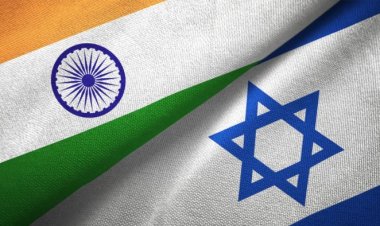
India–Israel Relations
- Prime Ministerial Visit to Israel (2017): First-ever visit by an Indian PM, symbolizing de-hyphenation of India's Israel policy from the Palestinian issue.
- Areas of Cooperation: Defense technology, cybersecurity, agriculture, water management, and innovation ecosystems.
- Strategic Partnership in Defence and Technology:
- Israel is one of India's principal defense technology partners (UAVs, missile systems, electronic warfare, border surveillance, counter-terrorism).
- India's Defense Exports to Israel (FY24): US$122.97 million.
- India's Share of Israeli Defense Exports (2020-2024): Approximately 34%.
- Agriculture and Water Cooperation:
- Centers of Excellence in Agriculture (2026): 29 operational centers across India, focusing on precision agriculture and drip irrigation.
- Future Target (2026): Israel aims to help India establish 1,500 'Villages of Excellence'.
India–Saudi Arabia Relations
- Strategic Partnership Council (SPC), 2019:
- Institutional mechanism for high-level political and economic coordination.
- Structure: Two pillars: Political, Security, Social and Cultural Cooperation; and Economy and Investment Cooperation.
- Bilateral Trade (FY 2023-24): US$42.98 billion.
- Indian exports: US$11.56 billion.
- Indian imports: US$31.42 billion.
- Investment Commitment: Saudi Arabia pledged approximately US$100 billion in various Indian sectors.
- Defence and Security Cooperation: Focus on counter-terrorism, intelligence sharing, maritime security, and military exchanges, reflecting growing strategic trust.
India–Iran Relations and Connectivity
- Chabahar Port Development:
- Purpose: Provide India access to Afghanistan, Central Asia, and Eurasia, bypassing Pakistan.
- Investment: India has invested US$500 million in the port.
- Progress (2024): Handled approximately 8 million tonnes of cargo and over 90,000 TEUs.
- Planned Capacity (2026): 500,000 TEUs.
- Challenges: Affected by U.S. sanctions, regional instability, and geopolitical competition.
- International North-South Transport Corridor (INSTC):
- Participants: India, Iran, Russia, and Central Asian partners.
- Significance: Alternative trade route connecting India to Eurasia.
Minilateral and Connectivity Diplomacy
- I2U2 (India–Israel–UAE–United States), 2022:
- Minilateral grouping focused on economic and technological cooperation.
- Key Initiative: The UAE committed to investing US$2 billion in integrated food parks in India.
- India–Middle East–Europe Economic Corridor (IMEC), 2023:
- Participants: India, UAE, Saudi Arabia, European Union, France, Germany, Italy, and the United States.
- Objective: Create a multimodal corridor (ports, railways, energy links, digital infrastructure).
- Strategic Significance: Projected to reduce logistics costs by 30% and transit times from India to Europe by 40-51%.
Energy Transition and Maritime Security
- Energy Sources (2023-24 Crude Oil Imports): Russia (39%), Iraq (20%), and Saudi Arabia (16%) were the primary sources.
- Renewable Energy Partnerships: With the UAE, Saudi Arabia, and Israel in solar energy, green hydrogen, clean technology, and energy storage.
- National Green Hydrogen Mission (2023):
- Outlay: ₹19,744 crore (approx. US$2.4 billion).
- Target: Production of 5 Metric Million Tonnes per Annum (MMTPA) of green hydrogen by FY 2029-30.
- Maritime Security: Regular naval exercises with Gulf states to secure the Arabian Sea and western Indian Ocean trade routes.
- India-UAE: Naval exercise 'Zayed Talwar' (renamed 'Gulf Waves') in October 2024.
- India-Saudi Arabia: 'Al-Mohed Al-Hindi' naval exercise (second edition) in May 2023.
- India-Oman: 'Naseem Al Bahr' naval exercise from October 13-18, 2024.
Diaspora Diplomacy
- Indian Diaspora in West Asia: Approximately 9 million Indians, the largest overseas concentration of Indian citizens.
- Remittances (FY 2023-24): India received a record US$129 billion in global remittances.
- Contribution: Five GCC countries (UAE, Saudi Arabia, Kuwait, Qatar, and Oman) contribute significantly to these inflows.
Download the PDF here