Beyond Netanyahu: Why India-Israel Ties Can Withstand a Change of Government
 usanasfoundation
Analysis
By Ameya Kulkarni
Israel’s 27 October election was widely framed as a referendum on Prime Minister Benjamin Netanyahu. For India, the more useful question is how well its growing partnership with Israel can survive political change. This article argues that the relationship rests on institutions and shared interests, not on personal rapport alone, so continuity is the most likely outcome whoever governs. India’s task is to turn that continuity into concrete results while keeping its diplomatic flexibility in a volatile region.
What the election is really about
Treating the vote as a verdict on one leader hides the larger question. Would Israel’s political centre of gravity shift if Netanyahu failed to win a mandate, and would new leadership change the country’s strategic direction in a security-driven environment?
Since the Hamas-led attack of October 2023, public debate has centred on the government’s security failures, the wars that followed, and accountability. Netanyahu also faces an ongoing corruption trial. The charges remain allegations, not findings of guilt.
The result will depend less on which party wins the most votes than on who can build a governing coalition. Israelis vote for parties, not for a prime minister, in what is effectively a single nationwide constituency. Seats in the 120-member Knesset are allocated proportionally to parties that clear a 3.25% threshold, and a governing alliance needs at least 61 lawmakers.
A political map that defies left and right:
Israel’s parties do not fit a conventional left-right spectrum.
- The Netanyahu bloc combines several distinct forces. Likud stands for nationalist-conservative politics, with a focus on security, Jewish national identity and a strong executive. The ultra-Orthodox parties, Shas and United Torah Judaism, prioritise religious education, welfare and the religious status quo. Far-right parties such as Itamar Ben-Gvir’s Otzma Yehudit take a hardline position on territory, settlements and Palestinian statehood. They agree on security and national identity but differ sharply on military service, state and religion, judicial reform and economic policy.
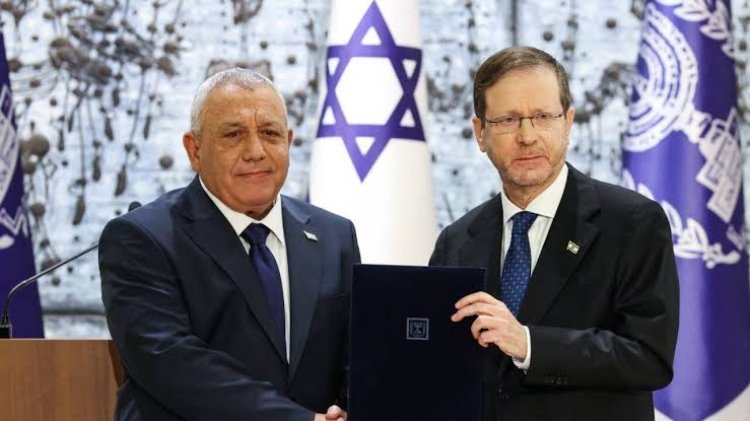
- The opposition is not a drastic alternative either. Gadi Eisenkot, the leading challenger, is a former IDF chief of staff who campaigns on security credentials plus accountability, democratic institutions and anti-corruption. Former prime ministers Naftali Bennett and Yair Lapid form a centrist-to-centre-right alliance focused on security and governance reform. Avigdor Liberman combines defence hawkishness with strict secularism. Yair Golan leads a smaller liberal-left constituency.
The implication is that an Israeli government without Netanyahu is unlikely to soften its stance on Palestine or regional security. Neither bloc has campaigned on a two-state solution, on the conduct of the war in Gaza, or on settler violence in the West Bank. An anti-Netanyahu vote should not be read as a demand for a different Palestinian policy.
The real fault line is military service. Israel is a citizen army, and heavy reserve mobilisation has made the traditional exemption of the ultra-Orthodox a central political dispute. Secular and religious parties call it a question of equal burden, while Haredi parties see it as protecting their way of life.
The foundations of the partnership
Netanyahu’s rapport with Indian Prime Minister Narendra Modi has given the partnership visibility, but it is not the only foundation. Since full diplomatic relations began in January 1992, cooperation has expanded across defence, agriculture, water management, technology and trade. These accumulated ties give both countries practical reasons to keep working together.
Defence shows the depth of the relationship most clearly:
- The Barak-8 air-defence system, jointly developed by India’s DRDO and Israel Aerospace Industries, shows collaboration has moved beyond simple buying and selling.
- Both sides are exploring co-production in India of Israeli systems such as Iron Dome and the Tamir interceptor.
- Between 2021 and 2025, India was Israel’s largest arms-export destination, taking 29% of its sales worldwide.
- The two countries signed a defence cooperation MoU in November 2025, and Amir Baram, director general of Israel’s Defence Ministry, visited India in June 2026 to discuss technology sharing and joint projects.
Economic ties offer further room to grow:
- During Narendra Modi’s February 2026 visit, the two governments discussed defence technology, artificial intelligence and cybersecurity, and free trade agreement talks are at an advanced stage.
- The Bilateral Investment Agreement, signed in September 2025 as a precursor to the FTA, entered into force in July 2026.
- In January 2026, the State Bank of India raised the possibility of rupee trade with Israel.
- Bilateral trade reached about $3.93 billion in 2025-26.
None of this guarantees that every project survives a change of government unchanged. But it creates established channels and a record of cooperation that any future leader can build on. Concluding the FTA should be in the interest of any Israeli government.
What could change
A new government could shift style and emphasis. It might try to repair Israel’s international standing or put more weight on ties with the United States and Europe, which have been strained by the Gaza war and worsening security in the West Bank. That would not mean retreating from India. Israel has reason to maintain partnerships beyond its traditional ones, and India values Israeli expertise in technology and security. A new prime minister would need to build a personal working relationship with New Delhi and might review particular priorities, timelines or agreements, but the existing agenda provides a base for doing so.
India’s regional balancing act
India’s approach must also reflect its wider interests in West Asia: energy security, trade and maritime routes, and nearly 10 million Indian citizens in the Gulf. It maintains relationships with the Arab Gulf states and with Iran, a longstanding partner. Escalation involving Israel and its neighbours, as seen this year, could strain these interests and make balancing harder. Regional instability has also stalled the India-Middle East-Europe Economic Corridor and the I2U2 framework (India, Israel, the UAE and the US), though neither has been shelved.
This context makes diplomatic calibration essential. India can deepen practical cooperation with Israel while continuing to support dialogue, regional stability and a political horizon for Palestinians, including a two-state solution. Such an approach reflects the need to protect Indian interests across a diverse region; it does not require New Delhi to treat bilateral cooperation as a substitute for wider diplomacy. For Israel, sustaining ties with India is valuable because the relationship spans several sectors and retains scope for further growth.
The likely trajectory is continuity, though not without qualifications. Netanyahu’s return as prime minister would preserve a familiar political channel, while a new government could bring different priorities and require a period of relationship building. In either case, established defence cooperation, the prospect of closer economic ties, and the growing convergence of interests in areas such as agriculture, water management, AI, renewable energy, cybersecurity, people-to-people ties, educational partnerships, and science and technology provide a foundation for continued engagement.
Predictably, the October 7 attack has disproportionately dominated electoral campaigns over other national issues. The incident produced two competing arguments – how the security breach occurred under Netanyahu's watch, and who Israelis can trust to protect them in the future.
Therefore, any anti-Netanyahu vote or sentiment should not be misread as a desire for a different Palestinian policy, with neither bloc campaigning on the issue of a two-state solution or against the disproportionate use of force in Gaza in 2023, or increasing settlement-related violence in the West Bank. The election contest may not alter Israel's strategic or regional direction in the foreseeable future; however, a change of leadership can carry significant domestic consequences.
This calls for careful calibration. India can deepen practical cooperation with Israel while continuing to support dialogue, regional stability and a political horizon for Palestinians, including a two-state solution. Bilateral cooperation should not become a substitute for wider diplomacy.
Conclusion
The likeliest trajectory is continuity, with qualifications. Netanyahu’s return would preserve a familiar channel, while a new government might need a period of relationship-building. In either case, defence cooperation, the prospect of closer economic ties, and shared interests in agriculture, water, AI, renewable energy, cybersecurity, education and science and technology provide a solid base.
The election may change the political setting in which India-Israel relations operate, but it is unlikely to erase the interests and institutional links that sustain them. India’s task is to convert continuity into concrete cooperation, relying on institutions rather than rapport or broad declarations, and to keep the flexibility it needs to navigate a volatile region.
Disclaimer: This paper is the author's individual scholastic contribution and does not necessarily reflect the organization's viewpoint.