The Price of Heavy Metals: Mercury, Lead, and the Making of a Human Security Crisis
 usanasfoundation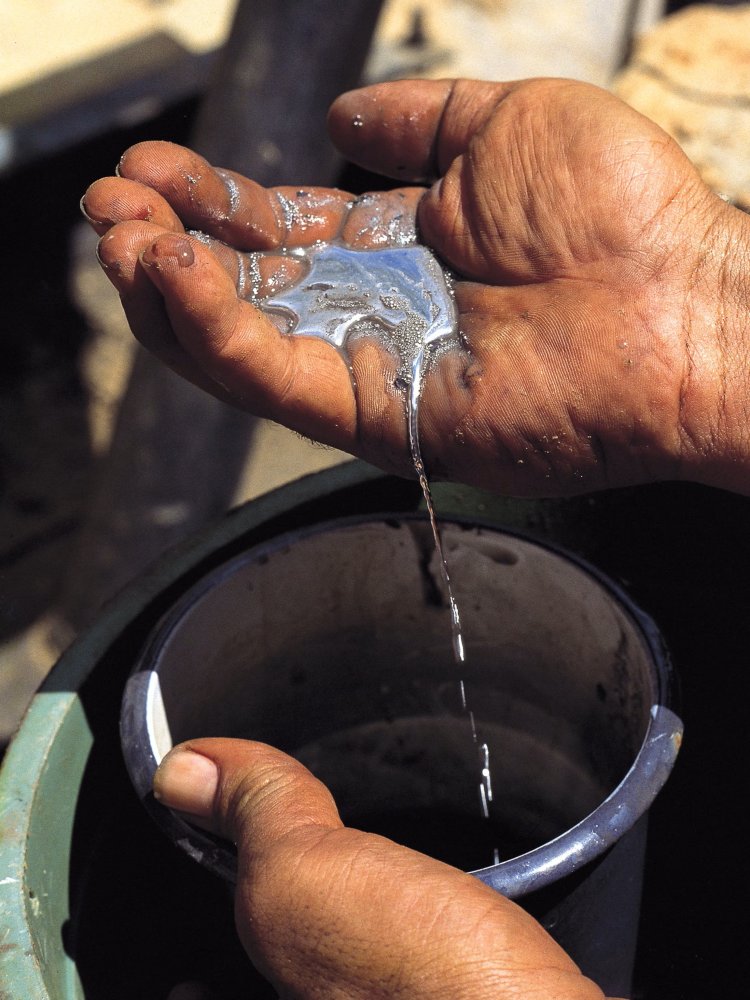
Analysis
By Anant Kakkar
The dentist in Kerala carries traces of mercury in her blood, the residue of years spent handling dental amalgam, as a 2018 study of heavy metals in the general population of the state found. Not far away, in Uttar Pradesh, a farmer waters his spinach with effluent-laced groundwater, not knowing that every leaf of his crop is quietly banking lead, a pattern documented across India’s industrial belt and confirmed by a nationwide review of urban soils across Indian cities. Half a world away, in Zamfara State, Nigeria, a child in a gold-mining village dies before her fifth birthday—not, as the village first believes, from malaria, but from the very dust ground into her family’s compound floor, as investigators from Médecins Sans Frontières and Pure Earth documented, and subsequent field research would later confirm. These people and their stories do not share a language, an income bracket, or even a coastline. What they do share, however, is an element and an economy that for over a century has found it cheaper to release toxic metals rather than contain them. Their experiences are far from outliers: independent analysis puts the number of Indian children with blood lead levels above the threshold at which the World Health Organization says cognitive damage begins at more than 275 million—roughly a third of all such children worldwide.
Toxic vs. Heavy Metals
While these terms are utilized interchangeably, they are not synonyms. “Heavy metals” refers to a loose density-based classification of metals that possess a specific gravity over roughly 5 g/cm³ and includes essential micronutrients such as zinc, copper, and iron as well as non-essential toxicants. “Toxic metals,’’ on the other hand, is a narrower, effects-based category. It talks about metals that even in minute concentrations can disrupt biological functions due to the fact that the body has no metabolic use for them and has limited means to excrete them, as research on the toxicity and mechanisms of heavy metals has shown. Mercury and lead firmly sit in this second, more dangerous category, and, unlike organic pollutants, they are non-degradable: as a review of heavy metal toxicity and the environment and subsequent research on metal mixtures have documented, they simply move, accumulate, and wait.
How do Mercury and Lead Compare?
|
Parameter |
Mercury (Hg) |
Lead (Pb) |
|
Key natural sources |
Volcanic eruptions, cinnabar weathering, forest fires, ocean degassing |
Natural mineral weathering, low-level soil background |
|
Key anthropogenic sources |
Coal-fired power plants, artisanal gold mining, chlor-alkali industry, dental amalgam, e-waste |
Battery recycling/smelting, leaded paint, mining/ore processing, old plumbing, cosmetics, contaminated spices, fossil fuel and exhaust |
|
Release pathway |
Atmospheric emission results in long-range transport which causes deposition in water bodies and ultimately leads to microbial conversion to methylmercury |
Airborne dust, soil contamination, contaminated water and food chains, direct ingestion (paint chips, dust) |
|
Land effects |
Soil microbial toxicity; reduces nitrogen-fixing bacteria |
Soil sterility, reduced crop yield, persistent contamination (half-life of centuries) |
|
Water effects |
Bioaccumulates as methylmercury in fish and shellfish; biomagnifies up the food chain |
Contaminates groundwater via leaching; toxic to aquatic invertebrates and fish gill function |
|
Primary human health effects |
Neurotoxic; results in tremors, cognitive impairment, developmental damage in foetuses (Minamata disease) |
Neurotoxic, especially in children; results in lowered IQ, anaemia, kidney and reproductive damage |
|
Where it bioaccumulates |
Fatty tissue, brain, kidney; concentrates in top predator fish (tuna, shark, swordfish) |
Bones and teeth (up to 90% of body burden), blood, soft tissue |
|
Human security dimension |
Threatens food security in fish-dependent coastal/riverine communities |
Threatens child development, labour productivity, and occupational safety in mining/informal-recycling economies |
Sources: Research on the toxicity, mechanism, and health effects of heavy metals; the Minamata Convention on Mercury; a review of heavy metal toxicity and the environment; and a study of lead in West African drinking-water systems
The Effects on Human Security
Mercury and lead convert an environmental problem into a security problem. Mercury poses a direct threat to food security as subsistence fishing communities near contaminated water bodies face a direct trade-off between protein intake and risk of neurological damage. In a similar manner, lead threatens developmental and economic security, as childhood lead exposure leads to lower IQ and school performance at a population scale and translates into measurable losses in future earning capacity and national productivity, as research on the toxicity and health effects of heavy metals has shown, and as a study of lead exposure in West African drinking-water systems confirms. When contamination coincides with weak regulation, as is the case with much of the informal mining and recycling sector, it becomes an occupational security issue that exposes workers, who are more often than not children, to hazardous conditions with no protective equipment or medical oversight, as documented by Médecins Sans Frontières, Human Rights Watch, and researchers who studied the Zamfara remediation effort.
India
India is a particularly instructive case study in the effects of heavy metal contamination due to its rapid industrialisation, dense urban population, and its large informal recycling and mining sector. A 2020 review of urban soils across 32 Indian cities found that the majority of the cities studied had heavy metal concentrations exceeding both the Grade-I geochemical background and Grade-II soil quality guideline values.
Lead and arsenic concentrations, meanwhile, were especially high in Telangana. Similarly, a study also found that atmospheric monitoring in Mumbai detected high levels of lead in the air, a result of high industrial and vehicular emissions. Another study conducted in Jhansi in Uttar Pradesh showed that the groundwater around the Parichha Power Plant had high concentrations of lead that exceeded WHO regulatory limits, as a review of heavy metals in the Indian atmosphere has reported. Field studies conducted in Gujarat and Karnataka have found that soil near battery-dismantling and smelting units had lead levels as high as 100,000 parts per million, according to a position paper on hazardous metals and mineral pollution in India.
Furthermore, at the human exposure level, a 2018 study from Kerala examined the blood levels of arsenic, lead, and mercury in the general population. This study found that dietary habits such as fish consumption along the state’s coastline and backwaters, alongside usage of dental amalgam, were linked to high blood mercury levels. A related screening in Karnataka found that adolescents also showcased signs of heavy metal toxicity. These findings showed that the exposure pattern in India was two-track; one is an industrial occupation contamination that is concentrated in specific manufacturing states, while the second is related to diet/lifestyle exposure that is distributed more broadly.
Zamfara State, Nigeria
The gold-mining village introduced at the outset of this paper lies in Zamfara State, in northern Nigeria, where in 2010 an unexplained spike in child deaths first drew the attention of local health authorities. When health workers from Médecins Sans Frontières, the US CDC, and the WHO investigated, they found that the outbreak was linked to acute lead poisoning from artisanal gold ore processing. Villagers, often women and children, crushed the lead-rich ore by hand in order to extract the gold. This led to fine lead dust being spread throughout the homes and compounds, as Pure Earth and subsequent field research documented. The effects of this dust were shown in the two worst affected villages in the state. In these two villages, roughly a quarter of all of the children under the age of five died within a year, with virtually all other children tested showing blood-lead levels exceeding the international thresholds. In Zamfara State, more than 400 children are estimated to have died, with over 17,000 more estimated to have been severely exposed. To combat this, a multi-year, multi-agency remediation effort was enacted to remove the contaminated soil and relocate the ore processing facilities away from the residential areas as well as the administration of chelation therapy to affected individuals, an effort that Pure Earth and public health researchers have both chronicled. The case study of Zamfara remains a stark example of how an informal mineral economy, operating without proper safeguards, can result in a public health catastrophe that lasts generations.
Trade and Economic Consequences
Heavy metal contamination reshapes trade in a myriad of ways. Countries whose soils or waterways carry high concentrations of heavy metals, or whose crops carry a high contamination risk, can face rejection of their exports once residue limits are breached. Shipments of food and agricultural produce contaminated with metals such as cadmium and lead, for instance, have been turned away by the EU and Japan from parts of the Indian subcontinent and Africa, as research on heavy metals in aquatic environments and a review of heavy metal toxicity and removal methods show. Fisheries that are dependent on mercury-sensitive export markets face reputational and regulatory risks once methylmercury levels in catch are flagged, a risk borne out by the same aquatic-toxicity research and formalised under the Minamata Convention. On the other hand, the informal artisanal and small-scale gold mining (ASGM) sector, while being economically essential to millions across Africa and much of Asia, operates outside of the formal trade and taxation systems. This means that the contamination costs of such operations are absorbed locally while the gold is exported at global market prices, a pattern documented both in sub-Saharan Africa’s informal mining economy and in the Zamfara remediation research. Studies attempting to measure the cost of lead exposure alone have estimated losses running into the hundreds of billions of dollars worldwide, through reduced lifetime earnings and cognitive capacity, according to research on the health effects of heavy metals and studies of lead exposure in West African drinking-water systems.
International Regulations
The clearest response of the international community to mercury usage in industries and mercury contamination is the Minamata Convention on Mercury, which was signed in 2013 and has been in force since 2017. This convention commits signatories to phasing out mercury use in products and restricting the trade of mercury internationally as well as laying out frameworks to curb ASGM emissions. Lead, on the other hand, lacks an equivalent global treaty due to how useful lead is in many industrial and electronic applications, but it is addressed indirectly via the Basel Convention on the transboundary movement of hazardous waste, which includes lead-acid battery scrap. This combined with national regulations phasing out leaded paint and fuel as well as WHO-led campaigns for lead paint elimination.
Both instruments are formally binding on their signatories, but neither carries a strong international enforcement mechanism of its own: compliance rests almost entirely on domestic administrative capacity, which is precisely where India's and Nigeria’s experiences diverge from that of wealthier signatories. In India, enforcement runs through domestic instruments such as the Environment (Protection) Act and the Batteries (Management and Handling) Rules, which are meant to formalise lead-acid battery recycling and cap heavy-metal discharge, with the Central Pollution Control Board and state pollution control boards responsible for enforcing them; in practice, the scale of the informal recycling sector means enforcement remains inconsistent outside major cities, and a dedicated national law on lead poisoning still does not exist, though bodies such as NITI Aayog have begun pressing for state-level action plans. Nigeria’s environmental regulator, NESREA, has since been tasked with tightening oversight of artisanal and small-scale mining, building on the multi-agency Zamfara remediation effort described above, though enforcement capacity beyond that immediate response remains limited. The economic losses at stake are substantial: independent analysis estimates that childhood lead exposure alone costs India close to US$236 billion a year in lost productivity and lifetime earnings, equivalent to more than five percent of its GDP.
Conclusion
While mercury and lead are not new problems, they are problems that persist due to their diffuse pathways and how insidiously slow acting they are. What Kerala and Zamfara reveal is that despite the different economic contexts, toxic metal exposure is rarely an isolated environmental incident. It is something that is woven into the very livelihoods, diets, trade flows, and regulatory gaps of the societies that it affects. To address it will require what has been inconsistent so far: the coordination of monitoring, to improve upon and actually enforce industrial standards, and to apply the conventions and treaties that govern lead as urgently as the world applied them to mercury. Bodies such as India’s Central Pollution Control Board and the Ministry of Environment, Forest and Climate Change already publish much of the annual monitoring data that this coordination would need to build on; the task from here is less about creating new machinery than about funding, staffing, and empowering the machinery that already exists.
Disclaimer: This paper is the author's individual scholastic contribution and does not necessarily reflect the organization's viewpoint.