Trump’s Foreign Policy Gamble and the 2026 Midterms
 usanasfoundation
Analysis
By Neelashma Jain
The 2026 midterms are shaping up as a referendum on Trump’s foreign policy as much as his domestic strategy. During Trump’s campaign, he promised that he would end “endless” or “forever” wars. However, American forces are engaged in the seventh month of a conflict with Iran. This conflict has also overlapped with open friction with NATO partners, fresh claims on Greenland, withdrawal of troops from Germany, and stalled mediation over the Ukraine issue. Voters are now watching a government that has intensified disputes with allies while failing to deliver on its promises.
Iran: The War That Defined the Year
After the failure of the nuclear negotiations, coordinated strikes by US- Israeli forces on Iran marked the beginning of the war on February 28. At the start, the administration asserted that this campaign would only take a few weeks. Seven months later, it is still going on in a stop-and-go manner. In the aftermath of an altercation between the two forces, Trump declared that the truce that had been brokered in early April was to be ended. Another later agreement that was signed by Donald Trump and President Masoud Pezeshkian fell apart within weeks due to renewed military action and a dispute over control of the Strait of Hormuz, which was used to transport about one-fifth of the world’s oil prior to the conflict.
On October 8, Trump said that he would not continue strikes before the elections, but he left the possibility of escalation open and called the negotiation talks with Iran productive. Iranian oil exports are getting shut down by a U.S. naval blockade, and Iran has increased its attacks on tankers. The underlying issues of the war still remain unresolved.
The main way that the conflict gets to the voting booth is through those consequences. According to an April Ipsos poll, 71% of Americans thought the US shouldn't become involved in Iran. According to a Politico survey, the national average price of gasoline was $4. 10 in late July, over $1 more than it was a year earlier. Sixty-three percent of Americans, including fifty-nine percent of Trump supporters, attributed the price changes to the war. Republican opposition to the war has been growing, which eliminates the buffer that a cohesive base would typically offer.
Europe and NATO: An Alliance Under Strain
More than any other of the second term, the Iran war has caused significant damage to the transatlantic alliance by converting a long-standing burden-sharing argument into an issue of loyalty. Multiple European governments refused to send in naval forces for U.S. assistance in reopening the Strait of Hormuz or to allow US planes to use their bases or airspace. Following a meeting with NATO Secretary General Mark Rutte in April, Trump expressed disappointment with the alliance, despite Rutte’s argument that Europe had been used as a platform for American power projection during the early weeks of the conflict.
The extent of the decline in relations was shown at the July NATO meeting in Ankara. Trump criticised Spain in particular, linking his displeasure to both Iran and Greenland, and claimed he could have boycotted the conference if it weren’t for his connection with host President Recep Tayyip Erdogan. The European leaders went to the summit with the key objective being to secure a renewed commitment from the United States. Meanwhile, the Trump administration urged the allies to increase their defense spending to 5% of GDP as quickly as possible and take a greater responsibility for the conventional defence of Europe, which would allow Washington to refocus more of its strategy towards the Indo- Pacific.
The administration’s rationale was accompanied by concrete military actions. In May, the Pentagon announced the decision to withdraw 5000 troops from Germany, while the military also scrapped a planned deployment of around 4000 troops to Poland. Congress criticised the decision across party lines. The National Defense Authorisation Act doesn’t allow reductions below 76,000 troops in Europe for more than 45 days without the required certification, and the House version of this year’s bill adds additional restrictions on the withdrawal of troops. Taken together, these actions undermine the claim that “America First” gives leverage over allies, since the allies have hedged together instead and have begun taking steps to protect their security interests due to the U.S. uncertainty.
Greenland and Canada: Sovereignty as Provocation
Trump's claims over the territory of his allies have also become a recurring element of his foreign policy, rather than an isolated provocation. Greenland, a semi- autonomous territory under the NATO member Denmark, has repeatedly taken centre stage in alliance discussions. Following his April meeting with Rutte, Trump posted on social media a reminder of his interest in the territory. During the Ankara Summit, he once again reiterated that Greenland should be controlled by the United States. Danish Prime Minister Mette Frederiksen rejected this, responding that Greenland was not for sale and emphasised that NATO allies were expected to respect the sovereignty of the Danish Kingdom.
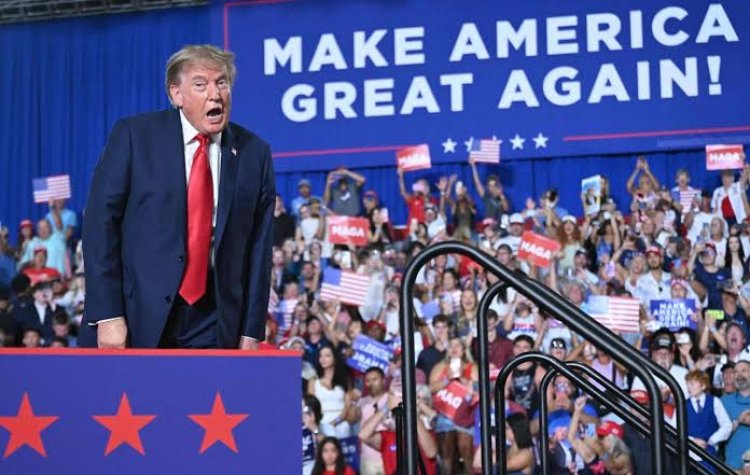
Pressure on Canada is largely economic in nature. Trade negotiations collapsed this autumn, while the Trump administration refused to rule out the idea of Canadian statehood. Speaking at a rally in Arizona on 14 October, Trump repeated this claim and said that Canada would end up as the 51st state, and it was the only way forward. Canada responded with retaliatory tariffs, and a technical recession in June has further widened the rift. Prime Minister Mark Carney has dismissed the idea and argued that Canada needs to reduce its reliance on the United States. Fewer American voters rank these disputes highly among their concerns, yet they contribute to a growing impression that the administration is pursuing confrontational policies towards friendly governments even as energy prices are rising back at home.
The Domestic Transmission: Opinion and Party Dynamics
The foreign policy record has arrived at a point of low presidential standing. Trump’s approval fell below 40 percent in the RealClearPolitics average in May for the first time of this term, and the Democratic advantage in the generic congressional ballot has stood at roughly six to seven points since the spring. YouGov recorded his net approval at a record low in the summer, and independents, who decide competitive suburban districts, have turned sharply against him. One recent tracker puts approval near 39 percent with the generic ballot at a Democratic lead of about seven points.
The war is also an affordability issue. In the Politico polling, only about one in ten voters said a one-dollar fall in petrol prices would make them consider voting Republican, and 46 percent said it would make no real difference, which suggests that opinion has hardened and that an end to the war would bring limited relief. The damage also reaches the base: among voters who said petrol prices affect their vote, close to 40 percent were considering a different party, including 49 percent of MAGA Republicans.
Republican candidates in competitive races have sought distance from the White House. The House has passed an Iran war powers resolution by 220 to 204, with seven Republicans joining Democrats, and Representative Thomas Massie, who lost his primary in May, has filed articles of impeachment against Defense Secretary Pete Hegseth. The legislative effect is limited, since the Senate has not followed, and a veto would require a two-thirds majority to override, but each vote forces Republicans to take a recorded position on an unpopular war.
Republican strategists argue that voters will tolerate short-term costs for strategic gains against Iran. History offers some support for caution: Joe Biden lost only nine House seats in 2022 despite weak approval, and in 2018, with a similar generic ballot gap, Republicans kept control of the Senate.
An Assessment: Will Republicans Hold Congress?
The available evidence suggests a clear distinction between the two chambers. In the House of Representatives, Democrats are poised to have the advantage. Their lead of six to seven points in generic ballot polling, presidential approval fluctuating at or below 40 percent, a net-negative declining position with independents and widespread opposition towards the war form the conditions of a majority-changing midterm. The principal obstacles to this outcome are procedural rather than political. These include the redistricting contests that both parties have pursued and the possibility, flagged by Brookings in the spring, of a Supreme Court ruling against Voting Rights Act districts, which could limit Democratic gains. Despite these uncertainties, a Democratic House majority is the most probable result.
The Senate is a more challenging contest. Republicans hold 53 seats and Democrats need a gain of four seats to secure a majority. The Cook Political Report has moved several races toward Democrats, with Georgia and North Carolina leaning Democratic and Maine, Michigan and Ohio rated as toss-ups, but it still describes Democrats as most likely to gain between one and three seats, short of a majority. Alaska's the only Republican-leaning seat that would realistically carry Democrats to an outright majority. The most likely Senate outcome is therefore a narrowed Republican majority, which would produce divided government rather than a Democratic sweep.
Trump has postponed the highest-risk decisions until after the vote, as his commitment on Iranian strikes shows, and is campaigning on strength abroad. That limits downside before 3 November but does not address the cost-of-living issue behind his decline.
The Next Phase: Divided Government and a Narrowed Foreign Policy
A Democratic majority would alter the operating constraints of Trump’s presidency without taking away his key foreign policy powers. Committee chairs would gain subpoena authority and could open sustained investigations into the oversight of the origins and conduct of the Iran war, the administration’s legal basis for continuing operations without congressional authorisation, and the role played by the Pentagon officials. War powers votes, which have so far been symbolic and limited, would carry greater weight linked with decisions on government funding. The Trump administration’s request to increase the military budget to $1.5 trillion would also give House Democrats leverage over the terms attached to defence spending.
Europe is the area in which Congress has the capability to limit the actions taken by the administration. The troop requirement of 76,000 in Europe, the certification procedures for withdrawals and the protections of the Supreme Allied Commander position already showed bipartisan concern, and a Democratic majority in the House would reinforce them. The likely result is a continued policy of shifting responsibility for conventional defence to European governments, but the transition would take place more slowly than the White House intends.
On Iran, Trump must choose between a settlement that lets him claim a conclusion to the war and the further military escalation he has kept open for after the election. Poor prospects at the polls and oversight pressure favour the former. In Ukraine, the more feasible course of action is continued pressure on Kyiv, while balancing pragmatic energy arrangements with Russia. On Greenland and Canada, the rhetoric will probably continue, the main focus remains on tariffs and trade negotiations rather than coercion.
Conclusion
The conflict with Iran is a major root of the electoral difficulties for the Republican party, but it is not the only component. Strained relations with NATO partners, withdrawal of troops from Europe, Trump’s claims regarding Greenland, and lack of diplomatic efforts to resolve the war in Ukraine traces a bigger pattern of tension with international allies, with no concrete or tangible results to show for it. These foreign policy strategies have also had domestic consequences, especially through soaring energy prices and rising loss of support among independent voters. The November 3 elections are most likely to lead to a democratic majority in the House of Representatives alongside a reduced Republican majority in the Senate. This would bring in two years of divided government, during which Trump would have substantial freedom over executing foreign policy decisions but would face greater Congressional scrutiny.
Disclaimer: This paper is the author's individual scholastic contribution and does not necessarily reflect the organization's viewpoint.