Radicalization in Kashmir: Assessing Structural Intelligence Loopholes
 usanasfoundation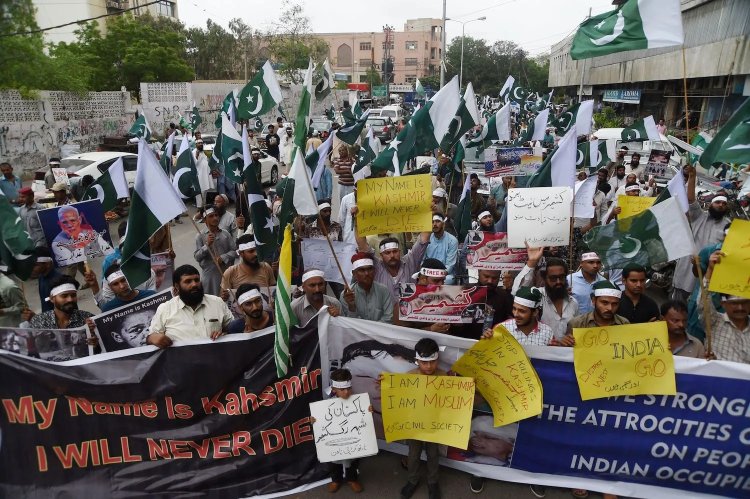
Analysis
By Umer Iqbal
In Kashmir, “radicalization” is often treated as a single phenomenon: the willingness of young people to support or join violent militancy. In practice, it has at least two layers that do not always move in tandem. The first layer is material violence vis-à-vis attacks, killings, infiltration, and operational capability. The second is subculture, identity, and meaning. The material layer can decline while the interpretive layer hardens, because narratives don’t require constant violence to spread; they rely on trust networks, repeated cues, and a steady flow of emotionally resonant triggers.
This distinction matters because Kashmir’s recent years can be read as a paradox. Multiple datasets suggest that violent outcomes have fallen compared to the peaks of the early 2000s and the 2016–2018 spike. At the same time, field-based narrative reports and local observation indicate that the youth-facing architecture of meaning-making remains volatile. A security strategy (meaning the government’s and security forces’ overall plan for keeping the region safe—policing, intelligence work, and counter‑militancy operations) should not assume that fewer deaths automatically mean less radicalization. A drop in fatalities may only show that attacks are less visible or harder to carry out, while the underlying beliefs and hardened attitudes can still be spreading.
Open-source conflict statistics do not measure beliefs. They do, however, capture the operational climate in which recruitment, coercion, intimidation, and propaganda circulate. The South Asia Terrorism Portal (SATP) trend indicates that the overall fatality burden has been substantially lower in the mid‑2020s than during 2016–2018.
Yearly fatalities (SATP) — selected years
|
Year |
Civilians |
Security forces |
Militants/insurgents |
Total |
|
2016 |
65 |
62 |
140 |
267 |
|
2017 |
83 |
82 |
192 |
357 |
|
2018 |
91 |
86 |
275 |
452 |
|
2019 |
80 |
77 |
126 |
283 |
|
2020 |
62 |
56 |
203 |
321 |
|
2021 |
64 |
45 |
165 |
274 |
|
2022 |
30 |
30 |
193 |
253 |
|
2023 |
12 |
33 |
89 |
134 |
|
2024 |
13 |
12 |
69 |
127 |
|
2025 |
28 |
17 |
47 |
92 |
|
2026 |
1 |
10 |
1 |
12 |
2026 is a partial-year figure in SATP (data through early April 2026).
Total fatalities trend (2016–2025)
A drop in deaths can mean many things at once: stronger border controls, disrupted militant networks, sustained pressure on armed groups, and fewer opportunities for large attacks. It can also reflect tactical adaptation driven by a higher-risk operating environment. Large, high-casualty attacks usually require bigger teams, more movement of weapons or explosives, more communication, and longer planning cycles—all of which create a larger “footprint” that is easier to detect and disrupt under tighter surveillance and enforcement. As a result, militants may shift toward smaller attacks, intimidation, or targeted killings that require fewer people and resources but can still generate fear, signal presence, and maintain influence without producing large headline numbers. So, fewer deaths in the data indicate less visible violence, but they do not prove that radical ideas are receding. Where politics and identity shape public meaning, declining fatalities can still coincide with sharper divisions in speech, symbolism, and debate.
August 2019 marked a turning point when the Government of India abrogated Article 370 and reorganised Jammu & Kashmir, bringing major administrative changes and an intense security clampdown that reduced open militant activity but also pushed militancy towards more covert, facilitation-based tactics. Initial restrictions were followed by tactical shifts: rather than open fighting, militants relied more on concealed roles—intimidation, selective killings, and support from local facilitation networks that are harder to map than conventional armed formations. Terms such as “hybrid militants”, “white-collar radicalization” and “OGWs” reflect this reality. This matters for youth radicalization. When full‑time militancy is difficult, involvement often grows incrementally—helping with logistics, sharing information, offering safe houses, circulating propaganda, or providing small favors. In such an environment, human intelligence (HUMINT) becomes central. Success depends not only on data collection, but also on cultural competence, local language, and credibility—because only then can a meaningful lead be separated from background noise.
After the October 7, 2023, Hamas attack on Israel and the Gaza war that followed, the conflict became a major discourse trigger in Kashmir. Images, sermons, and social-media narratives helped import a ready-made vocabulary—“occupation,” “settler colonialism,” “injustice,” and “religious duty”—that many people use to reinterpret Kashmir through a more religious and transnational lens, even without a major change in ground-level violence. This external shock operated as a perception “inflection point”: it intensified religiously coded language and symbolism in local discussion, making identity framing more dominant. Research on narrative shift in Kashmir notes that such geopolitical flashpoints can change how people interpret their own political condition through imported frames and emotionally resonant cues. In this setting, the decisive effect is often not factual similarity between conflicts, but the ease with which a compelling parallel can be mapped onto local grievance frameworks.
At the same time, discourse can intensify even as violence declines. In the digital era, emotionally charged content, fast-moving symbols, and trusted local intermediaries can polarize communities even under strict enforcement. Suppression may also reinforce persecution narratives, pushing conversations into encrypted or closed networks.
Youth radicalization in this environment can follow multiple pathways: lived exposure to violence, duty-based identity frames, intellectual reframing of the state, affective solidarity through activism, and cultural reinforcement. The most dangerous scenario is when these pathways overlap, producing a reinforcement loop in which emotion, identity, and moral permission converge toward escalation.
Youth dynamics and the HUMINT problem: cultural distance as an intelligence gap
Field observations point to a weakness often underemphasized in counterterrorism writing: the friction that arises when personnel are deployed to Kashmir without deep familiarity with local conflict dynamics. After 2019, the administration relied more heavily on outside officers within police and security institutions. That may be institutionally rational, but it can also produce a predictable intelligence gap rooted in language barriers and cultural distance. These gaps matter because they reduce sensitivity to subtle signals, weaken HUMINT, and slow response cycles. In a setting where militant activity is frequently hidden in everyday life, local familiarity is operationally decisive. Without it, even well-planned operations can misread intent and leave openings that adversaries exploit.
In Kashmir, the local language is not merely a communication tool; it carries signals. Cultural cues, idioms, and coded references can function as markers of alignment, defiance, recruitment, or intimidation. Officers who are not fluent in the vernacular must rely on translation, second-hand interpretation, or technical surveillance—creating distance from the social cues that often matter most. This reliance can weaken early warning detection and raise the risk of misclassification: ordinary interactions may be mistaken for suspicious behavior, while genuinely suspicious activity can be dismissed as routine. In a conflict environment where meaning is embedded in language and culture, vernacular fluency is not optional—it is central to effective intelligence work.
Radical ecosystems rarely announce themselves through explicit slogans at all times. More often, they operate via referential frames, selective symbolism, humor, inside jokes, controlled ambiguity, and deniable signaling. A security architecture that lacks cultural literacy tends to assume radicalization will appear as an overt statement. In reality, it often appears first as a pattern of association, a shift in idiom, a new reference set, or a change in what is admired and mocked.
One actionable HUMINT insight is the existence of youth subcultures that treat engagement with security personnel as a game. When some young people suggest, in effect, “we’ve befriended them and can manipulate them,” they describe relationships that may look cooperative on the surface but function as performance underneath. This is not a moral indictment of youth as a category; it is an incentive structure in which low-stakes cooperation can be traded for short-term benefit while deeper commitments remain absent.
From an intelligence standpoint, this produces two risks simultaneously:
- False confidence: the security apparatus may overestimate the depth and reliability of its relationship networks.
- Contaminated source reliability: information can be shaped by social signaling, personal profit motives, and local rivalries.
In such environments, the danger is not only missing an imminent threat; it is building an institutional picture on inputs strategically shaped by the very actors the system is trying to map.
Kashmir is not only a battlefield of arms; it is also a battlefield of perception, fear, honor, humiliation, and meaning. Officers without training in identity narratives, trauma dynamics, rumor ecosystems, and group escalation are forced to rely on intuition. In complex environments, intuition is not a plan. Psycho-cognitive competence should be treated as an operational skill, not a soft add-on.
External triggers and transnational framing
Recent Iran-linked mobilizations illustrate how external flashpoints can intensify local meaning-making even when local violence indicators remain comparatively contained. In early March 2026, protests were reported across parts of the Valley following reports of the killing of Iran’s Supreme Leader Ayatollah Ali Khamenei, with demonstrations (notably in Shia-majority areas) and an accompanying security response that included restrictions and slowed internet.
Analytically, these events matter less as direct predictors of militancy than as high-distribution moments for identity frames: they consolidate peer alignment, circulate emotionally resonant symbols, and can channel domestic grievance through the language of “solidarity.” A similar symbolic resonance appeared in April 2026, when the announcement of a US–Iran ceasefire was followed by public celebrations across multiple parts of Kashmir, widely described as an Iranian “victory.”
For an integrated status assessment, such episodes reinforce the core point: narrative polarization and transnational identity framing can surge independently of local attack totals, increasing the premium on culturally fluent HUMINT to distinguish expressive politics from shifts that affect facilitation and recruitment.
Integrated status assessment
An integrated reading suggests:
- Visible violence is lower than during 2016–2018, and trend lines support the claim that Kashmir is not currently in a peak-insurgency phase.
- Risk forms have adapted: a covert ecosystem emphasizing facilitation, intimidation, and compartmentalized participation is difficult to capture via standard “recruitment count” headlines.
- Narrative radicalization can grow independently of immediate violence, especially when transnational triggers provide emotionally powerful templates imported into local discourse.
- HUMINT is under stress not only due to operational danger but also because cultural-linguistic distance reduces signal detection and increases susceptibility to manipulation.
In this reading, the “status” of radicalization is best described as lower violent output, but a contested—and potentially hardening—meaning-making infrastructure, alongside an intelligence apparatus with identifiable vulnerabilities at the human interface.
A sustainable strategy cannot be only kinetic, and it cannot be only narrative. It must operate in both domains while preserving legitimacy.
Possible Strategy
The mental and social side of conflict should be treated as a serious security issue, but without making normal disagreement or criticism a criminal act. When public conversation turns into “good vs bad” thinking and gets dominated by identity-based stories, young people can be pulled into extreme positions more easily—and it becomes much harder to calm tensions later. In that setting, media literacy and mental-health/psychosocial support cannot take the place of policing or counterterror operations. But they do matter: they reduce the number of people who are emotionally charged, misinformed, and vulnerable to manipulation—so security agencies face a smaller, less volatile pool to deal with. You also have to pay attention to what people are hearing, believing, and sharing—in families, neighborhoods, schools, religious spaces, and online. If anger, humiliation, fear, and “us vs them” thinking spread unchecked, it becomes easier for extremist groups to recruit or justify violence later.
At the same time, there is a need to rebuild HUMINT as a culturally literate and strategically grounded craft. This goes beyond surface-level engagement and requires language proficiency as a minimum standard, together with structured cultural training. Incentive systems must shift away from rewarding short-term intelligence “inputs” and instead prioritize long-term relationship-building. Equally important is equipping officers with the ability to detect manipulation tactics and rigorously validate information, ensuring that quality and credibility are not sacrificed for volume.
Religious authority should be treated as an important and shifting factor, without treating religious identity itself as suspicious or wrong. When duty‑based or faith‑driven narratives help push escalation or radicalization , purely technical or administrative messages usually won’t connect. Some form of theological engagement is therefore needed, but it has to be credible, careful, and nuanced. If the people leading it are seen as obvious state proxies, the effort will likely fail. So, credibility protections must be built into the design from the beginning, not added later.
Finally, the focus should shift from isolated counter-messaging efforts to building a resilient counter-narrative infrastructure. In regions where discourse flows through peer networks, local influencers, and often closed communication groups, the central question is not just what message is delivered, but who delivers it and where meaning is actually constructed. Sustainable impact depends on understanding and integrating into these trust ecosystems rather than attempting to override them from the outside.
Disclaimer: This paper is the author's individual scholastic contribution and does not necessarily reflect the organization's viewpoint.