India-U.S. Relations: Beyond the Rhetoric
 usanasfoundation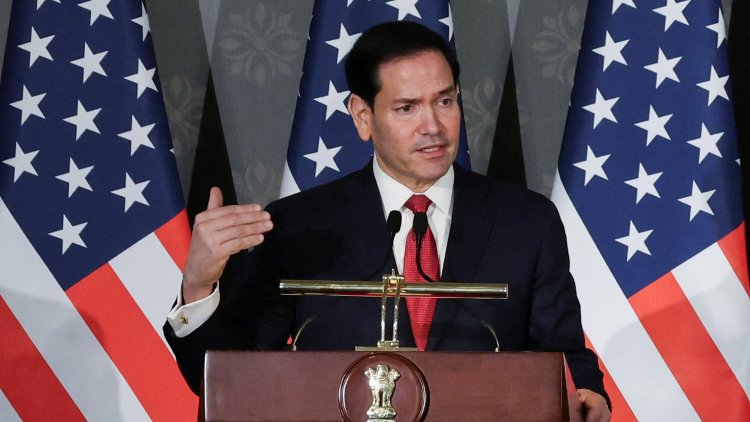
Analysis
By Nikita Anand
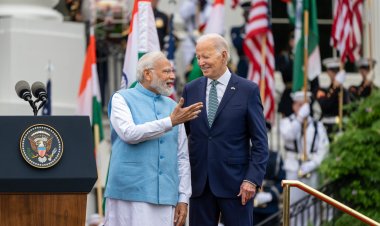
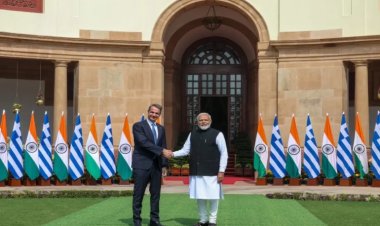
On May 24, 2026, US President Donald Trump called Prime Minister Modi and informed him that "he loves India" and that "the United States and India will get anything it wants." These are the statements that the US thought would settle down the resentment that exists in New Delhi towards the recent actions of the United States. To improve the strained relationship between the countries, on May 23rd, 2026, U.S. Secretary of State Marco Rubio arrived in Kolkata for his first trip to India. But it took the U.S. less than a week to aggravate the trust it had just spent four days trying to build. It was when Pakistan’s Foreign Minister Ishaq Dar flew to Washington that he was praised for his mediatory efforts, and talks happened around “mutual Interest”. Given how inconsistent Washington's actions have been, can India believe US words? India has its own patience and constraints, but for how long?
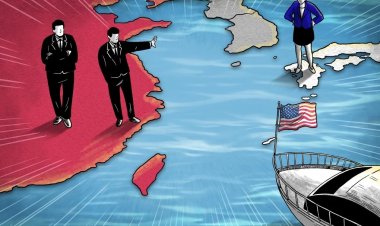
Nevertheless, Rubio’s visit to Delhi carried diplomatic weight. He carried with him the burden of a relationship that had recently become strained due to Washington’s unstable, uneven treatment of New Delhi. The U.S. is putting tariffs on Indian exports and a 25% tariff on India's imports of Russian oil, concurrently with Trump's recent visit to Beijing, and not imposing any heavy duties on partners like China; the relationship between the nations is affected not only economically but strategically as well. Marco came to India with a large objective of maintaining the trust and preserving the confidence lost amid an emerging geopolitical scenario.
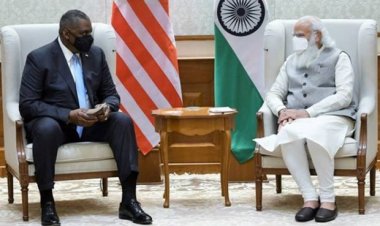
Rubio began his visit with the missionaries in Kolkata, then traveled to the Taj Mahal in Agra, and finally to New Delhi, where the dissatisfaction of India toward the U.S. was clearly evident. During his time in India, Rubio faced questions about racism towards Indians, and External Affairs Minister S. Jaishankar expressed concerns regarding challenges in visa issuance. Despite all of this, several talks about commerce, defense cooperation, energy security, and the Quad were held with the goal of advancing and strengthening these ties.
The strains and opportunities in India-US ties can be understood across four critical dimensions which are trade, energy, defence, and strategic alignment in the Indo-Pacific.
TRADE
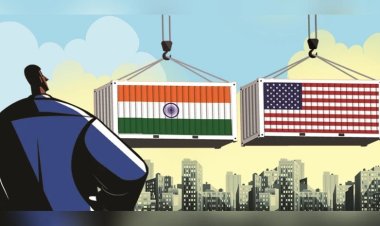
The most delicate and diplomatic topic of discussion between India and the United States turned out to be trade. The US imposed a 50% tariff on Indian exports and reduced it to 18% later, but it did not ease the tensions and resolved the trade tensions. While India has encountered such obstacles, other US partners have not faced this burden of tariffs but have actually benefited from favorable terms with the US.
Against this chaos, it was also announced that India has committed to purchasing $500 billion worth of goods from the US over the next five years. This might look like a win-win situation for both parties but if we look closer, Washington's demand for large-scale purchase from a partner who they penalized with some large amount of tariffs seems contradictory.The current affairs of the Indian rupee have been affected alot over the last twelve months, there has been a lot of criticism and resentment from the Indians. This will lead to risks to the Indian rupee, contradicting Modi’s urging citizens to lessen fuel consumption and overseas travel to preserve foreign exchange.
WEST ASIA
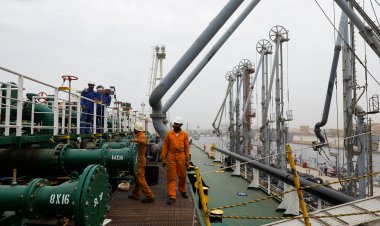
Energy has remained India’s most critical strategic issue for India, especially with the growing unrest between the US, Israel, Iran, and the disturbance at the Strait of Hormuz, an important international oil route. S. Jaishankar mentioned that India will remain committed to its multi-alignment approach that focuses on regional diaspora, stability, and affordable energy access. In an otherwise unpredictable energy landscape, New Delhi also saw the temporary 30-day U.S. sanctions reprieve on Russian seaborne oil as a little but important comfort.
For India, the consequence of the war is not only diplomatic, but the rise in the price of petrol and diesel, and concerns surrounding the unavailability of gas cylinders have affected us on a very large scale.
Marco Rubio said that the US “will not let Iran hold the global energy market hostage.”But we are not sure that the decisions that will be taken by the US towards West Asia policy to influence India’s energy choices might not be in India’s national interests and might affect us more badly.
DEFENCE
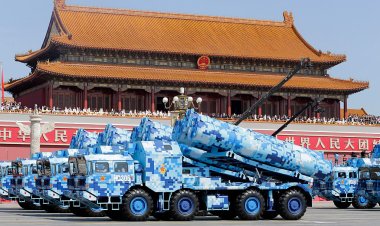
The security and defence cooperation between the nations gave a complex and balanced dynamic. Neither is it reassuring nor confrontational. The recent developments of Washington’s approval of the the $6 billion F-15 upgrade package for Pakistan and Rubio’s remark that the US directly mediated when Operation Sindoor took place were seen by many as contradicting India, which led to discomfort within New Delhi’s strategic circle. . Nevertheless, the renewal of a 10-year major defence partnership framework with a focus on the Make in India initiative, emphasizing domestic co-production in defence manufacturing and technology transfers, and cooperation in the underwater domain awareness, also emerged as a significant development aimed at countering growing Chinese naval expansion in the Indian Ocean region.
The US and India have continuously worked in order to strengthen their defense ties through programs ranging from advanced technological cooperation under the Initiative on Critical and Emerging Technologies (iCET). Despite the divergences in nations’ relationships, the greater strategic rationale of supporting defense cooperation continues to flourish.
India must read the signals carefully, as it is a pattern of the United States supporting Pakistan when a crisis hits, and at the same time, it is challenging to sustain these initiatives when the US keeps on introducing uncertainty.
QUAD
The group’s ongoing efforts to maintain the strategic coordination in the Indo-Pacific were seen in the recent QUAD foreign ministers meeting, which took place in Delhi on 26th May. Initiatives like The Indo-Pacific Marine Surveillance Cooperation, aiming to create a unified operational marine image throughout the area, and "Quad Ports of the Future Partnership” were all discussed in order to counter China’s maritime and logistic dominance in the Pacific. Additionally, the Quad Initiative on Indo-Pacific Energy Security highlighted the grouping’s expanding focus beyond traditional defence cooperation into economic and energy resilience.
But whether all of these initiatives will move in the right direction, as agreed upon, is a question. It comes up with a lot of difficulties, as there has been no leader-level quad summit held for a really long time, which makes the QUAD irrelevant. At the same time, Trump’s visit to China and his warm words about national interests have led to fear among the Quad partners of being reduced to secondary importance in Washington’s large geopolitical calculations. It reflects that Washington is not fully committed to the Indo- Pacific’s architecture. The QUAD’s future will depend on the members and how they will be able to maintain its cooperation and handle regional challenges in the light of current geopolitical power dynamics. While the group has taken various initiatives, its future is still unclear due to Trump’s frequent shifts and indecisive stance.
Rubio’s visit for the failure was neither a turning point. India has learned over the decades that great powers first pursue their own interests and display them as a partnership. Despite the instability and challenges in the current geopolitical system, all must preserve trust and maintain continuity in partnerships, dialogue, and commitments. India will continue to engage with Washington, but it will also keep talking to Russia, work on projects like Chabahar, and keep its options open. America needs to earn the trust back, which requires more than a four-day visit and an invitation to attend an event. It requires upholding commitments, transparency and understanding to maintain strategic autonomy.
Disclaimer: This paper is the author's individual scholastic contribution and does not necessarily reflect the organization's viewpoint.