Beyond the “Islamic NATO” Label: What the Mecca Defence Pact Actually Changes for India
 usanasfoundation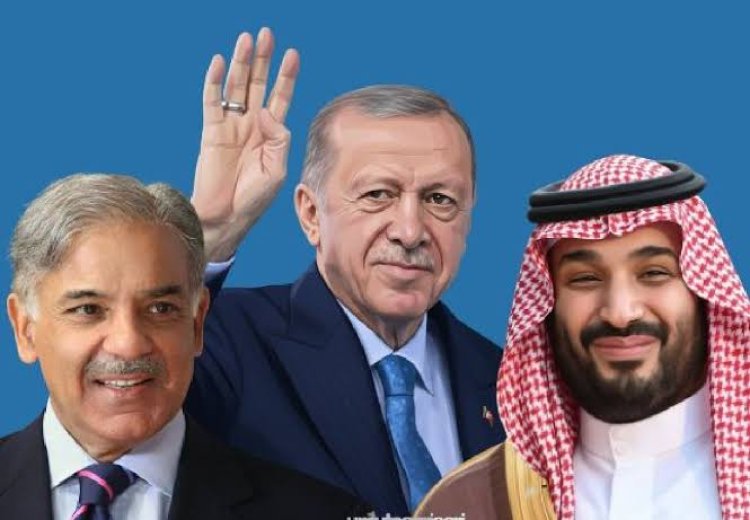
Analysis
By: Rohan Ambike
At Mecca on 7 August 2026, when Saudi Arabia, Türkiye, and Pakistan signed their Joint Defence Agreement, Pakistan's Defence Minister, Khawaja Asif, called it an ‘’Islamic NATO.’’ The description is striking, and the agreement's collective-deterrence clause, which regards an attack on one as an attack on all, gives the comparison limited credibility. However, Indian policymakers may miss the pact's true importance and implications if they focus too closely on that analogy.
It is important to clarify what has and has not changed. The agreement is real: Saudi’s Crown Prince Mohammed bin Salman, Türkiye’s President Recep Tayyip Erdoğan, and Pakistan’s Prime Minister Shehbaz Sharif signed it at Al-Safa Palace, and it was announced by all three countries. The event was publicly celebrated in Islamabad. The unresolved issue is not whether the pact exists, but what its practical effects will be.
The complete text of the treaty and the exact obligations involved have not been made public, so it remains unclear whether military aid will be automatic, what kind of aid it might involve, or how the agreement would define an "armed attack." Türkiye has shown interest in extending the arrangement, while Egypt has emerged as a potential next member. Although the pact is now an official document, the details of its implementation are still developing. India's attention should therefore be focused on the developing structure, not merely on the fact that it has been signed.
In this situation, the Indian authorities should set up systematic monitoring mechanisms. The main indicators to watch for are formal amendments or additions to the treaty; announcements of joint procurement programs, especially those concerning advanced military equipment or dual-use technologies; changes in the scale or scenario planning of joint exercises, particularly exercises involving external partners such as Egypt; and deeper intelligence-sharing cooperation between the parties.
By tracking these developments, along with official statements and procurement data, policymakers can focus on changes that could affect India's security. Policymakers can obtain early warning if the pact's scope or role starts to change by regularly participating in regional security dialogues and consistently using open-source intelligence. Ongoing monitoring will enable India to anticipate emerging developments and adjust its policy in time, rather than reacting later.
The key question is not whether Saudi or Turkish troops would fight alongside Pakistan against India. The more important question is whether Pakistan now has an institutional means of connecting a security crisis in South Asia with the developments unfolding in West Asia and how this might limit India's options in a future crisis. The arrangement may appear dramatic, but it is better understood as a functional agreement among three states with different strengths and interests.
Saudi Arabia offers financial resources and has considerable diplomatic influence, while Türkiye has a developing defence industry, military experience linked to NATO, and an increasing ability to export. Pakistan has a large permanent military, extensive operational experience, and one capability that the other two countries do not have: nuclear weapons.
The various components are not interchangeable parts that together make up a single unified force; rather, they are separate assets that are being connected for the first time through institutional links.
This distinction shapes how India understands the agreement. The term ‘’Islamic NATO’’ implies an ideological unity that might cause national interests to be overlooked in a crisis. In contrast, a material interpretation points to a more limited but possibly longer-lasting arrangement: a network of complementary capabilities that Pakistan could potentially use without asking the others to take military action. Because this approach is harder to dismiss and less likely to provoke an overreaction, it is worth paying closer attention.
Pakistan’s Real Gain: Depth, Not an Army
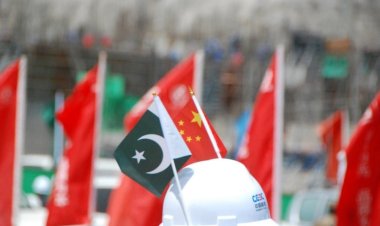
China has long been Pakistan's main external partner: its primary defence supplier, financier, and diplomatic backer. The Mecca agreement doesn't replace this relationship, but it could add another source of support, potentially reducing Pakistan's dependence on any one patron.
The pact's real advantage for Islamabad is not the assurance of a wartime ally but greater institutional depth. Pakistan has now acquired a position at the point where South Asian and West Asian security intersect, two areas that India has usually considered to be separate. If a bilateral crisis were to arise between India and Pakistan, it could lead to diplomatic pressure, intelligence sharing, or faster defence-industrial assistance from Riyadh or Ankara, all without any foreign troops entering the subcontinent.
There is a particular risk that the Indian government should take seriously: information relating to India's military posture, crisis decision-making, or operational planning, which is already available to Pakistan, could become available to Türkiye or Saudi Arabia in a more systematic way. This could make it harder for India to manage crises, since sensitive details or operational patterns might spread through a wider network and facilitate external countermeasures or coordinated reactions from beyond South Asia.
India will have to strengthen its information controls and reevaluate whether the remaining channels are secure as the pact's mechanisms become better understood. In practice, this could involve using stronger encryption for operational communications, granting tighter need-to-know access to sensitive intelligence, and regularly auditing both digital and physical channels for vulnerabilities. It would also be useful to have dedicated units monitor unusual patterns that might indicate leaks to third parties.
A more thorough examination of personnel with access to sensitive material, regular rotation of those responsible for such roles, and the use of communication technology capable of resisting future threats like quantum decryption would further reduce the risk of compromise. Frequent drills that mimic intelligence breaches and well-defined interagency response procedures would also improve readiness.
If Indian agencies introduce these practices now, operational intelligence is likely to leak less frequently beyond its intended channels. India's strategic freedom of action will be better safeguarded as the new framework develops. This objective is more realistic than military intervention, yet it should be the one that Indian planners adopt.
The way the Ministry of External Affairs first reacted—by stating that New Delhi was closely following developments and studying their implications for national security and regional stability—shows an appropriately restrained attitude. At the same time, it implicitly admits that the agreement alters India's escalation criteria, even though it makes no changes to the situation on the battlefield.
Türkiye, Not Saudi Arabia, Is the Sharper Edge
India should not regard the three signatories as forming a single group since each has its own relationship with New Delhi.
Saudi Arabia and India share a considerable strategic partnership in energy, investment, counterterrorism, and defence, which means Riyadh has strong economic reasons to keep its relationship with Pakistan separate from its relations with India.
Türkiye’s case is different, since Ankara's defence ties with Islamabad have expanded to include naval platforms, cooperation in aerospace and military training, and the Mecca agreement, which is intended to deepen defence-industrial cooperation. President Erdoğan has regarded joint defence-industrial projects as central to the arrangement. For India, the more important development is not the possibility of a military tripartite bloc but the continued integration of the Turkish and Pakistani defence industries, possibly backed by Saudi capital.
The involvement of Turkish technology, Saudi financing, and Pakistani operational needs means the agreement's political statements deserve closer scrutiny. To address these risks, Indian policymakers should take several actions: maintain regular diplomatic talks with Ankara to raise specific concerns about defence exports and ask for greater transparency on joint ventures, and set up technical working groups to monitor developments in aviation and naval technology. India should also strengthen monitoring of end uses and tighten enforcement of export controls on any Indian dual-use or sensitive technology that could reach Pakistan through third countries.
Better arrangements for sharing intelligence with countries concerned about the spread of advanced weapons systems, along with greater investment directed toward domestic capabilities to reduce dependence on foreign suppliers, would also help reduce India's exposure.
India should also continue its diplomatic efforts with Saudi Arabia, highlighting the benefits of strong economic relations and making it clear that Saudi financial support for defence industries elsewhere should not influence the regional balance. Together, these steps would enable India to respond more proactively to defence-industrial integration between Türkiye and Pakistan.
The Nuclear Dimension: Perception Without Proliferation
The fact that Pakistan is involved naturally brings up the issue of nuclear weapons, since it is the only one of the three countries to possess them. There is no publicly available evidence to suggest that Pakistan has offered anything like a nuclear umbrella to either Saudi Arabia or Türkiye, and all three governments have been careful to describe the agreement as defensive and not connected with nuclear proliferation. The International Institute for Strategic Studies has also highlighted the complementary character of the three states' capabilities while questioning how far the commitments would really stand up in a real crisis.
Nevertheless, deterrence also works through perception as well as actual capability. Pakistan's nuclear status is now part of a formal collective-security arrangement together with Saudi financial resources and Turkish conventional strength. The issue that concerns Indian planners is not whether or not nuclear weapons will be shared or transferred—because they won't be—but whether the institutional association itself enhances the deterrent message that Pakistan is trying to send.
What India Should Not Do
For India to regard the pact as a civilizational challenge and to pressure Saudi Arabia to take a side would be counterproductive. Such action would risk bringing Riyadh closer to Islamabad, not the other way around.
A better approach would be to strengthen economic and strategic ties with Saudi Arabia, giving Riyadh strong reasons to maintain distinct relationships with both Pakistan and India. This could be achieved by launching new joint economic initiatives in infrastructure or energy, increasing cooperation in areas like renewable energy or advanced manufacturing, and prioritizing regular high-level strategic talks.ss
A permanent bilateral task force on investment or annual meetings focused on regional security could also help keep the two relationships separate. Moreover, India could jointly host multilateral forums or cultural exchanges with Riyadh to show the strength of the partnership, both publicly and diplomatically.
At the same time, India should maintain deterrence and crisis preparedness via a visit to Pakistan and strengthen its monitoring of Türkiye, especially in relation to its growing defence-industrial associations with Islamabad. India does not need to follow a mirror-image approach. The Ministry of External Affairs has already properly rejected the reports of a possible defence agreement with Israel. There is sufficient room for cooperation within India's existing relationships with Israel, the UAE, France, Greece, Cyprus, and others, without engaging in the bloc politics that New Delhi has usually shunned.
The Bigger Shift Beneath the Headline
The biggest long-term consequence of the Mecca pact might be its effect on India's general security situation rather than on Pakistan alone. Traditionally, Indian strategic thought has kept the security of India, Pakistan, and China separate from West Asian security, which includes Iran, Israel, Saudi Arabia, Türkiye, and the Gulf states. Maintaining that distinction is becoming increasingly difficult. Pakistan is increasingly involved in West Asian security arrangements.
Türkiye's defence efforts are extending into South Asia. Saudi Arabia has close relationships with both Pakistan and India. India has expanded its partnerships to include Israel, the Gulf states, and various European countries. It has also advanced connectivity initiatives linking South Asia, the Middle East, and Europe.
In this context, the Mecca agreement is less a separate defence pact than proof of a wider convergence between two areas previously seen as distinct. India still faces only a limited immediate military risk since the pact is not equivalent to NATO, its mechanisms are unproven, and the interests of the member states won't always coincide. However, because the operational details, membership, and institutional depth are still developing, this situation is a process, not a final result.
Therefore, India should monitor these developments as they happen rather than reacting to them afterwards. The long-term importance lies in the message that India's security outlook is now reaching further west, and New Delhi must protect its achievements in West Asia while ensuring this new arrangement does not quietly restrict its freedom of action about Pakistan.
To meet this challenge, India will need to move beyond sporadic involvement and establish regular regional discussions that include not just its usual Gulf partners but also Türkiye and other key players. As a first move, India could propose an annual security dialogue between West Asia and South Asia, bringing together government and expert delegates from Saudi Arabia, the UAE, Türkiye, Egypt, and Israel, and possibly observers such as France or the United States.
The forum could start at either the Track 1.5 or Track 2 level, focusing on building trust and conducting joint scenario planning, and then move to more formal consultations. India could also participate in or co-host existing regional forums such as the Manama Dialogue or the IISS Shangri-La Dialogue, promoting greater consideration of cross-theatre crisis management.
Furthermore, New Delhi could create smaller working groups on maritime security, the protection of energy infrastructure, and transparency in the defence industry, rotating the host country to encourage shared responsibility and continuity.
Moreover, India should set up dedicated interdepartmental teams to monitor the arrangement's development and conduct tabletop exercises to prepare for future multi-party crises. Incorporating these practices into regular operations would allow Indian policymakers to influence the evolving security situation, maintain strategic flexibility, and ensure that India stays at the heart of security developments in West Asia.
There is no need for alarm or complacency. What is needed is continued and careful observation together with a clear evaluation of where actual capability, not just rhetoric, is taking us.
Disclaimer: This paper is the author's individual scholastic contribution and does not necessarily reflect the organization's viewpoint.