Monograph: Understanding the Islamic State of Khorasan: An Overview of its Evolution, Operational Strategies and Framing of India

Monograph
By: Ruchika Sharma, Research Associate
Dr. Abhinav Pandya, CEO & Founder
CONTENTS:
- Introduction
- Origin of the ISKP
- Why Afghanistan
- Early Signs and Presence of ISKP in Afghanistan
- The Emergence of ISKP: Salafist Grievances and Taliban Tensions
- ISKP vs Taliban: Power Struggle in Afghanistan
- Ideological and Structural Differences Between ISKP and the Taliban
- ISKP’s Aims and Strategies
- ISKP’s Urban Recruitment Pattern in Afghanistan
- Leadership Evolution and Command Structure
- List of Key Emirs
11.Evolution of ISKP’s Operations
- Different militant groups merging with ISKP
- ISKPs’ Brutality and Fighters Rejoining Taliban
14.ISKP’s Footprint and Activities in Pakistan
- ISKP ties with Lashkar-e-Taiba
- ISKP’s expansion in Balochistan
15.ISKP’s Regional Ambitions in South Asia and Focus on Kashmir
16.ISKP’s Strategy Toward Central Asia: Historical Background and Activities
ISKP and Uyghur Militancy: Recruitment and Exploitation of Grievances- ISKP’s External Operations
- Timeline of ISKP’s Attacks and Threat Analysis
- Terror Funding
- Understanding ISKP’s psychology through its Propaganda and Media networks
- Why Does This Matters?
- Media Jihad
- Emergence of Cyber Caliphate and Recruitment Strategies
- Exploitation of Indian Muslim Grievances
- Regionalisation and Localisation Strategy
- Exploitation of Indian Muslim Grievances
- Glorification of Indian Recruits and Martyrs
- Kashmir, Pakistan and the ISI Narrative
- Southern India and Calls for Violence
- Bangladesh and Regional Expansion
- Sri Lanka Attacks and Global Retaliatory Narratives
- Psychological Insights
- Purity and Legitimacy Narrative
- Religious Superiority, Jihad, and Spiritual Rewards
- Jihad as a Pillar of Faith
- Narratives of Patience and AI-powered extremism
- Gendered Propaganda and Women in Jihad
- Religious and Eschatological Narratives in ISKP Propaganda
- The Symbolism of Black Flags in ISKP Propaganda
- What Lies Ahead?
Abbreviations:
ISKP: Islamic State of Khorasan Province
IS: Islamic State
ISIS: Islamic State in Iraq and Syria
IS-C: Islamic State- Central
TTP: Tehreek-e-Taliban Pakistan
JDQS: Jama’at al-Da’wa iba al-Qur’an wal-Sunna
LeT: Lashkar-e-Taiba
BLA: Baloch Liberation Army
ASWJ: Ahl-e-Sunnat Wal Jamat
LeJ: Lashkar-e-Jhangvi
JeI: Jamaat-e-Islami
IMU: Islamic Movement of Uzbekistan
IJU: Islamic Jihad Union
ISJK: Islamic State of Jammu & Kashmir
ETIM: East Turkestan Islamic Movement
TRF: The Resistance Front
PFI: Popular Front of India
SDPI: Social Democratic Party of India
SIMI: Student Islamic Movement of India
IEDs: Improvised Explosive Devices
UAV: Unmanned Aerial Vehicle
COTS: Commercial-off-the Shelf
FATA: Federally Administered Tribal Areas
NATO: North Atlantic Treaty Organisation
NDS: National Directorate of Security
CSO: Collective Security Organization
ATS: Anti-Terrorism Squad
NIA: National Investigation Agency
UN: United Nations
UNSC: United Nations Security Council
UNAMA: United Nations Assistance Mission in Afghanistan
OHCR: Office of the United Nations High Commissioner for Human Rights
US: United States
FTO: Foreign Terrorist Organisation
ISI: Inter-Services Intelligence
CIA: Central Intelligence Agency
GDP: General Directorate of Provinces
AI: Artificial Intelligence
Introduction
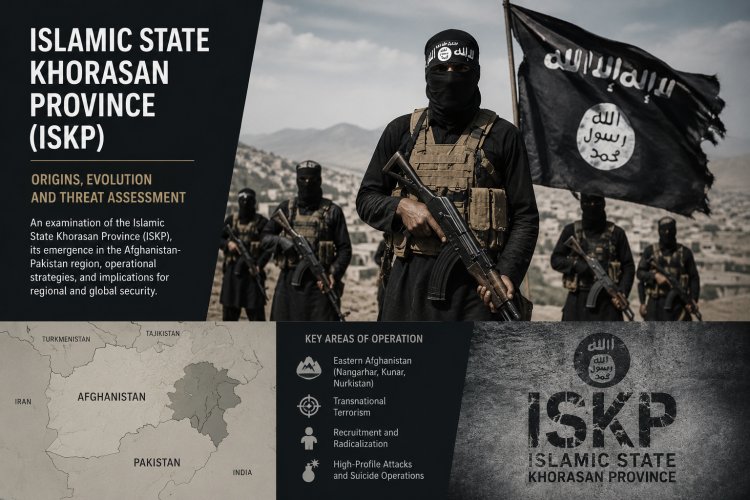
The announcement of the Caliphate in 2014 by Abu Bakr al-Baghdadi from the al-Nuri Mosque of Mosul in Iraq, continues to be one of the most powerful symbols of modern jihadist propaganda. Following his declaration, the Islamic State (IS) systematically expanded beyond its core territories in Iraq and Syria through the establishment of multiple wilayats (provinces). Among these, the Islamic State Khorasan Province (ISKP), also known as Wilayat Khorasan, has emerged as one of its most lethal and operationally significant affiliates. ISKP cannot be understood in isolation from Islamic State-Central (IS-C), which continues to function as its ideological parent organisation. This linkage is also reflected in ISKP’s propaganda narratives and evolving sympathy networks, which were reflected in IS-linked arrests in South Asia, including India.
Origin of the ISKP
Islamic State, originally rooted in Iraq and Syria, formally announced the declaration of the Islamic State of Khorasan in 2015, marking its expansion outside the Arab world. The ISKP aims to establish a caliphate in the historical Khorasan region, covering Afghanistan, Central Asia, Iran and parts of Pakistan. The region holds profound significance in Islamic eschatology and among jihadist groups. Building on this, Al-Qaeda leader Osama bin Laden famously referenced Khorasan in his 1996 ‘’Declaration of Jihad against the Americans’’, writing that “by the Grace of God he had found “a safe base in Khorasan.” This statement became a primary text for the global jihadist movement. Al-Qaeda further capitalized on this symbolism through its online magazine titled Vanguard of Khorasan. Similarly, Hafiz Saeed Khan, the governor of ISKP, described the region as “a gate to re-conquering all these regions until they are ruled once more by Allah’s law, and so the territory of the blessed Khilafah is expanded.”
Several Hadiths mention the emergence of an army from Khorasan carrying black flags near the end of times. According to these narrations, the al-Mahdi will arise and nothing will repel them until they are set up in Ilia (Jerusalem).” However, these prophecies are considered as weak narration. It is argued that throughout history, several Muslim factions have exploited black flag's symbolism for legitimacy. Abbasid dynasty was one of the earliest ones, which used black banners and titled their caliphs ‘al-Mahdi’ to justify their rule. There is no mention of black flags in the Quran as well.
ISKP, a Salafi-jihadist organization, was founded by the disgruntled members of the Afghan Taliban, Tehreek-e-Taliban (TTP) and Al-Qaeda from Afghanistan and Pakistan, declaring their allegiance to the Islamic State. By October 2014, Shahidullah Shahid and other regional commanders of the TTP pledged their allegiance to Abu Bakr al-Baghdadi (emir of the global caliphate), referring to him as ‘commander of the faithful’. In 2014, Abu Bakr al-Baghdadi was proclaimed the leader of the newly established caliphate by the Islamic State, under the name of “Caliph Ibrahim’’, further strengthening the ideological appeal of this newly formed chapter.
In 2015, Abu Muhammad al-Adnani, then IS spokesperson, announced the formation of the Islamic State’s regional chapter–the Islamic State of Khorasan. Hafiz Saeed Khan, a former Tehreek-e-Taliban (TTP) commander, was announced as a ‘’governor’’ (wali), while Abdul Rauf Khadim was appointed deputy governor; Khadim was later killed in a US drone airstrike in Helmand province in February 2015.
Why Afghanistan?
Despite the complex militant landscape dominated by the Taliban and other militant groups, ISKP chose Afghanistan as its primary base. Since its formation in 2015, ISKP has continued to receive support from the Islamic State’s core leadership in Iraq and Syria. Following the IS-C’s loss of territorial control in Iraq and Syria, it redirected its attention to Afghanistan as an alternate base to establish a global caliphate.
Numerous factors made Afghanistan attractive to ISKP. The rugged mountainous terrain and weak governance, along with widespread lawlessness, created a fertile environment for the group to exploit the large ungoverned spaces to establish its foothold. Afghanistan, which sits on the strategic juncture, allowed ISKP to extend its sphere of influence in Central as well as South Asia.

Source: Map of Afghanistan and Pakistan/Library of Congress
During its initial phase, ISKP avoided urban centres in Afghanistan to reduce exposure to US military actions. At the peak of its early expansion between August and December 2015, ISKP’s strength was estimated at approximately 3,750 to 4,000, with the majority of members concentrated in Nangarhar province. At the same time, the ISKP also aimed at expanding its influence in other provinces. One of the first instances of its presence emerged from Helmand province, regarded as the Taliban’s stronghold. However, it suffered a major setback when Abdul Rauf Khadim, the former influential Taliban commander and later ISKP’s deputy governor, was killed in Helmand in a drone strike.
Nevertheless, despite suffering setbacks, ISKP gradually consolidated its presence in eastern Afghanistan. By July 2016, the Islamic State Khorasan Province reportedly established a secure foothold in Nangarhar province.
Nangarhar as a base
Nangarhar became one of the safe havens and evolved into the de facto capital of ISKP. Mohamand Valley in Nangarhar emerged as its first ‘strategic pivot’, serving as an operational base with command centres and logistical hubs for large-scale offensives.
The emergence of ISKP in Nangarhar was closely connected to the influx of Pakistani militants into eastern Afghanistan. The militants who spearheaded ISKP were primarily from Pakistan’s tribal agencies, particularly the Orakzai, North Waziristan, and Khyber. Many of them have been settled in the Spin Ghar mountains since 2010. Over time, many Nangarhar-based militants later emerged from them following the official announcement of ISKP.
Before joining ISKP, many of these militants operated under the increasingly fragmented Tehreek-e-Taliban Pakistan (TTP) and called themselves muhajerin (refugees), seeking protection and shelter. Local communities in Nangarhar provided them sanctuary, viewing it as a moral and cultural obligation. Nanawatai (Sanctuary), is a core element of the Pashtunwali. Melmastia” (hospitality) is another key element of Pashtunwali. “Melma” translates to guest, emphasizing offering hospitality to a guest; irrespective of his race, religion or economic status. The guest, even the enemy who seeks refuge, must be protected and defended, even at a greater personal risk. This brief backdrop is particularly crucial to understanding how ISKP was able to embed itself within local socio-cultural structures. Notably, the Taliban had earlier offered sanctuary to the Al- Qaeda chief Osama Bin Laden. When the Americans demanded them to hand over Laden after the September 11 attacks, the Taliban refused because of these ethnic and tribal codes.
ISKP also found a receptive environment among the Salafi population in Nangarhar and Kunar provinces. The Salafi population became an important source of recruitment for the ISKP. The northeastern province of Kunar emerged as the first stronghold of salafism under the leadership of Sheikh Jameel-ur-Rehman (Mulavi Hussain), who hailed from Kunar. Over time, the Salafi community gradually expanded into neighbouring provinces such as Nuristan and Badakhshan. The spread of Salafism in Afghanistan can be traced back to the 1980s, with the arrival of foreign fighters and donations from wealthy donors in West Asia, especially from Saudi Arabia and Kuwait, during the fight against the Soviet Union.
Kevin Bell, the author at the CTC Westpoint, provides significant historical roots of Salafi influence in Afghanistan, highlighting the establishment of the Islamic Emirate of Kunar in the 1990s by Salafi Jamil al-Rahman and his political party, Jama’at al-Da’wa iba al-Qur’an wal-Sunna (JDQS). In the present context, even if ISKP is not operating at its full strength, this historical reference is significant to understand that the presence of Salafis in Kunar, even with limited local support, could serve as a socio-ideological base extending support to ISKP’s expansion.
Other Strategic Areas
ISKP expanded its presence beyond its traditional foothold, Nangarhar. The group secured its footing in the other strategically important provinces as well. One such province was Zabul. Local reports indicated the existence of ISKP's recruitment and training camps in areas such as the Khak-e Afghan and Deh Chopan districts of Zabul. Its neighboring province Ghazni, with a sizable population of Shia Muslims, emerged as another key strategic pivot for the ISKP. Similar to Islamic State-Central, the ISKP also engaged in sectarian violence, deliberately targeting Shia Muslims. A particularly brutal incident occurred in 2015, when the group beheaded seven ethnic Hazaras. The killings triggered widespread protests in the province, with demonstrators raising slogans of ‘’death to IS’’. Hafiz Saeed Khan, the first governor of the ISKP, in his interview with Dabiq magazine in 2016, explicitly emphasized Tawhid (the oneness of Allah), calling it the greatest priority of the men of Hisbah (an act which is performed for the common good). The group labelled Shia as “apostates’’ and “infidels’’ and systematically targeted the Shia community and Sufi shrines.
Such actions not only served ideological goals but also helped the group differentiate itself from the Taliban and attempted to portray itself as more ‘ideologically pure and uncompromising’ in its implementation of Salafi-jihadist doctrine.
Early Signs and Presence of ISKP in Afghanistan
The exact year of ISKP’s presence in Afghanistan remains highly debated. While the formal announcement came in 2015, signs of ISKP’s presence in Afghanistan had already emerged in 2014. A pro-IS graffiti reading “Zendabad Daesh” (Long Live IS) surfaced on the walls of Kabul University in 2014.
In the same year, in July, pro-IS CDs in Dari containing bomb-making instructions, articles on the virtues of Jihad and criticism of the Muslim Brotherhood for their non-violent approach were reportedly distributed near Company Bazar, in a mosque known as the hub of Salafists in Western Kabul. These developments indicated the penetration of ISKP’s influence in urban and educational spaces before even its formal establishment in the region. Although officials and media reportedly gave limited attention to this matter. This marked the first instance of IS propaganda inside Afghanistan.
In January 2015, the IS logo appeared in Hazara neighbourhoods of Kabul, writes author Giutozzi. The sectarian violence saw a sharp rise, with the first major attack targeting the Shia community in Kabul during the Ashura commemorations. Fearing IS attacks, elders from the ethnic Hazara community met Taliban commanders to seek protection against the group. According to an elder member of the Hazara community cited by the Dawn news, ‘’The Taliban commander agreed to help them.’’
However, in the subsequent years, bloodier attacks were reported. For instance, 80 ethnics Hazaras, mostly Shia Muslims, were killed in a suicide attack in Kabul in 2016.
Prior to its formal declaration, IS leaders reportedly communicated with various South Asian militant groups to assess the possibility of expanding their influence in the region. The group conducted an information campaign via printed materials. A 12-page booklet titled Fateh in Pashto was reportedly circulated by the IS sympathisers in Afghanistan and Pakistan. While IS criticised rival terror groups, in an article published in Issue 6 of Dabiq magazine (2015) it praised the Tehreek-e-Taliban’s (TTP) as among the ‘’best of mujahideen’’, noting that their leaders have a sound Salafi creed and previously enforced Sharia in the Swat Valley. IS also released a video of TTP's former spokesperson, Shahid Shahidullah aka Abu Omar Maqbool, announcing his pledge of allegiance.
In 2015, when the US and Afghan forces were combating the Taliban insurgency, the group strategically exploited the vacuum. Estimates of the ISKP’s strength in Afghanistan varied widely, ranging from 1,000 to 5,000 fighters. John Nicholson, former commander of the US and the North Atlantic Treaty Organisation (NATO) forces, assessed the numbers at around 1,000 to 1,500 fighters. However, these figures remain uncertain due to the fluid nature of the conflict. At the same time, the UN report also highlighted IS's efforts to establish its presence in Bangladesh. On 18th January 2015, 4 suspected IS members, including its coordinator, were arrested in Bangladesh’s capital, Dhaka.
The Emergence of ISKP: Salafist Grievances and Taliban Tensions
The existing deep-seated grievances among Afghan Salafists, which stemmed from the Taliban's anti-Salafi policies, are said to be one of the factors behind the emergence of IS-Khorasan. These tensions originated from the Taliban’s historically strained relations with Salafist communities, which had been marginalized since the Taliban rose to power in the mid-1990s. The widening gap between the Taliban and the Salafists enabled ISKP to establish an active front against the Taliban in Afghanistan by early 2015.
Furthermore, the group attracted hundreds of previously non-militant Salafists from both Afghanistan and Pakistan. Alongside this development, in 2015, Yousaf al-Salafi, an alleged Pakistan-based IS commander, was arrested during a counterterrorism operation. During interrogation, he reportedly claimed to have received funds routed via the United States. He further stated that, along with a Pakistani associate, reportedly an imam at a local mosque, he was involved in recruiting individuals for deployment to Syria, receiving around $600 per recruit from Syria-linked sources. A notable number of recruitments reportedly were from Peshawar, which is known to be a key cross-border hub for Afghan Salafist networks.
During the Taliban’s pre-9/11 rule, Afghan Salafists faced several bans, including the shutting down of Salafi madrassas. A key source of tension between Salafists and the Taliban was the dominance of Sufi and Maturidi Hanafi within Taliban ranks. Salafist theologians declared Sufi and Maturidi Hanafists impure Muslims and apostates, thereby deepening ideological divisions. Due to the Taliban's bans, Afghan Salafists moved to Peshawar, where Salafist madrassas operated actively and focused on preaching to the Afghan diaspora and local population.
Around 2007, these dynamics further evolved. Young and newly trained Salafi mullahs from Pakistan came into the neighbouring Badakhshan province in Afghanistan and had significant influence in the Warduj district. At the same time, the turf war between the Afghan Taliban and Salafists became more visible in September 2007, when the Taliban reportedly beheaded a former Salafi jihadi commander, Ma'ruf, in the Watapur district on allegations of spying for the US forces.
During the height of the Taliban's conflict with ISKP in Afghanistan in 2018-2019, Sheikh Rahim Ullah Haqqani, a prominent Taliban cleric, allegedly paid several visits to Taliban frontlines in Nangarhar and called for the brutal killing of ISKP fighters.
After the Taliban’s return to power in 2021, Salafists in Afghanistan faced renewed pressures, including the closure of Salafi madrasas. The Taliban, driven by suspicion that Afghan Salafists were supporting the ISKP, resorted to harsh measures targeting Salafis. In 2021, the Taliban intensified operations against the ISKP, reportedly destroying 25 hideouts in Kabul and Jalalabad. Taliban spokesperson Zabihullah Mujahid asserted that ‘’there was no space for IS in Afghanistan.’’ Reportedly, over 500 IS members surrendered to the Taliban in Nangarhar the same year.
In return, ISKP claimed the Taliban were conducting a broader campaign against Afghan Salafis. In 2021, the brutal and mysterious killing of the prominent Salafi scholar Sheikh Abu Obaidullah Mutawakil in Kabul further created deep fissures. The Taliban was widely accused of his murder. Mutawakil was arrested in 2019 on charges of recruiting militants for ISKP, as per the National Directorate of Security (NDS) statement. His killing exacerbated fears among Salafist scholars across the country. Reports from UNAMA and UNHRC highlighted serious human rights concerns. Since August 2021, more than 50 individuals suspected of having links with ISKP have been killed by the Taliban, including approximately 35 cases identified as extrajudicial killings. The report mentioned that during October and November 2021, several incidents were reported in Nangarhar. In addition to this, enforced disappearances, torture and ill-treatment in custody were also reported. Even mutilated bodies were found along roadsides, highlighting the involvement of brutal measures in the crackdown.
In 2020, during a meeting with the Afghan Taliban leaders, the Afghan Salafist council under its emir, Sheikh Abdul Aziz Nooristani, pledged allegiance to Sheikh Haibat Ullah Akhundzada, the Taliban's supreme leader. Among the prominent participants was Haji Hayatullah, the nephew of the founder of Salafism in Afghanistan. Another key figure was Sheikh Jamil ur Rehman (Muhammad Hussain), who initially belonged to Gulbuddin Hekmatyar’s Hezb-e-Islami and later established Afghanistan's first Salafist party, Jumat-ul-Dawa Lil Quran Wal Sunnah (JDQS), writes Abdul Sayed, an independent research analyst focusing on Afghanistan, Pakistan and Jihadism.
Sayed further explains that Sheikh Ameen Ullah Peshawari, an influential Pakistan-based Afghan scholar in the Pashtun belt, played an important role in promoting Salafist teachings. Importantly, the above meeting happened in a transitional phase after the Taliban’s victory over ISKP in Nangarhar and before the US Taliban Doha Agreement in February 2020. It also becomes significant in the context of the Taliban's crackdown on Afghan Salafists after coming to power. Following this, a senior Taliban commander, Sheikh Nida Mohammad Nadeem, reportedly became the Taliban’s governor for Nangarhar province, and dozens of Salafists were arrested.
To place this in historical context, during the Soviet war, Pakistan pursued a broader regional strategy. In the garb of humanitarian aid, the ISI provided funds and weapons to the Afghan Islamist parties based in Pakistan. These Islamist parties subsequently built powerful patronage networks within Afghan refugee camps in Pakistan, which also had links with the terror groups operating in Afghanistan.
In Pakistan, the roots of Afghan Salafists are found in Khyber Pakhtunkhwa, Peshawar, and districts bordering Afghanistan. Since the early 1980s, the presence of Afghan refugee camps and Salafist madrassas funded by wealthy donors of West Asia has facilitated Salafist teaching to a large number of the Afghan population. Major Afghan Salafist madrassas were in Peshawar during this period, from which several youths graduated with specialization in the Salafist creed. These graduates played a key role in spreading Salafism across their home provinces in Afghanistan, Peshawar, and the Pashtun belt bordering Afghanistan.
During the US invasion of Afghanistan post-9/11, Middle Eastern Salafists within the ranks of Al-Qaeda acted as a mediator to bridge the relations between Afghan Salafists and the Taliban. This move was to unify them for the religious duty of fighting against the United States and allied forces in Afghanistan. In Abdul Sayed’s closed-door interview, a source revealed that even after playing an important role in the early post-9/11 jihad, the Salafists in Kunar and Nangarhar provinces were marginalized by the Taliban and given minor military roles as low-level commanders only.
The emergence of ISKP, however, created a powerful platform for Afghan Salafists to establish military strength parallel to the Taliban. Consequently, the Afghan Salafists increasingly joined ISKP’s ranks from Afghanistan and Pakistan. These included students and followers of the Salafist scholars from Kabul and Peshawar, some of whom rose to senior positions within the group. One such figure was Sheikh Jalaluddin, who became the top mufti and ideologue before being killed in a US drone strike in Nangarhar on October 13, 2015.
Another significant factor that contributed to the group’s emergence was Pakistan's counterinsurgency operation Zarb-e-Azb (sharp strike), a military offensive started in 2014 targeting multiple terror groups, including Tehreek-e-Taliban, in the North Waziristan district of the Federally Administered Tribal Areas (FATA) of Pakistan. During this operation, several foreign militants, including those from the Islamic Movement of Uzbekistan (IMU) and Al-Qaeda, with their family members reportedly sought refuge in Afghanistan and lived with the locals in the lawless parts of the country. A tribal elder from Helmand’s Sangin district stated that he had recently accommodated a family of Arabic-speaking individuals who identified themselves as the loyal supporters of the Islamic State (IS).
Similarly, in an interview with Dabiq back in 2016, Hafiz Saed Khan had directed his sharp criticism towards the governments of Afghanistan and Pakistan for obstructing jihad and attempting to halt the expansion of the Khilafah. He labelled both as tawaghit (tyrants) and asserted that the rise of Khorasan was based on the Prophetic methodology and the foundations of Tawhid (oneness). He declared that these governments “will not be able to stand before the lions of Tawhid and Aqidah (creed).” He welcomed the influx of Muslims to Khorasan, stating: “We welcome all Muslims and do not differentiate between a muhajir and others.”
ISKP vs Taliban: Power Struggle in Afghanistan
ISKP emerged as the first major terror group to directly challenge the authority of Mullah Muhammad Omar, the founder of the Taliban. The group openly opposed the Taliban, questioning its legitimacy and accusing it of fostering Pakistan’s Inter-Services Intelligence interests. Even ISKP, in its propaganda magazine, The Voice of Khorasan, launched scathing attacks on narratives suggesting that the Islamic State has declined or ended, as well as on the Taliban and Pakistan. It claimed that the Taliban was created by Pakistan’s intelligence agency, the Inter-Services Intelligence (ISI), under the close monitoring of the Central Intelligence Agency (CIA). It further alleged that the death of Mullah Omar was not disclosed to the Islamic community, with statements continuing to be issued in his name. The publication also claimed that the Taliban’s financial resources came from the ISI, CIA and Saudi Arabia.
Hafiz Saed Khan, in his interview with Dabiq (2016), argued that, after the death of Mullah Omar, the Taliban started abandoning the implementation of Sharia in the territories under their control. He cited the Taliban’s negotiations in Qatar, its close ties with Pakistan’s intelligence, and the lifting of bans on Sharia-prohibited substances as evidence that Mullah Omar was no longer alive. Regarding the concealment of Omar’s death by Taliban leader Mullah Akhtar Mansour, he claimed that Mansour’s goal was “to promote his friends to rule Afghanistan and manage the war in accordance with what is desired by Pakistani intelligence,” who were “standing behind him and working in the shadows.” As a result, after the news of Mullah Omar’s death became public, several Taliban fighters split from the Akhtar Mansour faction and joined the khilafah in Wilayat Khorasan.
As ISKP attempted to establish itself in Afghanistan, violent clashes erupted between the group and the Taliban from 2015 onward. The fight between the two was mainly concentrated in Nangarhar Province between 2015 and 2018, resulting in heavy casualties on both sides. During this period, the Islamic State claimed that it had achieved greater gains over the past two years than the Taliban during its decade-long campaign.
In its propaganda magazine Voice of Khorasan, the Islamic State strongly criticized the Taliban, asserting that ISKP had tried not to engage in war against the “murtadd” (apostate) Taliban. It had repeatedly attempted to convince the Taliban that their real and common adversaries were America and the regimes of Afghanistan and Pakistan, not the ISKP. It heavily condemned the Taliban for initiating war against the group, particularly in the Achin district of Nangarhar province.
The rivalry further intensified through public exchanges between IS and the Taliban. In another sign of rising animosity, the Islamic State of Iraq and Syria (ISIS) caliph Abu Bakar al-Baghdadi called Mullah Mohammad Omar, the supreme leader of the Taliban, a “fool’’ and an ‘’illiterate warlord’’. In response, the Taliban issued an open letter dated June 16, 2015, addressed to Abu Bakr al-Baghdadi, warning that it would be compelled to defend its achievements if challenged. In a letter signed by the then deputy leader of the Taliban, Mullah Akhtar Mohammad Mansoor, it stated that the Islamic Emirate (Taliban) viewed multiple jihadi ranks as non-beneficial for jihad and the Muslims.
Shortly afterwards, the Islamic State spokesperson Abu Muhammad al-Adnani referred to adversaries in Khorasan, Libya, and Syria, accusing them of committing religious crimes, instructing IS commanders to show no mercy toward those who refused to repent and join the IS.
To show their force, IS reportedly killed 10-15 Taliban fighters in Nangarhar in 2015. In the same year, the Taliban’s shadow governor for the province, Maulavi Mir Ahmad Gul, was assassinated in Peshawar, with IS suspected behind the attack. Amidst the growing ISKP threat, a special task force, part of the Taliban's special forces command, was established in October 2015, comprising over 1,000 fighters better equipped than regular Taliban units. The sole aim of this operation was to eliminate the group from Afghanistan. Provinces such as Nangarhar, Helmand, Farah, and Zabul witnessed intense fighting. IS cells, mostly led by ex-Afghan Taliban commanders as well as some militants from Pakistan and Uzbekistan, were targeted.
By the end of 2016, Maulavi Haibatullah Akhund, the Taliban's supreme leader, ordered a large-scale offensive against ISKP’s cells and hideouts in Zabul Province, particularly in the districts of Deh Chopan, Shahjoy, and Arghandab. The group accused the Taliban leadership of taking Iran’s support, involving the participation of Iran’s special forces. Author Giutozzi mentions that, as per the sources, over 200 ISKP fighters were killed in this operation. In the same year, due to heightened pressure from Afghan security forces, global coalition forces, and the Taliban, the number of ISKP fighters fell to around 1,500. However, even after facing significant losses, ISKP remained present in more than 20 provinces.
Meanwhile, the Afghan government also intensified operations against ISKP. In 2016, then-Afghanistan President Ashraf Ghani claimed that the Islamic State group had been “rooted out’’ from the eastern parts of the country. The Afghan forces declared victories in Achin, Shinwar, and Nangarhar. According to the 25th UNSC Monitoring Report, joint pressure from the Afghan security forces and Taliban caused severe damage to ISKP, displacing it from large areas of Nangarhar Province. Over 1,400 affiliated with the group reportedly surrendered to Afghan authorities.
According to the UNSC report, its fighters not only came from Afghanistan but also from Azerbaijan, Canada, France, India, the Maldives, Pakistan, Tajikistan, Turkey, and Uzbekistan. At that time, the group had approximately 2,500 fighters in Afghanistan, with around 2,100 concentrated in Kunar Province. Moreover, ISKP’s covert presence was reported in Faryab Province, led by former Taliban member Qari Salahuddin.
Beyond the battlefield, the group also expanded its ideological and recruitment networks. It continued recruitment through the internet to extensively conduct propaganda activities in madrasas and Afghan universities, including in Kabul. Furthermore, it also established informal linkages with other terrorist groups, such as Jamaat-ul-Ahrar, Tehreek-e-Taliban Pakistan, and Lashkar-e-Islam. In mid-February 2021, a one-page directive in Pashto from the Taliban Military Commission circulated on social media. With the Islamic Emirate's official letterhead, it instructed the Taliban members not to recruit, shelter, or otherwise support foreign nationals into their ranks.
Alongside military confrontation, the Taliban is frequently targeted by the ISKP in its extensive ideological campaign. In one of its propaganda narratives, the Taliban was portrayed as a movement manipulated by the US government, and it accused the former of suspending the implementation of Sharia. It further noted that, because of the Taliban's ideological and religious roots in the Afghan villages, people are attracted to their false beliefs, and the ISI is also utilizing this point. It argued that the Taliban had abandoned “true Islam and described the Taliban as an apostate nationalist movement serving foreign interests. The propaganda further claimed that the US is changing the minds of the villagers towards democracy and its principles through the Taliban.
As per Issue 20 of the Voice of Khorasan Magazine, it claimed that if the Islamic State becomes stronger in Afghanistan, America will soon humiliate this Taliban militia as they humiliated the former government and bring another group to fight against the Islamic State. ISKP accused the Taliban leadership of legitimising “American Islam’’, designed through the Doha Peace Process. In Issue 46, the group also accused the Taliban of targeting Muslims who believe in a global Islamic brotherhood, seeking the re-establishment of a global caliphate.
Ideological and Structural Differences Between ISKP and The Taliban
On the ideological front, the Taliban adhere to the Hanafi school of thought, one of the four sects within Sunni Islam. Within that, they also belong to the Deobandi school of thought, which is widely practiced in South and Central Asia. A significant number of Taliban leaders were influenced by the 19th-century Deobandi Movement that emerged in British colonial India, a rigid strand of Hanafi Islam. ISKP, on the other hand, subscribes to Salafi-jihadist ideology, which rejects established Islamic schools of jurisprudence and promotes a ‘’puritanical and transnational’’ vision of Islam. The group strongly opposes nationalism, secularism, Sufism, and local traditions seen as bid'ah (creating a new thing without precedence). ISKP closely follows the ideology of the Islamic State’s central leadership in Syria. The group supports the establishment and expansion of a global caliphate governed by Sharia law and increasingly promotes global jihad against those it considers adversaries of “pure Islam’’.
Historically, Salafism emerged in Afghanistan during the Soviet occupation of Afghanistan in the 1980s, when Arab Salafists entered to fight alongside the mujahideen and other Islamist factions against the Soviet forces. On the other hand, the Salafists, also known as Wahhabis, are a strict and orthodox Islamic revivalist movement that views other branches of the faith as heretical. It first emerged in the 18th century in the Arabian Peninsula and is linked with several terror groups, including the Islamic State and Al-Qaeda. The Taliban has maintained long-standing alliances with terror groups, including Al-Qaeda, as reflected in its continued association highlighted in its video “Bond of Nation with the Mujahideen’’. The long-standing tensions between the Salafists and Taliban have battered Afghanistan. Taliban officials have referred to Salafists as ‘’Kharijites,’’ an early Islamic sect widely regarded as renegades. This word has also featured in one of the tweets of the Taliban media center in Nangarhar, which read, ‘’Members of the police, intelligence, and the Kharijites have again been assured of the general amnesty.’’ Over time, Salafism emerged as a challenge to the Hanafi tradition in the region. When the Taliban came to power in the 1990s, it carried forward an entrenched hostility toward Salafism. As a result, Salafi teachings were prohibited, and the Taliban implemented additional restrictive measures to arrest its expansion.
Beyond ideology, organizational composition and strategic objectives further distinguish between the two groups. The Taliban is an indigenous group, largely comprising of ethnic Pashtuns from Afghanistan. Whereas ISKP is composed of transnational fighters from Pakistan, Afghanistan, Central Asia, and the Caucasus. Secondly, on the strategic front; the Taliban focuses on Afghanistan, ISKP is aligned with the establishment of a global caliphate.
In addition to ideological divergence, the economic factors involving the control of mineral deposits are also a central driver of the conflict. As per a report by Afghanistan’s Ministry of Mines and Petroleum, the country holds about 2,698 kg of gold reserves, concentrated along two main gold belts stretching from Badakhshan southwest to Takhar and from Ghazni southwest to Zabul.
In 2017, fierce clashes between IS and the Taliban led to the forced displacement of thousands of people in Nangarhar. According to a Global Witness report, in 2018, IS in Afghanistan generated hundreds of thousands of dollars annually through the illegal mining of talc, much of which entered into the United States and Europe, re-routed via Pakistan. Illegal mining of gemstones and minerals, including lapis lazuli, remained a key source of revenue for the Taliban. Afghanistan has long been known for gemstone reserves, including lapis lazuli, emeralds, and rubies, mainly concentrated in the northeastern region. The report further highlighted ISKP's fight for control of mines in Nangarhar, bordering Pakistan. The province, rich in talc, chromite and marble deposits, even sits on the significant smuggling routes.
ISKP’s Aims and Strategies
ISKP deliberately sought to exploit instability and internal rifts within militant groups such as Tehreek-e-Taliban Pakistan and the Taliban, by drawing dissatisfied and disgruntled experienced fighters into its ranks. Through its numerous high-casualty attacks in Afghanistan, the ISKP attempted to show the Taliban as incapable of governing, challenging its legitimacy and exposing its failure to provide public security. Its subsequent strategy involved a co-optation strategy by forging ties with militant groups possessing local networks, operational expertise, and region-specific knowledge, not only to challenge the dominance of the Taliban but also to create space for its own presence and operations.
During its initial phase, ISKP avoided direct confrontation with the security forces and prioritized securing a safe space to conduct its operations. It cultivated ties with the local communities and tribal elders. They also had their patrol teams who claimed to enforce ‘’real sharia’’ and offered a better life than the Taliban to villagers.
ISKP attempted to secure financial autonomy and reshape the conflict landscape by generating sectarian conflict, aligning with its ideological objectives. One of the core strategies of the ISKP was to increase sectarian conflict within the Khorasan region. It aimed to cultivate a broader social constituency among Sunni populations and embed itself within the region’s social fabric over the long term.
Funding availability and donor priorities heavily shaped ISKP’s strategic choices. Although Pakistan offered more fertile ground for sectarian conflict, Afghanistan proved more suitable for establishing territorial footholds. By the end of 2015, Abu Yasir al-Afghani became the special representative of IS-Central in the region. In a video released by IS titled, ‘’Message to Khorasan Province’’, he urged Taliban fighters and Afghans to join the Islamic State and criticised the Taliban for maintaining links with the ISI.
ISKP’s Urban Recruitment Pattern in Afghanistan
The recruitment pattern of ISKP in the urban centres of Afghanistan brings the focus on an important factor, i.e., the sociological dimension. Its cells primarily targeted non-Pashtun University students from middle-class backgrounds for several overlapping reasons. The main factor was the underlying frustration with the existing socio-political order. Other motivations included the narrative of its commitment to implementing an uncompromising version of Islam. Additional pull factors include the prospect of marriage within Salafi-jihadist networks and the appeal of living in “the land of the caliphate.” Importantly, the roots of the Salafi-jihadist surge are often linked with the breakdown of traditional Afghan society, a process that began in rural areas in the 1970s and has since deepened with rapid urbanisation. This shift has contributed to a generation of socially and politically “rootless” urban populations, creating conditions conducive to radical ideological appeal.
Leadership Evolution and Command Structure
The counter-terror operations resulted in significant leadership losses for ISKP. While these strikes slowed down the overall number of attacks, they did not undercut lethality orchestrated by the group. For example, the number of attacks witnessed a downfall in 2017 but saw an increase in 2018.
Counterterrorism experts, Dr. Jadoon and Andrew Mines, argue that the May 2019 announcement by the Islamic State regarding the reorganization of its presence in South Asia into Wilayat Pakistan, Wilayat Hind and Wilayat Khorasan, with different operational environments, likely prompted the creation of these three provinces. Interestingly, these structural changes came in the aftermath of ISKP suffering major setbacks due to leadership losses and a decline in attacks, which might have dissatisfied Islamic State Central.
To understand its structure, ISKP maintains a hierarchical leadership model governed by the senior Shura Advisory Council, headed by the emir. The group also appoints provincial-level commanders and leaders. While the early leadership of ISKP largely consisted of former TTP commanders, the leadership has since become more diversified; for example, it was evident during the appointment of al-Mujahir by the IS-Central leadership.
ISKP’s Key Emirs
Seventh Emir:
Sanaullah Ghafari, also known as Dr. Shahab al-Muhajir, was appointed ISKP’s leader in 2020. While most of its leaders have historically hailed from Afghanistan and Pakistan, Ghafari– a foreign fighter from the Middle East- was chosen by the core IS leadership. According to Afghan security officials, he was from Iraq and previously served as a military commander with Al-Qaeda in the region. Some sources claim he was a former Tehreek-e-Taliban Pakistan (TTP) fighter from Pakistan’s Bajaur tribal district. According to another source, he is Abu Muhammad Saeed Khorasani, a Syrian national who has long been active in South Asia. As Emir Ghafari was responsible for approving all major ISKP operations across Afghanistan and for arranging the necessary funding. He is widely regarded as the mastermind behind several terrorist attacks in Afghanistan and Pakistan, primarily using IEDs and targeted assassinations. He was designated as a terrorist by the UNSC in 2021. The United States’ Rewards for Justice program has offered a reward of up to $10 million for information leading to his location.
Under his leadership, ISKP has carried out several high-profile attacks. The group first gained international attention with the major suicide bombing at Kabul Airport in August 2021. The most brazen attack occurred in January 2024, when ISKP conducted a double suicide bombing at a memorial ceremony for Iranian Revolutionary Guard Commander (IRGC) Qassem Soleimani in Kerman, Iran, killing nearly 100 people. ISKP propaganda also frequently praises al-Muhajir’s leadership abilities, particularly crediting him for masterminding the 2020 Jalalabad prison break and for introducing a new economic warfare strategy. Notably, the other prison breaks followed, from which al-Muhajir’s predecessor Aslam Farooqi, influential senior ideologue Abu Yazid Abdul Qahir Khurasani, and Aijaz Ahmad Ahangar, the founder of the Islamic State Jammu and Kashmir (ISJK) branch, escaped. There have been unconfirmed reports of Ghafari being killed in Afghanistan. However, his current whereabouts remain unclear, with some sources claiming he escaped to Pakistan.
Sixth Emir:
Maulavi Aslam Farooqi, aka Abdullah Orakzai, a Pakistani national, was appointed the group’s emir in 2019. According to Afghanistan’s National Directorate of Security (NDS), Farooqi was appointed by Islamic State’s central leadership. He replaced the group’s previous leader, Abu Omar Khorasani, in July 2019, following a series of major setbacks suffered by ISKP due to intensified military operations by the United States, Afghan government forces, and the Taliban. He reportedly began his militant career with Lashkar-e-Taiba (LeT) before later joining the Tehreek-e-Taliban Pakistan (TTP), where he served as a commander. In April 2020, he was captured by Afghanistan security forces in Kandahar province but was later freed during the prison break in 2020. Farooqi was also behind the deadly 2020 Kabul Gurudwara attack, which claimed 27 lives. In January 2022, he was killed during a shootout in northern Afghanistan.
Fifth Emir:
Abu Omar Khorasani, aka Maulavi Zia ul-Haq, was initially a spokesperson for ISKP before being appointed as the group’s fourth emir in August 2018. Abu Omar al-Khorasani was reportedly demoted by a delegation sent by the Islamic State’s central leadership due to “poor performance” in battles in Nangarhar province in 2018. The same delegation then promoted Farooqi as a new leader, highlighting the direct relationship between ISKP and IS-Central. In May 2020, Khorasani was arrested by Afghan security forces in Kabul and was reportedly executed by the Taliban the following year.
Fourth Emir:
Abu Saad Orakzai, also known as Abu Sayeed Bajauri, Sayed Bajauri and Abu Sayad Erhabi, was a Pakistani national from Orakzai agency in Khyber Pakhtunkhwa province. He was killed in a US airstrike in the Khyogyani district of Nangarhar in 2018.
Third Emir:
Abu Sayed, aka Abdul Rahman Ghaleb, became the group leader in April 2017. His tenure was short-lived as he was killed in a US airstrike in Kunar province the same year. US Pentagon spokesperson Dana W. White reportedly stated that the elimination of Abu Sayed would significantly disrupt the Islamic State Khorasan Province’s ability to expand its operations and presence in Afghanistan.
Second Emir:
Abdul Hasib, also known as Abdul Haseeb Logari, was initially appointed as ISKP’s deputy leader. He led the group for nine months until he was killed in a US raid in the eastern Afghan province of Nangarhar on 27th April 2017. According to the US Forces in Afghanistan, Hasib directed the 8 March 2017 attack on the Sardar Mohammad Daud Khan Hospital in Kabul, in which nearly 30 people were killed and several others wounded.
First Emir:
Hafiz Saeed Khan, a former commander of the Tehreek-e-Taliban Pakistan (TTP), was appointed as a first emir of ISKP. He pledged his allegiance to IS caliph Abu Bakr al-Baghdadi in 2014. Previously responsible for TTP operations in Orakazi in Pakistan’s Federally Administered Tribal Areas (FATA), he brought with him extensive recruitment networks in Pakistan, which significantly helped ISKP to secure a foothold in the strategically significant Af-Pak region. Khan was killed in a US drone strike on 26 July 2016 in Afghanistan’s Nangarhar province. The US military described Nangarhar as “a hotbed for ISKP’s activity since 2015 and stated that his death would significantly disrupt the group’s operations in Afghanistan.
Evolution of ISKP’s Operations
In their initial phase (2015-2016), having limited strength of members and the lack of a safe haven, ISKP not only faced threats from multiple terror groups but also had to develop military superiority to fight against the Afghan government, the Taliban and the Coalition forces along with Pakistani security forces. The group refrained from openly glorifying their landing stage and focused on demonstrating their operational viability to their prospective donors and recruits, reflecting their calculated approach to surviving in an environment full of vulnerabilities.
The defected members from the Tehreek-e-Taliban Pakistan (TTP) and Taliban acted as informants and communicated about their organization’s leadership weaknesses and internal rifts to the ISKP. In their landing phase, they adopted a co-opting strategy to consolidate their position. For example, Lashkar-e-Jhangvi and Islamic Movement of Uzbekistan (IMU) provided critical regional geographical knowledge, writes Amira Jadoon, an associate professor of Political Science at Clemson University. In 2014, Reuters cited a militant stating that more than a year ago, senior leadership of Lashkar-e-Jhangvi (LeJ) reportedly travelled to Saudi Arabia, where they met representatives of the Islamic State at an undisclosed location near the Saudi-Iraq border.
Detailing their tactics, ISKP resorted to brutality, including executions and beheadings, promising to bring ‘real sharia’. To advance their propaganda, the group launched its local FM radio station in Nangarhar to drive recruitment. Strict control over the population in some areas of Nangarhar was imposed, and it also banned narcotics and the cultivation of poppies.
The strategic calculus of the ISKP initially focused on using low-profile underground cells, which were difficult to detect and better suited to carry out operational activities. However, these underground cells soon met with pressure. In Herat, ISKP faced targeting from not only the Taliban but also from Iranian allies and local militias. Taliban forces destroyed bases with jails and patrols in Kajaki in September 2015. After facing setbacks, ISKP formed an underground network cell, and Helmand is one such example.
By 2016, ISKP’s operational capabilities in Kabul had evolved significantly. This was evident in the July 2016 attack on a demonstration organized by the Enlightenment Movement, where coordinated suicide bombings caused mass casualties.
In its mid-phase (2017-2019), Taliban special task forces and US heavy airstrikes significantly weakened ISKP’s territorial control, especially in Nangarhar province. Leadership losses were also severe during this period. In 2017, the US military dropped the GBU-43 Massive Ordnance Air Blast bomb (Mother of all Bombs) on ISKP fighters in the eastern Achin district of Nangarhar. According to US Forces– Afghanistan, “hundreds” of ISKP fighters were killed during a “counter” offensive that was launched “in early March 2017.” Before this, Hafiz Saed Khan, governor of the Khorasan province, was killed in a US airstrike carried out in Nangarhar in 2016. After territorial setbacks in Iraq and Syria, IS-Central facilitated the relocation of key operatives into Afghanistan, reinforcing ISKP’s structural and operational depth. For instance, Abu Qutaiba, an IS leader from Iraq’s Salah al-Din province, was reportedly relocated to Badakhshan in 2017.
Despite the setbacks, the ISKP was ranked the fourth deadliest terror group in 2018, with the majority of deaths occurring in Afghanistan. Terror-related deaths increased by 24 per cent, rising from 891 in 2017 to 1,060 in 2018. At the same time, ISKP’s fighting force was estimated to be between 600 and 800, a sharp decline from the estimated 3,000 and 4,000 fighters in 2016. While the fighter's strength decreased, its operational lethality rose sharply. The lethality rose from one death per attack in 2014 to 8.5 deaths per attack in 2018, indicating a strategic shift toward fewer but more high-impact attacks. Of 125 attacks carried out by ISKP in 2018, nearly 36 per cent involved suicide bombings, representing a 50 per cent increase compared to the preceding year.
Following territorial setbacks due to increased military pressure in 2019, the group went through a major organizational restructure. It transitioned toward urban warfare and concentrated its operations in Afghanistan and parts of north-western Pakistan. ISKP’s early tamkeen (consolidation) strategy focused on territorial control and proved costly. The sustained military pressure resulted in losing its strongholds; Sultan Aziz Azzam, the group’s spokesperson, acknowledged that ISKP was on the brink of collapse and deprioritized holding territory. According to the UNSC’s 25th report, Afghan security forces and the Taliban caused significant damage to ISKP, largely displacing them from Nangarhar province. From 2020, the group shifted to an urban warfare strategy aimed at undermining the Taliban’s legitimacy among the population.
As of February 2021, the strength of Afghan Forces numbered approximately 308,000 personnel, falling short of their target strength of 352,000. Notably, the group showed remarkable resilience and retained its presence in eastern and northern Afghanistan. With its sleeper cells in Kabul, Herat and Jalalabad, ISKP orchestrated high-profile attacks against the Afghan government and Taliban.
Resurgent Phase
The fall of the Afghan government and the Taliban’s return to power after the US's withdrawal in 2021 brought untold misery. It created a fertile environment for the ISKP’s resurgence in already war-torn Afghanistan. The deadly suicide bombing at the Kabul airport in 2021 underscored its operational capabilities to inflict mass casualties. By late 2021, the United Nations reported ISKP’s presence in nearly all provinces of Afghanistan. In their resurgent phase, the group, under its new emir, Sanaullah Ghafari, aka Dr Shabab al-Mujahir, adopted the strategy of guerrilla warfare, urban warfare strategy, and prison breaks. In the 2020 Nangarhar Central prison break in Jalalabad, over 1,000 prisoners, including several ISKP prisoners, were released. It is worthwhile to mention that after the siege, Masoud Andarabi, the former acting minister of interior, tweeted: ‘’Haqqani & the Taliban carry out their terrorism on a daily basis across Afghanistan, and when their terrorist activities do not suit them politically, they rebrand it under ISKP.’’ According to a 2021 UNSC report, the number of ISKP attacks recorded a sharp decline. 572 attacks were recorded between April 2019 and March 2020, the same period between 2020-2021 recorded 115, representing a decline of nearly 80 per cent.
In 2021, ISKP shifted further toward external operations while maintaining attacks in Afghanistan. The September 2022 attack on the Russian Embassy in Kabul marked the first attack against a diplomatic mission since the Taliban’s return to power. Another attack on the Pakistani Embassy and a hotel accommodating Chinese nationals was a direct challenge to the Taliban’s authority and its claims of restoring security and stability in the country. Apart from these high-profile attacks, the group continued low-intensity attacks to instill fear in the local communities.
In Pakistan, ISKP claimed attacks in Orakzai, Bajaur and Quetta. The group increasingly targeted Shia and Hazaras, polarizing the violence. It resorted to brutal methods and relied heavily on Improvised Explosive Devices (IED’s), suicide bombings, targeted assassinations, and executions. A UNSC 2023 report estimated ISKP’s fighters’ strength between 1,000 and 3,000, including nearly 200 fighters from Central Asia.
ISKP was largely concentrated in the eastern provinces: Kunar, Nangarhar and Nuristan, while having a large cell active in Kabul. Smaller cells also emerged in several provinces, including Balkh, which, given its economic development, remained the primary interest of the group for revenue generation. In a notable shift, ISKP also started engaging in smuggling narcotics to increase its revenue. On the other hand, the Taliban’s finances largely came through illicit activities, including drug trafficking, opium cultivation, extortion, kidnapping, illegal mining and taxation within areas under its control. The opium poppy crops constituted a significant part of the Taliban’s stream, with an estimated income of around $460 million in 2020.
In another sign of rising conflict and competition between ISKP and the Taliban, the former attacked Afghanistan’s critical infrastructure, involving fuel tankers and electricity pylons. In the subsequent years, ISKP’s ambitions for regional expansion became more evident. By July 2025, IS in Khorasan confirmed the presence of its bases in Balochistan, Pakistan. The group declared war on the Baloch Liberation Army, accusing them of having ties with the Afghan Taliban.
Different militant groups merging with ISKP
The message of Abu Bakr al-Baghdadi reverberated beyond West Asia, extending to South Asia. Practicing Al-Qaeda's model of local franchise, the IS established alliances with local jihadist groups in the region to establish dominance and influence. In Afghanistan, some Taliban members subscribing to Salafism recognized Abu Bakr al-Baghdadi as their Ameer-ul-Momineen. In a video message, Afghan Salafi jihadists, including Abdul Rahim Muslim Dost, also declared their support for the Islamic State. Dost, a prominent Afghan Salafist scholar, had played an influential role in the militant landscape of Afghanistan and Pakistan since 9/11. Notably, he became the first Afghan jihadist to pledge loyalty to Abu Bakr al-Baghdadi within 48 hours of the declaration of the caliphate in 2014. However, he broke away from the group within months, alleging that it had been infiltrated by Pakistani intelligence agencies. After being detained by Pakistan in 2001 and sent to Guantanamo Bay (2002), Dost later claimed that during his detention, he had a vision predicting the “establishment of the caliphate’’ twelve years later. In 2014, Ansar-ul-Khilafat Wal-Jihad (Helpers of the Caliphate and Jihad), formerly known as Tehreek-e-Khilafat Jihad, became the first militant group from Pakistan to formally pledge bay‘a (allegiance) to the Islamic State following Abu Bakr al-Baghdadi’s announcement of the caliphate. The sectarian militant group allegedly pledged to raise the Islamic state's flag across South Asia and Khorasan.
At the same time, a secret report by the Balochistan government to the federal government warned of increasing IS footprints and its recruitments in Pakistan. It cautioned that IS has approached elements of Ahl-e-Sunnat Wal Jamat (ASWJ) and Lashkar-e-Jhangvi (both violent Sunni extremist groups) to join hands in Pakistan. A "Strategic Planning Wing" was reportedly formed by the IS to plan an attack against Pakistani army outfits that are part of Operation Zarb-e-Azb.
The report further claimed that the Islamic State had attracted between 10,000 and 12,000 followers from the Hangu and Kurram agencies of Khyber Pakhtunkhwa and was allegedly planning attacks on military infrastructure and Shia communities.
At the same time, additional splinter factions also gravitated towards the Islamic State. Jundullah (Soldiers of God), a splinter group of the TTP, publicly pledged allegiance to Abu Bakr al-Baghdadi in 2014. Pakistan’s Sunni sectarian group had carried out several deadly attacks targeting Shia communities and other minorities, including a church bombing, killing around 80 Christians, illustrating its sectarian edge for ISKP.
Similarly, a splinter group of Hizb ut-Tahrir, known as Saut-ul-Ummah, reportedly pledged allegiance to the Islamic State. At the same time, counterterrorism operations by the Pakistan Army against the Tehreek-e-Taliban Pakistan (TTP) led to some militants joining ISKP. Several sectarian militant factions from Pakistan, including Lashkar-e-Jhangvi, Jundullah, and Jamaat-ul-Ahrar, extended their support to the group. ISKP also maintained links with Lashkar-e-Islam, led by Mangal Bagh Afirdi and Lashkar-e-Khorasan.
In addition to militant groups, radical religious networks also became involved in extending support for the Islamic State. Students from Jamia Hafsa, a radical wing of Lal Masjid, played a visible role by declaring their allegiance to the Islamic State, leading to the arrest of several female students. They also invited IS to carry out violent attacks against Pakistani soldiers and civilians, invoking acts such as mutilation and execution. These appeals were framed as retaliation for the Lal Masjid Operation and the killing of Osama bin Laden.
The role of Tehreek-e-Khilafat Jihad (Movement for the Caliphate and Jihad), widely considered a part of Tehreek-e-Taliban, an umbrella movement linked to Al-Qaeda, further illustrates the fluidity of allegiance. In January 2015, the group pledged allegiance to Hafiz Saeed Khan, the leader of ISKP. In another development, Jamaat-ul-Ahrar (JuA) announced its intention to re-merge with the main TTP faction led by Mullah Fazlullah, while simultaneously expressing loyalty to Mullah Muhammad Omar of the Taliban. Its propaganda magazine Ihya-e-Khilafat simultaneously praised the Islamic State and described Omar as a ‘brave mujahideen’, notes author Giustozzi.
Amid the intensified fighting between the ISKP and the Taliban, Gulbuddin Hekmatyar, the leader of the Afghan Islamist organization Hezb-e Islami, reportedly announced his support for the ISKP in 2015. This announcement by Hezb-e-Islami (The Islamic Party) came at a time when the Taliban sent a letter to the ISIS leader, urging the group to stop recruiting in Afghanistan.
ISKP’s Brutality and Fighters Rejoining Taliban
The announcement of the establishment of a global caliphate in 2014 attracted numerous recruits from South and Central Asia. However, ISKP’s use of brutal tactics, including attacks on early tribal members and civilians, instilled fear, leading to widespread dissatisfaction. Two former IS commanders, in their interview with Voice of America, stated that their decision to join the group had been largely driven by financial incentives rather than ideological commitment. This distinguishes IS fighters in Syria and Iraq from the fighters in Afghanistan. Another commander sharing his account revealed that he lived in the mountains, and people had no money. There was no work, and they joined IS because it paid them 10,000 Pakistani Rupees, or approximately $100, as a monthly salary.
Ideological and tactical differences led to significant defections. In 2016, several ISKP leaders, including “central council” members and mid-level and senior leaders based in the eastern Afghan province of Nangarhar, broke their oath to Abu Bakr al-Baghdadi and rejoined the Taliban. Ideological rigidity and ultra-violent actions were the common denominators cited by the defected leaders. Even radicals such as the Taliban distanced themselves from ISKP due to their brutal tactics, including wanton beating, loot and extortion, depriving civilians of education, clinics, public welfare, etc. ISKP’s operational space also became limited by a wave of defections. Notably, Muslim Dost, who had pledged allegiance to Abu Bakar al-Baghdadi in 2014, left the group within months, surrendered to the Afghan Taliban and pledged his allegiance to the group’s emir, Hibatullah Akhundzada. In an interview with Shamhad TV, he denounced ISKP as khawarij (outside the fold of Islam), and accused it of being involved in extreme brutalities and urged ISKP members to join the Afghan Taliban for the greater interest of Afghanistan and admitted his support for ISKP was the ‘’biggest mistake of his life’’.
The defections bolstered the Taliban's strength and helped them recover from factional rifts, especially after the power struggles and internal divisions that came after the revelation of Taliban supreme leader Mullah Muhammad Omar’s death in 2015.
ISKP’s Footprint and Activities in Pakistan
Even though the footprints of ISKP in Pakistan are in a scattered form, along with the limited information about the operational activities, the early indicators of the group’s presence in Pakistan were reported in 2014, when graffiti reading, “We welcome the head of the Syrian Daesh Group, Abu Bakr al-Baghdadi and pay him tribute’’ was spotted at various locations in the Bannu district.
Additionally, another graffiti was found in support of the Islamic State in the outskirts of Karachi. Leaflets calling for support for IS were also reportedly seen in Northwest Pakistan to attract the radical elements. Pakistani Security Analyst Amir Rana observed that the IS is increasingly becoming a major source of inspiration for violent and non-violent religious groups. In response, Pakistan's National Counter Terrorism Agency warned government agencies, cautioning them to be on their guard against IS.
In a parallel development, during a 2014 interview, Maulana Abdul Aziz, a cleric of Lal Masjid, a mosque located in Islamabad, openly endorsed the video of a global caliphate. He reinforced his position by stating, “We want a caliphate across the whole world, including Pakistan. The caliphate is the solution to the problems.” Maulana Abdul Aziz repeatedly reiterated that he “respected’’ IS due to similarity in their missions and expressed no regret for his support of IS.
In 2015, the cycle of violence intensified, with a brutal attack on a bus carrying Ismaili Shia Muslims in Karachi claiming more than 40 lives. The attack was claimed by Jundullah, who was allied with the IS. In the same year, another gruesome video replicating the tactics of IS in Iraq and Syria showed a Pakistani soldier being beheaded using a machete by a group of Pakistani and Afghan militants, also featuring former TTP leader Shahidullah Shahid.
In 2016, security forces busted a secret network of the Islamic State, reportedly run by a university professor in Karachi. In another case, a medical student from Liaquat University of Medical and Health Sciences was arrested for planning a suicide bombing attack after reportedly receiving weapons training in Syria during her attempt to join the IS. These developments indicated ideological promotion among educated segments of society.
Notably, things further evolved in 2016, when a series of attacks confirmed ISKP’s active role. The group began making progress in Pakistan's urban centers like Peshawar, Lahore, Islamabad, and Quetta. Former Punjab Law Minister Rana Sanaullah stated that approximately 100 Pakistanis travelled to Syria and Iraq to join the Islamic State.
The growing symbolic presence was also visible in 2017, when an Islamic State flag with ‘’Khilafat’’ written on it featured in Islamabad. In addition to this, universities were also not immune to militant infiltration, as the group tried to exert influence on the students and lecturers at the university for recruitment purposes. ISKP also increasingly targeted urban cells to expand its influence. As a part of their strategy, the group targeted students from Pakistani educational institutions and reportedly allocated 450 million Pakistani rupees, writes author Giutozzi.
At the initial stage of its emergence, ISKP did not launch attacks against Pakistan, despite viewing the Pakistani government as its enemy. One of the reasons behind this move was that Pakistan did not create any hurdles to their logistics and operations.
At the same time, the evidence pointed to the fact that the ISKP threat was not taken very seriously, as revealed by a Pakistani source in a closed-door interview with the author Antonio Giustozzi. The statement reads, “We do not worry about Daesh’’. The ISKP members were not considered the real ones operating in Syria. They were considered Pakistani, raising IS flags. Reportedly, early activities of the ISKP, including their attacks, were not countered or monitored.
Another source interviewed by the author Giutozzi claimed that ISKP members in Afghanistan claimed that the Pakistani military covertly provided funds and material support. They labelled Afghan forces as infidels, and a daily report was allegedly shared with Pakistan, and they were encouraged to fight against the Afghan government. Similarly, a Taliban source stated that in early 2016, the Inter-Services Intelligence was openly supporting ISKP and was involved in training the group’s fighters. However, the picture soon changed when Pakistani authorities started cracking down on ISKP attempts to establish networks within urban centres. There were also attempts to attract other Jihadist groups, such as Lashkar-e-Taiba.
IS strategically calibrated its actions by demonstrating active hostility against Pakistan to allegedly satisfy the demands of former TTP leaders. It reportedly avoided upsetting the wealthy Gulf donors by targeting Pakistan. Sources suggest that IS components were instructed not to target Pakistani territory. This, in turn, fuelled suspicions within the Taliban that ISKP was supported by Pakistan.
The Taliban government and Pakistan have faced turbulence in their relations due to the TTP, famously known as the Pakistani Taliban, operating from Afghanistan. After the border clashes in Torkham, Pakistan reportedly showed interest in IS, offering logistical support if its target only remained confined to Afghanistan.
In a closed-door interview with author Giutozzi, a source linked to the Haqqani network claimed that Pakistan’s ISI tried to use them as an entry point to establish influence over ISKP. Lashkar-e-Taiba members were also encouraged to join ISKP to gather information about the group.
ISKP ties with Lashkar-e-Taiba
The growing and surprising nexus between Lashkar-e-Taiba and Islamic State Khorasan has marked another critical development in the terror landscape of South Asia. The growing convergence is increasingly concerning given LeT’s history of high-profile attacks in India. LeT was behind the 2008 Mumbai attacks that claimed 166 lives, while The Resistance Front (TRF), described as its proxy, attacked Pahalgam, Kashmir, last year.
Ideologically, LeT adheres to Ahl-e-Hadith (People of the Traditions of the Prophet), the South Asian version of Salafism, whereas ISKP subscribes to global Salafi-Jihadism (the same transnational version of Salafism). This shared Salafi ideological ground gives this alliance ideological as well as strategic dimensions. LeT operates under the firm grip of ISI and is widely regarded as Pakistan's state instrument. However, for LeT, in the long run, ideology remains secondary to Pakistan’s strategic interests. The group avoids attacking the Pakistani state and instead prioritizes Kashmir and waging war against India. In Lashkar-e-Taiba: From 9/11 to Mumbai (2009), Stephen Tankel mentions that ISI support for the LeT has become more discreet since the launch of the global war on terror after the 9/11 attacks. It has never ceased, even after LeT was formally banned by Pervez Musharraf, former President of Pakistan, in January 2002.
According to a classified document, Pakistan’s deep state is allegedly repurposing ISKP as a tool to wage hybrid warfare against Baloch nationalists and anti-Islamabad factions within Afghanistan’s Taliban regime.
The most compelling evidence of this reported nexus became visible through a photograph showing ISKP’s Balochistan coordinator, Mir Shafiq Mengal, handing a pistol to Rana Mohammad Ashfaq, the influential commander of Lashkar-e-Taiba. Intelligence sources interpret that this image points toward the formalisation of operational ties between LeT and ISKP, allegedly under Pakistan’s ISI supervision.
Furthermore, Mir Shafiq Mengal, son of former Chief Minister of Balochistan Nasir Mengal, has reportedly maintained longstanding links with the ISI. He formed the Difa-e-Balochistan outfit involved in attacks against Baloch nationalists. Since 2015, Mengal has reportedly functioned as ISKP’s key facilitator in the region, allegedly supplying funding, weapons, and safe havens. His name was also reportedly featured in Pakistan’s Joint Investigation Team (JIT) report in 2015.
Under ISI’s patronage, Mir Shafiq Mengal helped establish ISKP bases in Mastung and Khuzdar. Reportedly, these bases were primarily used to crush Baloch resistance and launch cross-border attacks into Afghanistan. In 2021, the ISI reportedly restructured ISKP’s presence in Balochistan. In 2025, in an attack by Baloch fighters on the ISKP camp in Mastung, around 30 militants were killed. The ISI allegedly turned to Lashkar-e-Taiba to fill the operational vacuum.
The same year, LeT chief Rana Mohammad Ashfaq and his deputy, Saifullah Kasuri, convened a Jirga in Balochistan, where they pledged jihad against “anti-Pakistan” forces. This evolving alliance highlights the complex and opportunistic nature of the jihadist ecosystem, where ideological adversaries can converge when interests align. Strikingly, this development stands in sharp contrast to ISKP’s own propaganda, which routinely criticises Pakistan as a ‘’murtad’’ (apostate) state and sharply condemns the ISI. This pragmatic turn represents a marked departure from ISKP’s earlier ideological stance. In his Dabiq interview, the group’s founding leader, Hafiz Saeed Khan, had strongly criticised Pakistan-aligned groups, including Lashkar-e-Taiba and accused the group of proceeding in accordance with Pakistan’s ISI.
It is worthwhile to mention that Pakistan's relations with the Afghan Taliban have become increasingly turbulent, with Islamabad accusing the Taliban of shielding terror groups, especially Tehreek-e-Taliban, on its soil. Simultaneously, the spurt in Baloch insurgency and the Baloch Liberation Army’s (BLA) repeated violent attacks against the Pakistani military and state have further reinforced the alliance between the ISI and ISKP.
Pakistan, without evidence, claims that India is expanding its footprint in Afghanistan and Baloch nationals receive support from both India and the Taliban. To counter this, Pakistan has openly forged ties with ISKP. In Balochistan, Pakistan successfully carried out offensive operations against Baloch rebels on account of their robust intelligence footprint. However, the absence of operations against the ISKP camps raises further doubts on Pakistan’s stance, suggesting the possibility of an underlying alliance between the two. In the broader context, Pakistan’s historical use of proxies to advance its strategic and tactical interests heavily contradicts its counterterrorism narrative. The true extent, scale and depth of this alliance require more research into these clandestine domains. Nevertheless, Pakistan’s robust ties with transnational jihadist groups and duplicity of its formal anti-terror stance continue to demand high-scrutiny.
ISKP’s expansion in Balochistan
Balochistan, Pakistan’s resource-rich but conflict-ridden province, is becoming a safe sanctuary for the Islamic State Khorasan Province (ISKP). The province witnessed deadly clashes between the Baloch Liberation Army (BLA) and the Islamic State of Khorasan Province in the Mastung district in March 2025. ISKP further intensified tensions by ‘’declaring war’’ on Baloch pro-independence insurgent groups in the same year. In the same year, a 36-minute video released by the Al- Azaim Foundation in Pashto delineated that its cadres were attacked by the Balochistan Liberation Army and Baloch Liberation Front in the Mastung District, which is also known as a hub for militant groups, and has thus become a focal point.
ISKP had previously maintained a non-aggression policy toward Baloch insurgent groups; it now considers them adversaries, labeling them ‘’secular traitors’’, warning of bloodier days ahead. Furthermore, the video claimed that ISKP maintains training bases in Balochistan, emphasizing that the region remains outside the control of the Pakistani government. ISKP’s presence has also been highlighted by the Afghan Taliban. In 2024, Taliban chief spokesperson Zabihullah Mujahid claimed that ISKP leaders and members have been relocated to Pakistan’s Balochistan and Khyber Pakhtunkhwa provinces with the help of “certain intelligence agencies,” where they have established training and educational facilities. A pro-Taliban media outlet, al-Mirsaad, claimed that Balochistan is one of the key strongholds of the ISKP, reportedly hosting the group’s training centres and bomb-making workshops.
Furthermore, ISKP has reportedly warned civilians, especially families of missing people, not to participate in the protests and rallies. The protests in Balochistan often center on forced disappearances and human rights violations committed by Pakistani authorities against the Baloch nationals. In a parallel development, ISKP also targeted a Baloch religious sect known as the Zikri community through its digital propaganda.
The Zikri community, considered to be a sect of Islam, is primarily concentrated in Turbat, Gwadar, and Awaran, and has contributed fighters to Baloch insurgent movements. As the group frequently targets the Baloch nationalists and insurgent groups in its propaganda, it is argued that the ISKP is likely to face significant challenges in gaining local support in Balochistan. Imtiaz Baloch, researcher at the Global Network on Extremism and Technology (GNET), notes that ISKP’s propaganda is devoid of cultural sensitivity, with a limited grasp of Balochistan’s ethnic and political realities. He points out that the group fails to acknowledge the historical grievances and suffering of Baloch communities. Another clear indicator is that the group repeatedly refers to the Baloch people as “Balochi,” a term widely viewed as offensive by the community.
Against this backdrop, the ISKP's entry into the region could further destabilize by intensifying power rivalries among various militant groups operating there. ISKP, through its presence, seeks to undermine the BLA’s authority by challenging it in its traditional strongholds. According to reports, ISI is promoting ties between ISKP and Lashkar-e-Taiba to target Baloch nationalists. It reveals Pakistan’s longstanding strategy of nurturing terror groups.
ISKP’s Regional Ambitions in South Asia and Focus on Kashmir
In an early indication of ISKP’s regional ambitions, Hafiz Saeed Khan focused on Kashmir in his interview with Dabiq (2016). He sharply criticised Pakistan’s army and intelligence agencies for exploiting various “Islamic” organisations in Kashmir for their own geopolitical interests while abandoning the Kashmiri people, ‘’leaving them in the middle of the road’’. He claimed that growing disillusionment had already prompted many Kashmiris to make hijrah (migration) to Wilayat Khorasan. He portrayed Kashmir as a future ground for the expansion of the Islamic State, asserting that ‘’specific arrangements’’ had already been made and Muslims would soon hear pleasant news regarding the Khilafah’s expansion to those lands.
These statements laid the ideological groundwork for ISKP’s later expansionist narrative in South Asia. In early February 2016, the Islamic State announced its intention to expand into Kashmir. In mid-2017, Mohammad Eesa Fazili, aka Abu Yahya al-Istashadi, in coordination with Islamic State members in Afghanistan, announced the formation of the Islamic State Jammu and Kashmir (ISJK). A notable example emerged in 2017, when Amaq News claimed responsibility for an attack in Srinagar, Jammu and Kashmir, that killed a policeman. During the investigation, it was found that the militant, Mugees Ahmed Mir, consumed radical content from IS magazine Dabiq and reportedly wore an IS T-shirt at the time of the attack. According to a police official, global jihad material started circulating in Kashmir after 2014 through online communication channels to entice the youth, with Mugees emerging as one of the early proponents in the region. In another development in 2017, an Urdu-language video was circulated through an IS-linked Telegram channel with the hashtag ‘Wilayat Kashmir’. A masked man representing Mujahiddin in Kashmir pledged allegiance to the IS and called upon Al-Qaeda-affiliated Ansar Ghazwat-ul-Hind to join the caliphate.
Moreover, one of the terrorists involved in the 2020 Gurdwara attack in Kabul was identified as Abu Khalid al-Hindi from Kerala, India. As per Voice of Khorasan magazine, Abu Khalid was allegedly anguished by the oppression of Muslims in Kashmir. This showed ISKP’s efforts were directed to adapt more effectively to local dynamics and avoid its organisational overstretch. However, in India, pro-IS networks have met with heightened counterterrorism pressure. Senior ISJK figures, including the emir Fazili and Burhan Musab were killed in 2018. Musab’s successor, Abu Anwar al-Kashmiri, was also killed in the same year by Indian security forces.
The emergence of Islamic State-Pakistan and Islamic State Hind in May 2019 reflected ISKP’s decentralisation strategy aimed at increasing local outreach. However, the pro-IS network in Kashmir faced challenges from rival militant organisations. In June 2019, Islamic State Hind Province’s (ISHP) senior leader Adil Ahmad Dass was reportedly assassinated by Lashkar-e-Taiba (LeT).
Nevertheless, ISKP retained ideological alignment with IS-Central. For instance, the brutal killings of 11 Hazara miners in 2021 by the Islamic State of Pakistan in Balochistan resonated with IS-C’s strategy of sectarian violence. However, despite target killings, the IS has struggled to establish a foothold in Pakistan and is unable to leverage the Shia-Sunni sectarian war to expand its influence. In an interview to BBC Urdu, a Karachi-based journalist, Naimat Khan, argued that ‘’the Islamic State has failed to gain popularity in Pakistan’s Deobandi school of thought because of its killings with the Afghan Taliban’’.
However, the appointment of Haji Daud Mehsud as the emir of the newly-formed IS’ Pakistan Wilayah (province) by the IS-C in 2019 was viewed as a pragmatic move to expand its influence in Pakistan. Mehsud, former commander of the Tehreek-e-Taliban Pakistan, belonging to the Fazlullah faction, was a seasoned jihadist. According to a Pakistani journalist Ziaur Rehman, ‘’Mehsud belonged to the Deobandi school of thought. His appointment was believed to be aimed at drawing members of Deobandi armed sectarian groups into the Islamic State of Pakistan.” Prior to this, in July 2017, Mehsud pledged allegiance to IS caliph Abu Bakr al-Baghdadi and joined ISKP.
ISKP’s Strategy Toward Central Asia: Historical Background and Activities
The historical background, along with the evolution of militant movements in Central Asia are critical to understanding the developments involving ISKP in the region. Central Asia, consisting of five republics: Kazakhstan, Kyrgyzstan, Tajikistan, Turkmenistan and Uzbekistan are collectively known as Western Turkistan. It is strategically located between China to the east, Iran to the south and the western Caspian Sea.
As highlighted in the book Muslims in Central Asia and the Coming Battle of Islam by Abu Mus`ab al-Suri, the region holds immense strategic value for jihadist groups due to its large Muslim populations, the historic Islamic centres in Uzbekistan, the Fergana Valley and formidable natural defenses such as the Pamir Mountains, known as the “Roof of the World.” These mountainous terrains provide natural defensive fortifications that defy siege and control, while the region's water and food resources support sustained operations. Uzbekistan additionally possesses huge stocks of Soviet-era military surplus. In jihadist narratives, these factors, combined with historical resistance to Russian Tsarist and Bolshevik rule, political grievances, military strategy, and prophetic references, give Central Asia high importance and priority.
Islam’s revival accelerated in Central Asia after the fall of the Soviet Union in the early 1990s. One of the reasons attributed to the revival was the Soviet Union's continued suppression of Islam. In Uzbekistan’s Fergana Valley, Islamist organizations such as Adolat (Justice), led by Tohir Yuldashev and Juma Namangani, filled power vacuums by establishing local councils and enforcing Sharia. Adolat (Justice) is a predecessor of the IMU. In 1999, Islamic Movement of Uzbekistan (IMU) founder Tohir Yuldashev stated that its highest goal was to “see the Holy Quran as the Constitution of Uzbekistan,” and establish an Islamic state.
The IMU members have previously fought alongside the Taliban, Al-Qaeda, Tehreek-e-Taliban Pakistan (TTP) and ISKP, against Coalition forces, Afghan government forces and Pakistani forces in Pakistan. The IMU and its splinter, the Islamic Jihad Union (IJU), which includes a significant number of Central Asians as well as German and Turkish fighters (some referred to as “German Taliban”), had also maintained alliances with Al-Qaeda and the Taliban. In 2001, during the US-led Operation Enduring Freedom, which was launched in response to the 9/11 attacks to dismantle Al-Qaeda and remove the Taliban regime from power, the Islamic Movement of Uzbekistan (IMU) served as a vanguard force alongside the Taliban.
The relationship between the IMU and the Taliban evolved into a mutually beneficial one. The Taliban accepted IMU members crossing from Central Asia and provided them shelter and training areas in northern Afghanistan in exchange for the IMU’s pledge of allegiance to the Taliban’s supreme leader, Mullah Omar and military support against the Northern Alliance.
The rise of IS in 2014 led to a major shift, creating new fault lines within the existing jihadist ecosystem, including Central Asia. The Islamic Movement of Uzbekistan under leader Osman Ghazi (also spelled Usman or Uthman Ghazi) publicly declared support for Abu Bakr al-Baghdadi and the Islamic State “Caliphate.” In 2015, Jund Allah Studio released a statement from the Islamic Movement of Uzbekistan (IMU) in which its leader, Osman Ghazi, said the group had rejoiced at the establishment of the Islamic caliphate. At the same time, a video was released under the Furqoon TV label showing fighters from the Islamic Movement of Uzbekistan (IMU) pledging allegiance to Abu Bakr al-Baghdadi.
However, it drew criticism from the Turkistan Islamic Party (TIP). Abdul Haq strongly criticised the Islamic Movement of Uzbekistan (IMU) for abandoning its traditional allies in Afghanistan and Pakistan, “choosing the path of war” against the Taliban. He denounced the Islamic State’s so-called caliphate as “illegitimate’’.
The IMU attempted to logically justify its support for the Islamic State while not completely turning away from the Taliban. In his 2015 statement, Ghazi simultaneously praised the Taliban’s supreme leader, Mullah Mohammad Omar, saying that Omar had sacrificed his position to preserve Islam, and added that although the IMU had made many efforts to find him, his whereabouts remained unknown. He also criticized Pakistan, stating that God had opened their eyes to many issues during their jihad there, and described the Pakistani government as infidel, claiming it had played a major role in the overthrow of the Islamic Emirate of Afghanistan.
However, a clear split soon followed. In February 2015, the Omar Ghazi faction broke away from the main IMU (encouraged by IS-Central figures such as Abu Muslim Turkmani) and fully joined IS structures, with its main base in Faryab, Afghanistan. In 2015, Omar Ghazi reportedly sent reconnaissance elements to Central Asia to lay groundwork for their operations, planning to start in 2016 in Tajikistan, Uzbekistan and Turkmenistan. ISKP ranked Central Asia as the third priority in its global jihad strategy (after Afghanistan and Syria). In a parallel development, Hafiz Saeed Khan, in his (2016) interview with Dabiq, described Uzbek mujahideen brothers as “truthful in their jihad” and criticised the Taliban as a nationalist and treacherous movement for attacking them. He used this contrast to highlight ISKP’s pan-Islamic approach, committed to a global caliphate versus the Afghan Taliban’s narrow nationalism.
A Faryab-based IMU member, Sadullah Urgenchi, publicly declared that the IMU no longer viewed Mullah Omar as leader because he had not been seen for 13 years and, according to Sharia, could no longer hold that position. Urgenchi announced the group’s recognition of Abu Bakr al-Baghdadi’s authority. The faction also released a video showing members beheading an Afghan soldier.
ISKP’s co-opting strategy with Central Asian jihadist groups such as IMU provided significant gains for ISKP. The IMU's experienced fighters and their networks in Afghanistan and Pakistan were beneficial for ISKP. The IMU holds a track record of carrying out the deadly attacks, including the 2014 Jinnah International Airport attack in Karachi. In this high-impact attack, militants wearing Pakistani uniforms stormed into the busiest airport, opened fire and hurled grenades, in which 39 lives were reportedly lost. Following the attack, the IMU posted photos of 10 men in black turbans with AK-47s. In a statement, it claimed that the attack was to avenge Pakistani military strikes in the tribal areas, which killed several militants.
According to Dr. Amira Jadoon, the IMU could act as a powerful force multiplier for the ISKP in Central Asia, similar to the support it previously provided to the TTP in Pakistan and orchestrated the assault. The wave of radicalisation within Central Asia is not a recent phenomenon but rather the outcome of long-standing socio-economic, political repression, and psychological factors, which continue to fuel ISKP’s appeal in the region. With Central Asians implicated in terrorist incidents in the United States, Russia, Europe, and the Middle East, their growing involvement with the group has raised concerns among both regional and international observers.
The central hub of jihadist entities and terrorist activities is in the tri-border area of Uzbekistan, Kyrgyzstan, and Tajikistan, where ill-defined and porous borders facilitate the movement of people, weapons and illicit goods across the region.
The movement of Central Asian fighters to Iraq and Syria internationalised local militant networks. Between 2011 and 2019, Central Asia became a significant source of foreign fighters for IS in Syria and Iraq, with approximately 4,000 men and women traveling to join jihadist movements. However, after the fall of the Islamic State ‘’Caliphate’’ in 2019, the fighters scattered in various countries. While some returned to their countries of origin, many did not. Many were resettled as migrants in Russia, Turkey, and Europe, where they played a significant role in establishing ISKP cells. ISKP effectively exploited the grievances and alienation faced by the migrant communities settled in the foreign land, turning these sentiments in their propaganda into a powerful tool to facilitate recruitment.
Among Central Asian nationals, Tajiks have emerged as particularly prominent within ISKP operations and propaganda. Former Tajik special forces commander Gulmurod Halimov (Khalimov) defected to IS in 2015 and reportedly pushed for Central Asian operations. Tajikistan reportedly operated under direct IS-Central orders in some cases. While IS affiliates in Central Asia remain fragmented, Tajik networks “still connect to the Islamic State in Iraq and Syria (ISIS) central leadership, while groups in Kyrgyzstan, Uzbekistan, and Kazakhstan align more with ISKP,” notes researcher Francesco Pagano. ISKP strategically strengthens its operational and support base inside Afghanistan by exploiting local grievances against Taliban rule, particularly among ethnic Tajik populations in the northern provinces.
The first major IS-linked attack in the region was the suicide bombing of the Chinese Embassy in Bishkek, Kyrgyzstan, in August 2016. Since 2017, Central Asians, particularly Uzbeks and Kyrgyz, have been involved in several high-profile international attacks, such as the St. Petersburg metro bombing and the Stockholm truck attack. In November 2018, an Islamic State-linked member reportedly was involved in several deadly prison riots, including one in Khujand, northern Tajikistan, which reportedly killed 25 inmates and two prison guards.
ISKP has gradually expanded its activities in Central Asia. In 2022, the group fired Katyusha rockets from Afghanistan toward military positions near Termez, Uzbekistan, also described as the first explicit attack on Uzbek soil. The group claimed the strikes via Amaq News and released an Uzbek-language audio statement declaring the beginning of a “great jihad” in Central Asia. In December 2023, Kyrgyz special services foiled a planned terrorist attack aimed at New Year celebrations in Jalal-Abad, a city in the south-western Kyrgyzstan. The operation led to the arrest of individuals linked to the Islamic State Khorasan Province (ISKP), who were allegedly preparing to carry out bomb attacks.
In 2023, Anatoly Sidorov, Chief of the Joint Staff of the Collective Security Treaty Organization (CSTO), stated that the total number of IS fighters in Afghanistan has reached approximately 6,500. Of these, around 4,000 ISKP fighters are believed to be positioned near the Tajikistan border. He admitted that the presence of the group posed a severe security threat to Central Asia. ISKP has also strengthened its Central Asia-focused propaganda through Al-Azaim, its official media wing, which has traditionally published in Pashto and Urdu but has since expanded into Tajik, Uzbek, and other regional languages, reflecting ISKP’s effort to deepen recruitment across Central Asia. In its online propaganda, the group celebrated the Crocus Hall attack in Moscow, describing it as a “heroic” operation. It criticized Russia for supporting Bashar al-Assad in Syria, and the attack was described as “tactical and full of achievements, while framing Christians responsible for atrocities against Muslims. The deadly Moscow attack in 2024, claiming more than 140 lives, involved the participation of Tajik nationals.
Following the attack, a statement released by Tajikistan placed particular attention on the regulation of the process of labour migration and strengthening joint Russian-Tajik efforts to counter security threats, especially terrorism, extremism and religious extremism.
However, a notable paradox remains despite developing one of the most threatening transnational jihadist networks, with extensive transnational activities, large-scale attacks inside Central Asia itself have been relatively limited. This doesn't guarantee complacency, as underlying drivers of radicalisation continue to exist.
In Uzbekistan, groups such as the Islamic Jihad Union (IJU), the Islamic Movement of Uzbekistan (IMU), as well as ISKP, have been active. The arrests in recent years show a concerning trend in Central Asia. Beyond the dominant Tajik networks, there is a rise of Kyrgyz, Turkmen, and Uzbek nationals' involvement in the ISKP operations. Even the ISKP's propaganda extensively focuses on Central Asia to attract potential recruiters. In July 2025, Uzbekistan’s State Security Service uncovered an ISKP cell in Namangan led by a 19-year-old woman who studied religion at a hujra (private Islamic school) in Istanbul, Turkey, in 2022. Her views drastically changed during that time. The underground group reportedly held meetings in Namangan, promoting ideological sermons of the terrorist organizations containing calls for jihad and martyrdom.
A recent report by the Russian Ministry of Foreign Affairs identified ISKP as a major security threat, noting the presence of approximately 20,000-23,000 militants from international terrorist organisations in Afghanistan, including around 3,000 ISKP fighters. The group present across eastern, northern, and northeastern Afghanistan seeks to expand into Central Asia to establish an Islamic Caliphate.
Analysts warn that pressure from Syria’s new authorities and ideological tensions could further push Central Asian militants toward Afghanistan, potentially strengthening ISKP as well as Al-Qaeda networks. In addition to the grievances pertaining to the history of religious persecution by the Soviet regime and their successor authoritarian governments, Turkey's pan-Turkic ambitions and efforts in spreading Islamism have also played a crucial role in nurturing a mindset at a collective societal level that is more receptive to hardline Islamist doctrines of Salafism and global jihad.
ISKP and Uyghur Militancy: Recruitment and Exploitation of Grievances
Prior to the emergence of ISKP, Uyghur militancy was primarily represented by the Turkistan Islamic Party (TIP), also known as the East Turkestan Islamic Movement (ETIM). The group maintained longstanding links with Al-Qaeda. Its former leader, Abdul-Haq al-Turkistani, served as a member of Al-Qaeda’s elite Shura council in Afghanistan, while his deputy in Syria, Abu Omar al-Tukistani, held a senior position within Abu Jolani’s Jabhat Fatah al-Sham in 2016, as noted by Dr. Uran Botobekov, a leading expert on the Central Asian Salafi-Jihadi Movement. When the IMU split in 2015-2016, the TIP largely aligned with Al Qaeda.
The TIP is a jihadist group composed mainly of Uyghurs from China’s Xinjiang province. Its primary aim is to create a separate Islamic Uyghur state centered on Xinjiang and a wider “Turkestan.” As a Turkic Muslim ethnic minority, Uyghurs have faced systemic repression under the Chinese government policies, including mass surveillance, forced labor, religious restrictions, disappearances and mass detention in re-education camps, which have been described as crimes against humanity by the United Nations. While the ISKP has not conducted attacks directly inside mainland China, Chinese infrastructure and nationals have frequently been targeted by the group abroad.
ISKP has played an important role in attracting Chinese Muslims, as many Uyghurs were already present in Afghanistan and Pakistan when the Islamic State announced the establishment of Wilayat Khorasan, writes Antonio Giutozzi. The input for opening a Chinese theater of operations came directly from IS Central. According to a closed-door source referenced by author Giutozzi, ‘’Daesh leaders stated they planned to conduct operations in Central Asia and China, with the strategy being to first establish operations in Tajikistan and other Central Asian countries before launching attacks inside China’’.
The OHCHR 2022 assessment noted the involvement of Uyghurs in militant activities in both Afghanistan and Syria. According to a 2017 Reuters report, up to 5,000 ethnic Uyghurs from China’s Xinjiang region were fighting with various militant groups in Syria. The Syrian ambassador to China warned at the time that Beijing should be “extremely concerned” about this development.
ISKP has leveraged widespread grievances stemming from severe oppression faced by Uyghurs in Xinjiang. Through sophisticated propaganda via the Al-Azaim Foundation, producing localized content, the group portrays itself as the only “true defender of oppressed Muslims’’. It has also framed attacks on Chinese, Russian, and Central Asian nationals as retaliation for anti-Muslim policies and sought to discredit the Taliban. A notable example is a 2025 poster titled “Voice of Resistance: Our Message to the Cowardly Xi Jinping’’, released by Al-Tazkirah Media, an unofficial media outlet of Islamic State Hind Province based in Kashmir, according to MEMRI, which accused China of persecuting Uyghur Muslims and suppressing their aspirations to establish an Islamic state governed by Sharia law.
In 2021, ISKP used an ethnic Uyghur suicide bomber known as Muhammad al-Uyghuri (a former TIP militant) in an attack on a Shia Mosque in Kunduz, Afghanistan. The group celebrated the attack and condemned the Taliban for expelling Uyghurs from Afghanistan at China’s behest. ISKP in their propaganda, also offers economic incentives for TIP members to join the group and encourages its followers to attack Chinese targets. ISKP’s narrative of protecting Islam, establishing a global caliphate, and killing all “takfiris” (infidels), including the Chinese, has been central to its efforts to recruit Uyghurs. This presents a security concern to China and the Taliban as well.
ISKP has also conducted several attacks on Chinese targets in Afghanistan, including the shooting at a hotel frequented by Chinese travelers in Kabul in 2022. These attacks by ISKP demonstrated its operational capabilities and an attempt to show the Taliban’s lack of intelligence and operating capabilities.
Analyst Lucas Webber, co-founder of Militant Wire, noted that “The Uyghur issue is one of the bigger issues of Muslim oppression. And so ISKP has been looking to exploit this and leverage it to grow their appeal.”
According to the UNSC 2025 report, estimates of ETIM strength in Afghanistan vary between a few dozen to 500 fighters. ETIM reportedly maintained ties with the TTP, the IMU and Jamaat Ansarullah, with whom they share local headquarters and training camps in Balkh, Badakhshan, Kunduz, Kabul and Baghlan Provinces. The report further mentions that ISKP tried to recruit members of Al-Qaida-affiliated groups by offering them economic incentives. Recent monitoring by The Militant Wire reveals a new unofficial IS-linked outlet, Al-Iman Media centre, which has come up with a new article titled, The Alienation of Muslims in China. It begins with a highly charged narrative by claiming that “millions of Uyghur Muslims are languishing under the yoke of the most horrific process of identity and religious eradication in the modern era.’’
In a recent development, China has agreed to provide Tajikistan with intelligence, policing, and counterterrorism equipment worth over $7.6 million under a grant assistance programme. Previously, Tajikistan’s parliament approved an agreement for China to finance the construction of 9 border facilities along the Tajik-Afghan frontier.
ISKP’s External Operations
ISKP has increasingly demonstrated its capability of inspiring, facilitating and directing attacks beyond its traditional operating territories of Afghanistan and Pakistan. This clearest indicator of ISKP’s expanding geographical scope became visible through high-profile attacks in Russia and Iran, as well as disrupted plots linked to the group in Europe. The February 2021 UN report warned that “the better established the remote provinces become, and the more unstable the conflict zones in which many of them are embedded, the greater is the potential for external threat to grow’’.
In 2024, Swedish authorities charged two Afghan nationals accused of plotting a shooting attack near Sweden’s parliament. Investigators alleged that suspects had transferred funds through intermediaries to ISKP. The group allegedly instructed the suspects to conduct an attack in Europe in response to Quran burnings.
ISKP’s external operations network has also been active in India. The IS-linked arrests (as mentioned in the Timeline of attacks section) highlight the existence of pro-IS sympathies and the vision of a ‘next-door Caliphate’ appealing to its sympathizers. In 2023, Indian security forces arrested four individuals in Porbandar, Gujarat, for their alleged links with the group. The suspects were reportedly radicalised by an ISKP handler known as Abu Hamza, who instructed them to travel to Afghanistan via Gujarat rather than the more heavily guarded Jammu and Kashmir route. According to Dr. Aaron Y. Zelin, a Senior Fellow at the Washington Institute for Near East Policy, at least 15 ISKP-linked plots were disrupted in India, Iran, Germany, Turkey, Qatar and the Maldives. Four of these plots emerged before the Taliban’s takeover in 2021, while the remaining ones unfolded afterwards.
Dr. Zelin argues that ISKP has pursued a two-pronged strategy consisting of expansive propaganda and planning of attacks abroad. Unlike several other IS branches that rely on IS central media, ISKP has developed an independent media through its Al-Azaim Foundation, instrumental to recruitment across South Asia, Central Asia and beyond.
A prominent feature of ISKP’s external operations has been the participation of Tajik nationals. The Tajik-linked operatives were also involved in the 2024 Crocus Hall attack in Moscow. It reflects ISKP’s broader strategy to penetrate Central Asian diasporic and migrant communities. Tajik-language extremist networks have increasingly emerged in digital communication channels, especially Telegram. The role of social media has been significant in facilitating ISKP’s external operations. In an indictment following a series of arrests in Turkey, it was revealed that Rustam (also spelt Rüstem), a Tajik national, is allegedly the current head of ISKP’s foreign operations unit. It further states that Rustam operated through multiple, frequently changing usernames on the Telegram messaging platform. Furthermore, Abu Munzir, a Tajik operative, and Kaka Younis, an Uzbek operative, reportedly involved in the recruitment, travel facilitation and financing of fighters and suicide bombers, were arrested in Pakistan.
The IS-linked operations and activities have been reported in the Maldives. The Addu City cell, an IS-affiliated network in the Maldives since 2018, was involved in attempting terror attacks using improvised explosive devices and UAVs. Jinaau Naseem, the self-proclaimed emir of the cell, reportedly maintained direct communication with Islamic State Khorasan Province (ISKP). He also extended financial support to the fighters from the Maldives, who had joined IS in Syria. According to the US Department of the Treasury 2023 press release, other individuals in the Addu city cell included Mohammed Thasleem, Faris Mohammed Didi, Ali Nihadh, and Mohammed Naushad Shareef. Furthermore, Mohamed Ameen, the key ISKP recruiter in the Maldives, was reportedly sentenced to 27 years in prison in 2023. He was also named in the US Office of Foreign Assets Control terror list in 2019.
By combining sophisticated propaganda, centralized coordination, and the strategic use of Central Asian fighters, ISKP is also positioning itself as one of the most operationally proactive Islamic State branches globally. Amidst the ongoing war in West Asia, ISKP can leverage the limited visibility to orchestrate high-scale regional as well as external attacks.
Timeline of ISKP’s Attacks
The Islamic State in Khorasan has carried out several high-impact attacks, inflicting high casualties. The gruesome killing of minority communities and attacks on religious sites, as well as diplomatic missions, reflect the scale and intensity of attacks. While the group’s primary battlefield remains Afghanistan, it has demonstrated a growing capacity and willingness to conduct external operations, including in Pakistan, Russia, and Iran. More concerning for India is the group’s active effort to establish and direct cells aimed at conducting attacks inside the country. This timeline of attacks below provides an analysis of attacks and IS-linked arrests in Russia, Afghanistan, Pakistan, Iran and India, showing the group's evolving operational and recruitment strategy.
Afghanistan
May 2015: IS claims responsibility for killing Abd al-Rahman Kushi, leading a campaign against ISKP in the Spin Ghar area of Afghanistan’s Nangarhar province. killed 7 members of the Taliban.
November 2016: An ISKP suicide bomber targeted at Shia Muslim Mosque in Kabul, reportedly killing 27 worshippers.
March 2017: IS militants dressed as doctors stormed the Sardar Mohammad Daud Khan Hospital, the largest military hospital in Kabul, armed with AK-47 rifles and grenades. The attackers reportedly entered after one of the militants’ detonated explosives at the hospital gate.
August 2017: ISKP and the Taliban reportedly carried out a coordinated attack on a Shia village in Sar-e-Pul Province, slaughtering dozens of Hazara civilians.
October 2017: In a suicide attack at a shiite Muslim Mosque in Kabul, killed more than 30 people. In a separate incident at least 33 people were reportedly killed in Central Ghor province.
January 2018: A suicide attacker detonated a car bomb outside the headquarters of an international charity in Jalalabad, killing two security guards and one civilian, while injuring at least 25 others.
August 2019: A bomb blast at a wedding hall reportedly killed 63 people and injured more than 180 others. The Islamic State (IS) later claimed responsibility for the attack.
March 2020: A Gurudwara in Kabul was attacked by ISKP suicide bombers, in which, 25 lives were reportedly lost.
March 2020: In a gathering marking the death anniversary of Abdul Ali Mazari, an ethnic Hazara leader, was targeted by ISKP attackers in Kabul. As per media reports, at least 27 people were killed.
March 2020: 30 ISKP fighters reportedly surrendered to security forces in the Suki and Narang districts in Kunar province.
May 2020: The maternity ward of the Dasht-e-Barchi hospital in western Kabul came under a brutal attack in which two babies and 12 mothers were reportedly killed. Located in a predominantly Hazara neighbourhood in the western part of the city, ISK is suspected to be behind the attack, while the Taliban denied any involvement.
August 2020: The ISKP attackers targeted a prison facility, reportedly killing 29 people. According to a provincial council member, during the assault in Jalalabad, the capital of Nangarhar Province, at least 10 ISKP attackers were also killed.
October 2020: A suicide bomb attack outside an education center in Kabul claimed more than 20 lives. The building, located in the predominantly Shia Muslim area of Dasht-e-Barchi, hosted several students.
November 2020: At least 22 people were reportedly killed in a deadly attack at Kabul University, where gunmen stormed the campus and started the brazen assault. The attack was claimed by ISKP. In addition to this, Adil Arif, the mastermind, was arrested by the Afghan forces. He was sentenced to death but was released from prison following the Taliban’s return to power in 2021.
December 2020: Malalai Maiwand, a presenter with Enikas Radio and TV in the eastern province of Nangarhar, was shot dead along with her driver when their vehicle was attacked in the provincial capital, Jalalabad. ISKP later claimed responsibility for the attack, describing her as a pro-regime journalist.
August 2021: Two suicide bombers and gunmen attacked crowds of Afghans gathered outside Kabul’s airport, reportedly killing 60 Afghan civilians and 13 US service members.
November 2021: In an ISKP-led suicide attack at a military hospital in Kabul, claimed 25 lives including a senior Taliban commander, Mawlawi Hamdullah Mukhlis.
July 2022: Asami al-Futullah, an ISKP member and the group’s cultural activist, was arrested by the Taliban in Logar province.
May 2022: In a cross-border attack, ISKP fired 7 rockets from Khwaja Ghar, Takhar province, into Tajikistan, targeting the military.
August 2022: ISKP claims the assassination of a prominent Afghan cleric and a supporter of the Taliban, Rahim Haqqani. He was killed in a suicide attack in Kabul.
September 2022: Ali Sher and Ibrahim Khan were arrested by the Taliban in Kunduz province for conducting attacks against two local Shia Mosques on behalf of ISKP.
2022: ISKP conducted a deadly suicide bombing attack on the Russian embassy in Kabul reportedly claiming 6 lives and injuring. The attack occurred shortly after the Taliban had reassured regional countries, including Russia, that there was no need for concern regarding the threat posed by the Islamic State.
December 2022: ISKP attacked the Longan hotel in Kabul, frequented by Chinese nationals. Three gunmen were killed by security forces, according to the Taliban. Kabul Emergency Hospital reported that the attack resulted in three deaths. The attack occurred a day after China’s ambassador met Afghanistan’s deputy foreign minister to discuss security concerns and called for greater protection of the Chinese embassy.
December 2022: Taliban’s Police Commander Abdul Haq Omar and three others were reportedly killed in a car bomb attack conducted by ISKP in Fayzabad, the capital of Badakhshan province.
January 2023: A bomb exploded near a checkpoint at Kabul’s military airport. ISKP, while claiming the attack, reported 20 killings.
March 2023: operations in Balkh province, including the number of ISKP fighters, including three senior figures, including Maulavi Zia al din, the interim governor and head of the ISK’s administration of Justice Abu Umar Afridi, a member of the ISKP Shura council and Ustad Salman Tajikistani, an expert bomb maker.
April 2023: Two ISKP members were killed during a Taliban raid in the Saydabad Nimroz district of Maidan Wardak province.
March 2024: ISKP claimed responsibility for a bombing at a bank in Kandahar province. At least 20 people were reportedly killed and around 30 others injured in the attack.
January 2025: A Chinese national was killed in a gun attack in Takhar province. ISKP claimed responsibility for the attack and used a machine to target the Chinese national.
January 2026: A deadly explosion at a Chinese hotel in the Shahr-e-Naw district in Kabul reportedly killed a Chinese national and six Afghans. IS Amaq news claimed the attack and stated that Chinese nationals are on the list of attacks, citing growing oppression against the Uyghurs.
Russia
March 2024: In a deadly attack, ISKP attackers targeted Crocus City Mall in Moscow. As per a Russian media outlet, 360 people were injured, and more than 140 were killed by camouflaged gunmen. As per the Russian Investigative Committee, the attackers also used flammable liquid to set the concert hall on fire. All four ISKP attackers were reportedly from Tajikistan.
Uzbekistan
April 2022: ISKP launched rockets in Termez, Uzbekistan, a city bordering Afghanistan, to avenge the deaths of former IS leader Abu Ibrahim al Hashimi and his spokesperson Abu Hamza al Qurashi in February 2022.
Azerbaijan
January 2026: 3 individuals were arrested in Baku, accused of planning to carry out an attack on a foreign embassy. They were reportedly acting on the instructions of ISKP.
Sri Lanka
April 2019: In one of the worst suicide attacks, the IS coordinated bombings in hotels and churches on Easter day in Sri Lanka. Nine suicide bombers detonated the explosives, killing over 200 people and injuring about 500 others. The IS via Amaq agency claimed responsibility for this attack and released photos of the perpetrators of the attack, led by Zahran Hashim (founder of the local jihadist group, National Thowheed Jamath), pledging allegiance to Abu Bakr al-Baghdadi. Indian intelligence agencies gave early warning of the attacks. According to an Indian intelligence source who spoke to CNN, the information emerged during the interrogation of an IS suspect. The accused disclosed the name of Zahran Hashim, one of the suicide bombers affiliated with National Thowheed Jamath (NTJ) and admitted to playing a role in his radicalisation.
In a latest development, media reports suggest that a Sri Lankan court has barred former president Gotabaya Rajapaksa and two military officers from traveling abroad in connection with an ongoing investigation into the Easter bombings attack. Before this development, former Sri Lankan intelligence chief Suresh Sallay was named a suspect in the investigation. Reportedly, he was arrested in February 2026 and is currently in detention.
Bangladesh
July 2016: A deadly attack on the Holey Artisan Bakery in Dhaka’s Gulshan district reportedly claimed 20 lives. The Islamic State, through its Amaq news agency, claimed responsibility for the attack, stating that its operatives had attacked a restaurant frequented by foreigners. The group also released pictures of five men, identified as the perpetrators. Following the attack, in its propaganda magazine Rumayah (Issue 2), the group stated that the bakery was frequented by the “citizens of crusader countries’’ and described it as a “sinister place’’. It admitted that during the attack, “the operatives separated the Muslims from the 'kuffar’ by asking claimants of Islam’’.
According to Bangladesh's The Daily Star, one of the attackers, Rohan Imtiaz, the son of a politician affiliated with the Awami League, had posted a Facebook message a year before the attack, quoting an extremist Salafi Indian cleric, Dr. Zakir Naik. In the aftermath of the attack, the Bangladeshi government prohibited the broadcast of Peace TV, a channel founded and operated by Dr. Naik, citing concerns that its content promoted extremism and encouraged terrorism.
Pakistan
March 2015: In a deadly attack, 45 Ismaili Shia Muslims were reportedly killed in Karachi, Pakistan. Officials reportedly recovered pamphlets allegedly linked to IS from the site of the massacre.
August 2016: IS claims responsibility for a suicide bombing attack on a government hospital in Quetta. As per Reuters, at least 70 people were killed.
August 2016: In an attack claimed by IS, a military vehicle was targeted in the Kurram district, claiming 10 lives.
September 2016: Three soldiers were killed in an attack claimed by IS in Peshawar, as per Amaq News Agency.
October 2016: IS claims responsibility for attacking a Shia parade in Karachi, in which two people lost their lives.
October 2016: Three ISKP fighters wearing suicide vests attacked a police academy in Quetta, reportedly killing 61 people and wounding at least 117.
December 2016: After carrying out several attacks in November, an IS suicide bomber targeted police personnels in Punjab province. Two policemen were injured during the attack.
January 2017: A police officer and an intelligence agent were killed in an attack in Quetta. This attack was later claimed by IS.
February 2017: A suicide bombing at a popular shrine in southern Pakistan reportedly killed at least 72 people. The attacker detonated explosives among worshippers at the shrine of Sufi saint Lal Shahbaz Qalandar Shrine in the town of Sehwan, located in Sindh province. The attack was claimed by several terror groups, including ISKP and Tehreek-e-Taliban.
March 2017: IS claimed responsibility for carrying out three coordinated assassinations, including the killing of a member of Pakistan’s Anti-Terrorism Bureau in Multan.
March 2017: IS claims responsibility for killing an intelligence officer in Peshawar.
April 2017: IS attacked a Shia gathering in Khyber Pakhtunkhwa. As per the group, 12 people were killed.
May 2017: In Balochistan, a suicide bomber, Abu Handhala al-Khurasani, blew himself near the convoy of Abdul Ghafoor Haideri, the deputy chairman of the Pakistan Senate and a member of Jamiat Ulema-e-Islam, reportedly killing at least 25 people.
June 2017: IS claims responsibility behind killing two Chinese nationals in Mastung, Balochistan.
July 2017: Five police officers were killed in an attack in Quetta, Balochistan. The attack was claimed by IS on Amaq news agency.
August 2017: IS claims responsibility behind killing an ISI member in Multan.
August 2017: In an attack claimed by IS in Balochistan, a suicide attacker, Aby Yahya al-Balochi targeted a military patrol in Balochistan, allegedly killing 17 people.
September 2017: IS claims an attack on Shia travelers in Quetta, killing 7.
October 2017: An IS suicide bomber targeted a Sufi shrine in Balochistan, reportedly killing 22 people.
December 2017: Two IS suicide bombers attacked a church in Quetta, reportedly killing at least nine people and injuring up to 56 others.
July 2018: An IS suicide bomber targeted a political rally in Balochistan’s Mastung region, reportedly killing 149 people and injuring 186.
January 2020: A suicide attack was carried out by Abu Jarah al-Balochi against the Taliban and Pakistan’s police at a Taliban headquarters in Quetta, Balochistan. IS claimed 20 killings.
January 2021: 11 Shia Muslims were murdered by IS in Balochistan’s Bolan Pass region.
March 2022: Galibib al-Kabuli, an IS suicide bomber, targeted a Shia Mosque in Peshawar, claiming 61 lives.
March 2023: An IS suicide bomber struck a truck, resulting in the killing of at least 10 police officers in Balochistan
July 2023: An ISKP suicide bomber detonated his suicide belt at the Jamiat Ulema party’s rally in Bajaur district. As per media reports, at least 54 people were killed.
January 2024: IS claimed responsibility for targeting police personnels in Khyber Pakhtunkhwa province. The group claimed that 5 police officers were killed. However, Tehreek-e-Taliban also claimed the attack.
August 2025: An ISKP network operating in Peshawar was arrested, claimed by the Counter Terrorism Department. The group was also reportedly involved in the killing of Lashkar-e-Islam religious scholar Mufti Munir Shakir.
December 2025: Mehmet Gören, also known as Yahya, a senior ISKP operative reportedly tasked with planning suicide attacks in Turkey, Europe, Pakistan, and Afghanistan, was apprehended in the Afghanistan–Pakistan border region and then transferred to Turkey.
December 2025: An ISKP member named Tufail, allegedly involved in terrorist activities, was arrested in Pakistan. Reportedly, the group maintains support networks in Khyber Pakhtunkhwa, including Peshawar.
February 2026: 9 ISKP members, including two key commanders, were reportedly killed in an operation in Orakzai District.
March 2026: A mid-level ISKP operative identified as Muhammad Iqbal was reportedly killed by unidentified gunmen in Orakzai agency in Khyber Pakhtunkhwa. According to reports, some sensitive documents were recovered from him, which allegedly indicated that the ISI had embedded additional operatives within ISKP.
March 2026: Two Azerbaijanis identified as Ghor and Muhammad Younis, suspected to be affiliated with ISKP were arrested in Orakzai, Khyber Pakhtunkhwa.
March 2026: ISKP commander Zalmai Badakhshi, mastermind behind the bank attack in Kuduz, was killed in Peshawar.
April 2026: In an attack suspected by ISKP, 4 Shia/Hazara civilians were killed in Quetta, Balochistan.
Iran
June 2017: IS suicide bombers attacked Iran’s parliament in central Tehran and the Mausoleum of Ayatollah Khomeini. IS, while claiming responsibility for the attack, stated 60 people were killed.
October 2022: In an attack claimed by ISKP at the Shah Cheragh mausoleum in Shiraz, at least 15 people were killed.
January 2024: At least 84 people were killed in suicide bombing attacks by ISKP in Kerman.
India
December 2014: Mehdi Masoor Biswas, arrested for running a pro-Islamic Twitter account, posted regular updates on IS operations in Iraq and Syria.
December 2015: Mohammed Sirajuddin, a resident of Jaipur, was arrested for supporting the IS and inciting others to join the IS on social media.
January 2016: The National Investigation Agency (NIA) arrested Sheikh Azhar ul Islam, resident of Ganderbal, Jammu and Kashmir, Adnan Hassan, resident of Bhatkal, Karnataka and Mohammad Farhan Shaikh, resident of Mumbai, Maharashtra, in New Delhi for their involvement in promoting IS ideology and funding activities to support IS activities in Syria. Adnan Hassan also financed the Hyderabad IS module and attempted twice to travel to Syria.
February 2016: Mohsin Ibrahim Sayeed was arrested in New Delhi for allegedly plotting a series of attacks to target Ardh Kumbh Mela in Haridwar. He was acting on the instructions of Yusuf Al Hindi, an Indian national fighting for Syria. Mohsin claimed that he came into contact with Yusuf through a friend who had travelled to Afghanistan to join IS.
February 2017: Naeem Ramodiya and his older brother Waseem were arrested for allegedly plotting a lone-wolf bombing in Gujarat. While investigating, police recovered IS-related material, gunpowder and crude bombs. This marked the first IS-related arrest in Gujarat.
March 2017: Mohammad Faisal, based in Kanpur, was arrested for his role in the MP train bombing. His associates were arrested and had also pledged allegiance to IS and its caliph Abu Bakr al-Baghdadi.
April 2019: Riyas Aboobacker from Kerala was arrested for allegedly communicating with IS members based in Afghanistan and Syria with the intention of carrying out a suicide attack in Kerala. He reportedly became radicalised after establishing contact with Abdul Rashid Abdulla, who led a group from Kerala to Afghanistan to join ISKP in May 2016 and was later killed in 2019. Aboobacker was influenced by the speeches of Zakir Naik and Zahran Hashim, the mastermind behind Easter suicide bombings in Sri Lanka.
January 2020: Three individuals, Khaja Moideen, Syed Ali Navas and Abdul Samad, former members of the banned Popular Front of India, were arrested in Wazirabad for planning IS-inspired terror strikes in New Delhi and Uttar Pradesh.
March 2020: A Kashmiri couple, Jahanzaib Sami Wani and Hina Bashir Beigh, were arrested in New Delhi for their alleged involvement in activities supporting ISKP. Jahanzaib was reportedly radicalised after coming into contact with ISKP operatives Huzaifa al-Bakistani and Abu Usman al-Kashmiri, the group’s India-based head of operations. He also collaborated with Abdullah Basith in producing the ISKP magazine Voice of Hind, which aimed at inciting Muslims to violence and recruitment into ISKP. The couple were also allegedly involved in provoking youth to participate in Citizenship Amendment Act protests.
July 2020: Sadiya Anwar Shaikh and Nabeel Siddiqui Khatri were arrested in Pune in a case related to ISKP. Sadiya reportedly communicated online with IS operatives in India and Afghanistan and allegedly tried to obtain a suicide vest from an Indian operative in the ISKP. Previously, Sadiya attempted to travel to Syria to join IS in 2015. She was counselled by the ATS for de-radicalisation. However, she was later arrested in 2018 in Jammu and Kashmir on suspicion of planning an attack. After returning to Pune, she addressed the media at a press conference.
March 2021: Mohammed Ameen, a resident of Malappuram, Kerala, was arrested along with Mushab Anwvar and Rahees Rasheed for leading an Islamic State affiliate cell. He was allegedly planning to travel to Jammu and Kashmir and then Pakistan for military training.
August 2021:The National Investigation Agency (NIA) arrested four individuals: Obaid Hamid from Srinagar (Jammu and Kashmir), Muzammil Hassan Bhat from Bandipora (Jammu and Kashmir), Ammar Abdul Rahman from Mangalore (Karnataka), and Shankar Venkatesh Perumal from Bengaluru for their alleged links to a Kerala-based IS-affiliated cell. It was also noted that in 2019, Marla had unsuccessfully attempted to join ISKP in Afghanistan via Iran.
October 2022: A car blast near the Sangameshwarar temple in Ukkadam, Coimbatore. The attack was carried out by Jamesha Mubeen, a self-proclaimed IS operative and suicide bomber, who allegedly acted in retaliation against “kafirs” (non-believers of Islam). The ISKP in Voice of Khorasan claimed responsibility for the attack.
November 2022: An Improvised Explosive Device (IED) concealed inside a pressure cooker accidentally detonated in a moving autorickshaw in Mangaluru. Shariq is reportedly linked to an IS module that originated in Shivamogga, Karnataka.
June 2023: Sumerabanu Hanif Malek from Surat, was arrested on suspicion of being an active member of ISKP. She was also believed to be in close contact with an ISKP handler, Abu Hamza, a resident of Srinagar. Furthermore, three men: Ubaid Nasir Mir, Hanan Hayat Shawl, and Mohammad Hajim Shah, were also arrested from Porbandar for allegedly being part of an ISKP module. They were reportedly planning to travel to Afghanistan via Iran. Additionally, Zubair Ahmed Munshi, another alleged ISKP member was detained in Srinagar.
July 2023: Zulfikar Ali Barodawala, Tabish Nasser Siddiqui, Zubair Noor Mohammed Sheikh and others were arrested by ATS Pune for promoting and supporting IS.
July 2023: Kodayil Ashraf, a former member of the banned Popular Front of India, was arrested in Tamil Nadu for his involvement in raising funds and promoting IS activities.
November 2023: Ariz Hasnain and Mohammad Naseem were arrested by police in Jharkhand for allegedly sharing social media content, promoting Islamic State’s ideology. Ariz Hasnain was also reportedly planning to travel to Palestine to carry out a suicide attack at Jerusalem’s Al-Aqsa Mosque.
February 2024: Mohammed Zoheb Khan, an alleged member of an Islamic State (IS) cell, was arrested in Maharashtra. He is accused of promoting Islamic State activities, conspiring to recruit youth for terrorist attacks on sensitive installations across India, and running a WhatsApp group in which he shared bomb making videos.
March 2024: Haris Farooqi, the head of IS in India, and his associate Anurag Singh were arrested in Assam after they crossed the border from Bangladesh. Anurag Singh (also known as Rehan of Diwana, Panipat) converted to Islam. Both were involved in a conspiracy to recruit for the Islamic State, secure terror funding and conduct multiple IED attacks at various locations across India.
March 2024: A student at IIT Guwahati identified as Tauseef Ali Farooqui was arrested after allegedly pledging allegiance to the IS. He publicly announced his intention to travel and join ISKP through LinkedIn and email. Farooqui allegedly played a key role in establishing Islamic State modules across several states, including Jharkhand, Delhi, Madhya Pradesh, and Karnataka. Reportedly, he is a skilled indoctrinator and an adept handler of terror funding like Yasin Bhatkal, head of the Indian Mujahideen.
March 2026: An engineering student, Ayan Shaikh was arrested by the Maharashtra Anti-Terrorism Squad (ATS) for circulating extremist content on Telegram. Ayan Shaikh, was also involved in supporting Jaish-e-Mohammed and the Islamic State (IS).
Threat Analysis:
The IS-linked arrests in India reveal the existence of pro-IS sympathies along with the vast networks that facilitate funding, recruitment, and the planning of terror attacks, including active involvement in bomb-making. The above timeline shows that influence of IS has not waned and is no longer limited to Kashmir. The repeated busting of modules across the Indian hinterland and urban centres, including Delhi, Uttar Pradesh, Maharashtra, Rajasthan, Gujarat, Jharkhand, Tamil Nadu, and Karnataka, demonstrates deep penetration of IS sympathies. The formation and rise of ISKP has given a fresh thrust to the broader IS movement, which in turn fuels these sympathiser networks in India. A clear example is the Al-Hind Module in 2019, a 20-member module led by Bengaluru-based Mehboob Pasha and Tamil Nadu-based Khaja Moideen. Their plan to establish an IS province (Wilayah) in the jungles of Karnataka, Tamil Nadu, Andhra Pradesh, and Kerala, coupled with their study of Veerappan’s forest warfare tactics for survival, shows that IS continues to attract hearts and minds.
The prominent role of attackers from southern India in ISKP operations further indicates that the group continues to show special interest in India. Earlier reports had highlighted that a significant number of people from Southern India travelled to Syria when the Caliphate was declared. While they were given marginal roles in Syria, they are being assigned combat roles in ISKP, as seen in the case of Najeeb al-Hindi. For many sympathisers, the establishment of the Caliphate ‘next door’ through ISKP appears more realistic. Due to tight scrutiny on travel to West Asia, many are now attempting to reach Afghanistan through sea routes or via Bangladesh, as seen in several recent arrests.
Also, it is important to mention the banned radical Islamist organization, the Popular Front of India (PFI). It was formed in November 2006 by integrating organisations such as the Karnataka Forum for Dignity, National development Front and Manitha Neethi Pasarai. Its slogan is Naya Karavan: Naya Hindustan.
PFI has been described as evolving from the banned Students’ Islamic Movement of India (SIMI). Over the years, PFI (describes itself as a non-governmental and non-profit organization) has faced repeated allegations of involvement in links to the terror groups, targeted killings, terror funding and other unlawful activities. In 2010, PFI came under the radar after its activists were involved in chopping off a professor’s hand in Kerala for allegedly preparing an inflammatory question paper on Prophet Mohammed. During the investigation, police recovered several materials, including CDs containing Al-Qaeda and the Taliban plans for attacks. Its cadres were also suspected in the German Bakery blast in Pune. In 2017, according to intelligence reports, 40-50 PFI members from Kannur district had joined the Islamic State. The organization is also accused of hawala funding, forceful conversion of Hindu girls and facilitating large-scale IS recruitment in India.
PFI drew renewed national attention in 2022, when the Ministry of Home Affairs banned the organization and its affiliates for their involvement in serious unlawful offenses, including terror financing, targeted killings, terrorism etc. In a simultaneous nationwide crackdown, the National Investigation Agency and the Enforcement Directorate arrested over 100 top PFI leaders across 11 states, while Maharashtra ATS separately arrested 20 activists. In response, PFI condemned the arrests, calling NIA claims ‘baseless’ solely aimed at creating an ‘atmosphere of terror’.
The above raids came amid the hijab controversy in Karnataka, where PFI was widely believed to have played a role in pushing Muslim girls to wear hijabs in educational systems. After the Prophet Mohammed row that erupted in the same year, the IS-styled beheading of a tailor in Udaipur, Rajasthan, further spotlighted the organization. During the investigation in 2022, it was found that PFI maintained close ties with a radical Turkish group accused of supplying arms to Al-Qaeda-linked terrorists in Syria.
Notably, in the light of the government's stringent measures against terrorism, PFI, the banned organisation, has evolved itself. A 2023 ANI report highlighted that the PFI members through its political arm, the Social Democratic Party of India (SDPI), were allegedly planning to launch a new outfit. PFI members have also been involved in forming a new youth front in association with the SDPI. They have also evolved their recruitment strategies. While earlier, activists and leaders were largely recruited at religious centres and institutions, the new recruitment process involves carefully selecting 4-5 potential recruits from each area where the outfit operates.
Notably, the ISKP’s propaganda magazine Voice of Khorasan came up with an article titled “Crackdown on Popular Front of India: Lessons for Indian Muslims,”. It described the raids on PFI offices across several states, the arrests of its leaders, and portrayed the Indian state as “Hindu tyrants.” It called upon Indian Muslims to draw lessons from the earlier SIMI ban, urging the current generation to respond with courage and create fear among “kuffar” and “cow worshippers.” The article discouraged peaceful protests and instead encouraged PFI supporters to abandon placards, adopt violent means to terrorize “polytheists,” raise the black flag of the Islamic State, and gather under the shadow of the Khilafah. It further appealed to them to pledge allegiance to the Khalifah, utilising their experience to support the establishment of Islamic rule in India.
Building on the previous developments, in 2024, the NIA stated that the banned PFI was working towards establishing Islamic rule in India by 2047 under its “India 2047’’ project. The agency linked the 2022 murder of RSS leader SK Sreenivasan in Palakkad to this larger plan and recovered documents referring to Hindus as “Kuffrs’’. One of the accused, Ashraf aka Karamana Ashraf Maulvi, the national in-charge of PFI’s educational wing, encouraged vulnerable youth to join the Islamic State. In 2025, during the final arguments in the PFI leadership case, the NIA presented evidence to the court, including testimony from a protected witness, that the PFI taught in classes, ‘’in case of India-Pakistan war, the focus would be on the north and at that time, they would attack from the South and Capture southern India’’.
PFI, which maintains a strong base in Kerala due to Gulf migration and conservative influences, expanded nationally by absorbing like-minded organizations and individuals. has faced over 1,300 criminal cases across the country related to the targeted killing, radicalisation of youth and links with terror organizations such as Islamic State and Lashkar-e-Taiba. A former member of PFI was also involved in the 2020 Kabul Gurudwara attack. In a latest development, on Karnataka government revoking Hijab ban, SDPI Karnataka state general secretary Afsar Kodilpete strongly opposed restrictions on hijab, terming them ‘unconstitutional’. In another statement by Abdul Majeed, President of SDPI Karnataka, he claimed that SDPI's 18,995 ‘’self- respecting’’ votes in Davanagere terrified the Congress government to reinstate the hijab. Even the Pakistani media actively focused on this development.
ISKP’s propaganda extensively focuses on Hindu nationalism and communal tensions in India. One of its propagandas accuses the state of ‘’nationalising Hindu terrorism’’. By carefully building the us vs. them narratives, the group encourages the use of violence. These factors could be an underlying driver of radicalisation. Moreover, exposure to global jihadist developments, events in West Asia, and the widespread use of social media have led to the increased outreach and expansion of the IS.
In Kashmir, militancy largely operates on an autopilot mode, with Pakistan maintaining significant influence over the militant landscape and limiting the operational space available to groups such as Al-Qaeda and the Islamic State. Consequently, IS and Al-Qaeda increasingly view the Indian hinterland as a more fertile ground for recruitment and expansion. Their propaganda, embedded with religious and eschatological narratives, urges a strong ‘call to action’ to terrify the ‘perceived enemies’. In the jihadist discourse, India is referred to as the ‘’Israel of South Asia’’. IS, in its propaganda (Issue 3, The Voice of Hind), invokes the concept of Ghazwa-e-Hind (the conquest of India), declaring: “O Muwahideen in Pakistan, Kashmir, Bangladesh, Maldives, Sri Lanka and India, we bring you glad tidings of Ghazwa-e-Hind’’. Considering these developments, the repeated dismantling of the terror modules, local support networks and encrypted communication channels underscores the continuous threat India faces from within.
Terrorist organisations, including the Islamic State, have encouraged supporters to employ locally available materials to manufacture explosives and to use readily accessible weapons such as machetes and commercial off-the-shelf (COTS) drones to attack the perceived ‘’enemies’’. This was seen in one of the attacks in Mumbai that occurred in April 2026. A 31-year-old man identified as Zaib Zubain Ansari stabbed two security guards when they were reportedly unable to recite a religious verse. This incident demonstrates that individuals radicalised by their propaganda, which extensively mention the means and methods to carry out attacks, do not necessarily require sophisticated weapons or suicide vests; the threat increasingly lies in the weaponisation of everyday objects and easily accessible tools to achieve the end.
Terror Funding
The Islamic State Khorasan Province has developed a diversified and adaptive financing strategy to sustain its activities across Afghanistan, Pakistan and beyond. Its revenue streams have historically included local taxation, extortion, mining, smuggling, contributions from component groups, support from IS-Central, and donations from wealthy Gulf donors.
According to the US Defence Intelligence Agency, the core leadership of the IS has almost certainly provided direct financial support to ISKP and maintains a degree of operational control over the group through leadership appointments and funding.
In its early phase, ISKP commanders were allegedly directed not to raise funds locally to avoid confrontation with other existing terror groups that dominated taxation and smuggling networks. However, by 2015, IS-central encouraged the group to begin generating its own revenue through taxes on farming and smuggling operations.
An exception was made for poppy cultivation after ISKP imposed a formal ban in November 2015. IS chief Abdul Hasib Logari’s ban on poppy cultivation was driven by pragmatic efforts to reduce internal competition and disputes over drug revenues within ISKP itself. Before imposing the ban, ISKP allegedly tried to assert control over heroin refineries, many of them located in ISKP-controlled districts such as Achin, Momand Dara and Shinwari of Nangarhar province. The group reportedly imposed 15-20 per cent taxes on smugglers. In contrast, ISKP justified its anti-narcotics stance on ideological grounds, portraying the Taliban as corrupt actors violating Sharia through involvement in the drug trade.
As ISKP expanded its presence in eastern Afghanistan, it further diversified its income. By 2016, the group seized control of several mining operations in Nangarhar Province, including marble, talc, and luminous stone extraction sites. According to one closed-door interview cited by the author Giutozzi, an ISKP member stated: “Daesh told us that we must find some local source of money that can help us. We are extracting from mines and collecting taxes from the people.” The group also established a structured taxation system. One internal source claimed that ISKP collected approximately US$33 million in taxes during the first half of 2016 alone.
Component groups within ISKP also generated independent streams of revenue. As per the figures estimated by the author, the Muslim Dost faction allegedly raised around US$5 million within two months in 2015. Furthermore, ISKP leadership instructed affiliated networks to maintain transparent taxation mechanisms using computerized records and receipts. Unlike the Taliban, which traditionally extracted zakat from rural populations, ISKP reportedly focused on taxing businessmen, shopkeepers, wealthy individuals, and drug traffickers. One source in an interview with Author Giutozzi claimed that “Daesh was completely different from the Taliban. The Taliban collected zakat from villagers, but Daesh collected taxes from businessmen, shopkeepers, and drug traffickers.” Revenue generation increased substantially over time. Based on figures estimated by author Giustozzi, in Zabul Province, monthly tax collection rose from approximately US$1 million in 2015 to US$4.7 million in 2016.
At the same time, IS-Central’s own financial difficulties began reshaping ISKP’s funding structure. Following the territorial collapse in Iraq and Syria, IS-C reportedly reduced its financial commitments to ISKP from around 2016. Consequently, private wealthy donors from the Gulf emerged as increasingly important sources of funding. Afghan intelligence officials reportedly observed funds flowing to ISKP from Saudi Arabia, Qatar, and Pakistan, alongside locally generated revenues. It is to be noted that the channels of IS funding, which are majorly complex in nature due to a high degree of opacity, limit the research from fully mapping their streams of revenue.
According to author Giutiozzi, private donors in Qatar transferred approximately US$20 million to ISKP in 2015, often routed through informal hawala networks. The motivations of some donors also reflected broader geopolitical calculations. One Pakistani donor cited by author Guitozzi claimed IS leadership encouraged him to prioritise ISKP over IS-Central. Some donors allegedly viewed Central Asia as a future operational theatre through which pressure could be exerted against Russia. According to closed-door interviews, some financiers actively encouraged attacks targeting Shia communities.
However, donor support also waned over time, with complaints that ISKP was spending excessive resources fighting the Taliban instead of focusing on expanding globally.
Nevertheless, ISKP remained integrated into the Islamic State’s broader transnational financial architecture. A US Treasury fact sheet noted that the Islamic State’s Asia-based al-Siddiq Office is responsible for overseeing ISKP, and received financial support from IS-Central.
The Islamic State is attempting to use the ISKP base in Afghanistan to expand its transnational operational, fundraising and recruitment capabilities and to conduct attacks globally. As of 2023, IS networks in Afghanistan remained recipients of financial transfers from the IS-C. Since late 2022, this financial support amounted to hundreds of thousands of dollars, including from now-deceased IS official Bilal al-Sudani.
The IS leverages various channels, including the combination of informal fund transfers, such as Hawala networks and modern virtual assets, to transfer funds to Afghanistan. These funds do not reach Afghanistan directly; instead, these funds transit through multiple countries, including Turkey and Yemen. To understand their financial and economic model, not every branch of the IS is well-funded, while some of it continue to struggle in generating its own independent revenue streams or receiving funds from the IS-C. Notably, instead of IS-C funding exclusively to the branches, some wealthy provinces redistribute wealth. Since mid-2022, IS officials based in Afghanistan have likely deprioritized branches and networks in South and Southeast Asia due to their limited operational capabilities. The revenue streams of IS-linked networks in Pakistan, Indonesia, Bangladesh, India and Central Asia are drying up, with many reportedly receiving very little or no financial assistance from the central leadership. After the fall of the Caliphate, IS affiliates rely on self-sustaining models. According to the US 2024 factsheet, the IS-C has access to between $10 million and $20 million, including cash and other liquid assets, which is significantly low. It further highlighted ISKP as a “regional hub’’, transferring funds and providing fighters and weapons to support external operations.
The group has increasingly adopted digital ways to carry out financial activities. In 2023, the United Nations reported that IS’s Al-Karrar office transferred up to US$25,000 per month to ISKP through virtual currency mechanisms. Although IS branches are generally encouraged to become financially self-reliant, ISKP receives substantial external support because it is regarded as one of the most capable and strategically important affiliates. Since January 2024, IS has significantly increasingly used virtual assets in Asia and Africa. In addition to this, ISKP reportedly transferred approximately US$2,000 in virtual assets to the 2024 Crocus City Hall attackers. The IS-Central and al-Siddiq office transferred virtual assets to fund the Moscow attack. These financial linkages highlight the continued coordination between the Islamic State-Central and IS in Khorasan. In this regard, it is worthwhile to mention that the General Directorate of Provinces (GDP) is central to the revival of the Islamic State- Central’s external operational capability.
The international donor base has also been reportedly broadened. In June 2024, a man was arrested by German authorities under suspicion of transferring over US$1,700 in cryptocurrency to an ISKP-linked account. Similarly, a 24-year-old Amin Rahman from Luton was jailed in December 2023 for allegedly transferring more than £16,000 worth of Monero to ISKP. The Maldives has also emerged as a potentially important node in the ISKP-linked cryptocurrency network. Between 2013 and 2018, the Maldives reportedly produced one of the world’s highest per capita rates of IS foreign fighters, while growing cryptocurrency usage has increased concerns regarding digital terrorist financing. According to the UNSC 2025 report, ISKP has reportedly shifted its financing strategy. Instead of only depending on abduction and extortion, it is fundraising through donations, increasingly facilitated via cryptocurrencies, with transfers amounting to tens of thousands of dollars. Qari Rafi Ullah, an Afghan national, managed ISKP’s financial operations within Afghanistan. ISKP-linked fundraising networks use encrypted digital platforms. In an example, a Telegram group called Devotion and Loyalty reportedly raised funds for ISKP through the Russian financial payment system QIWI wallet (the banking license was revoked in February 2024). In another example, IS-linked networks in Germany reportedly routed suspicious transactions via England, with an IS-linked entity allegedly receiving transfers on behalf of these networks through a London-based Revolut bank. According to a 2019 BBC report, The Telegraph newspaper revealed that Revolut disabled a system designed to automatically halt transactions of individuals on the sanctions list. Such lists contain the names of those with frozen assets, including individuals associated with chemical weapons violations, as well as members of the Islamic State. The pro-IS networks are also available on Rocket Chat and Tech Haven to solicit funds. The increased use of digital wallets and QR codes shows that the IS is increasingly modernising its financial means.
Hawala systems, cash couriers, extortion, smuggling, and informal exchange networks play a crucial role in sustaining the group's finances. The disrupted banking infrastructure in Afghanistan has made the traditional informal networks, such as the hawala system, indispensable. The money moved through these informal mechanisms is increasingly used by terror groups, drug traffickers, and smugglers to move the money domestically and internationally. The distrust in the banking system in Afghanistan is one of the reasons behind the flourishing of Hawala networks. The reliance on Hawala networks is evident outside Afghanistan. In a case highlighted by the FinCen 2025 report, Mohammed Chhipa from the US allegedly raised funds through various social media accounts, receiving electronic transfers and, at times travelling hundreds of miles to collect money in person. The funds were then converted to cryptocurrencies and sent to Turkey, from where it was smuggled to the Islamic State members in Syria. Reportedly, Chhipa sent over $185,000 in cryptocurrency.
A UN report identified hawala transfers routed from IS-Central via Turkey into Afghanistan. At the same time, Afghanistan’s hawaladars have increasingly adopted cryptocurrency services, functioning as informal exchanges and cash-out points. Notably, an upsurge in crypto was noticed after the return of the Taliban in 2021. Cryptocurrencies are widely used by terror groups, which are routed through the dark web. For example, IS urges the audience to donate to wage jihad with wealth. ISKP has embraced Monero crypto, in which transactions can't be easily tracked or verified, unlike Bitcoin and Ethereum.

Image: One of the screenshots from ISKP magazine/Usanas Foundation sources
The terror groups, including ISKP, under the guise of humanitarian relief and support, circulate the fund-raising appeals. In their posts, the women and children are shown in distress while embedding QR codes linked to cryptocurrency wallets to solicit funds. A poster by ISKP Uzbek propagandists urged supporters to send money for detained IS family members in Syria. These campaigns mimic legitimate humanitarian fundraising efforts, thereby increasing their credibility and reach.
Furthermore, funds are also routed through social welfare organizations and sham charities to ISKP. For example, as a cover company, Nejaat Social Welfare Organization directed funds to support ISKP. As per the US Department of the Treasury 2022 report, the organisation, on behalf of ISKP, collected donations from individuals in Qatar, the UAE, Iraq, and other Middle Eastern countries before transferring funds to Afghanistan for distribution among ISKP commanders. An ISIS-K recruiter, who worked at Nejaat, was involved in recruiting ISKP fighters in Kabul and arranged for their travel to Nangarhar province.
International sanctions have increasingly targeted ISKP’s financial infrastructure. In September 2015, the US Treasury designated Hafiz Saeed Khan, the founding emir of ISKP on the UN Al-Qaeda Sanctions List. In January 2016, the US designated ISKP as a Specially Designated Global Terrorist. At the same time, the US Department of State also declared it a Foreign Terrorist Organization (FTO)
In May 2019, the UN Security Council’s 1267 Sanctions Committee formally designated ISKP on the sanctions list, imposing asset freezes, travel bans, and arms embargoes across all UN member states. In 2021, the US Treasury further designated Ismatullah Khalozai, as a Specially Designated National for acting as an ISKP financial facilitator, operating hawala businesses in Turkey and financing schemes in the UAE to generate funds for ISKP. According to CNN, ISKP has established a significant presence in Turkey. In 2023 alone, Turkish authorities detained 426 ISKP suspects in 122 separate operations, according to Turkey’s National Intelligence Organization (MIT).
Understanding ISKP’s Psychology through its Propaganda and Media Networks
The Islamic State’s propaganda in different languages is highly structured and organised, which functions through coordinated media networks. At its core is the Al-Azaim Media Foundation for Media Production, which is a prominent outlet within the Fursan al-Tarjuma (Knights of Translation) umbrella. It functions as a broader coordination framework with around 14 pro-IS media outlets that spread pro-Islamic State propaganda in at least 18 languages.
In 2021, ISKP centralized its media and propaganda activities under Al-Azaim Foundation. In an annual report released in 2022, Al-Azaim claimed that in the past 12 months, the group had released 750 audio and 108 videos, in addition to publishing 175 books, including both original titles and translations.
Apart from this, the I’lam Foundation operates as a major repository, archiving extensive official and supporter-generated IS propaganda in various languages. According to the Militant Wire, I’lam has documented links with ISKP-affiliated media entities. Among these, Halummu is noted as a leading English-language translation outlet.
One of the most effective ways to understand the psychology and motives of ISKP is through its own propaganda materials, such as Voice of Khorasan magazine, Al-Naba and others. The group remains loyal to the broader Islamic State’s core ideology and features messages from central leadership; ISKP has developed its own character. IS-Central remains focused on the symbolic survival of the caliphate project in Iraq and Syria. In contrast, ISKP operates as a highly active regional branch that has expanded its attention far beyond Afghanistan and Pakistan. It also aggressively incorporates Indian domestic issues, South Asian geopolitics, and local Muslim grievances into its global narrative. This dual focus: global loyalty combined with sharp regional localisation, forms the central and strongest feature of ISKP’s propaganda. As of writing this piece, 46 issues of Voice of Khorasan have been released.
Why Does This Matter?
Propaganda is not secondary to ISKP’s threat. It is the mechanism through which the group sustains itself, radicalises individuals far from Afghanistan and Pakistan, and keeps its ideology alive despite military pressure. For India, the combination of global IS ideology with hyper-local Indian issues creates a unique and evolving challenge.
This section examines ISKP’s propaganda through its own publications. These materials are important because they reveal the group’s thinking, strategy, and psychology more clearly than their attacks alone. Indeed, terrorist organisations have developed increasingly targeted and psychologically tailored recruitment strategies based on psychology and demographic profiling. These include gender-differentiated narratives aimed at men, alongside recruitment appeals directed at women that emphasise family roles, identity, and religious purification. Such patterns are also reflected in ISKP propaganda outputs, including the Voice of Khorasan magazine.
Media Jihad
The concept of “Media Jihad” featured in a document published by the Islamic State’s publishing house, Al-Himmah Publications. The article titled ‘’Media Operative, You Are Also a Mujahid’’, described media activity as “a jihad in the way of Allah” and stated that “with your media work, you are therefore a mujahid in the way of Allah.” ISKP has adopted and expanded this media warfare strategy as a central component of its propaganda objectives and operational outreach. The group has successfully encouraged supporters to create and disseminate pro-IS content in multiple languages across digital platforms by framing media and information warfare as an equally important battlefield. It argues that the battle between Islam and “Kufr” is occurring on multiple fronts, especially in media and intellectual warfare. In its Voice of Khorasan, ISKP directly appeals to “media warriors” to strengthen “media jihad,” promising immense spiritual rewards for writings, translations, videos, and audio statements supporting Islam. A section states that those who struggle in the media field will find their records filled with good deeds on the Day of Judgment. They are also aware of audiences regarding digital hygiene and how to evade monitoring and surveillance by law agencies, by drawing comparisons between Telegram and other messaging applications based on privacy, security, and data-sharing policies.
Through Al-Azaim, ISKP has pursued a strategy of both regionalization and internationalization. The English-language magazine Voice of Khorasan first appeared online in January 2022 and has since become one of its influence propaganda tools. The magazine covers geopolitical developments in South Asia and the broader world. By the second half of 2022, its average size had almost doubled, and is also increasingly focusing on global themes.
A notable feature of its propaganda is the sophisticated use of visuals to captivate readers. In its publications, ISKP launches ideological attacks against multiple states, including India, and systematically exploits domestic developments involving Indian Muslims to amplify grievances and encourage radicalisation. Amira Jadoon observed, ‘’ISKP propaganda can become a more significant threat for India in the future as it may encourage more attempts for terrorist attacks within India or its regional interests’’.
The propaganda material of ISKP demonstrates a mature understanding of perception-shaping narratives and grievances. Through its own interpretation of ideology, ties with religious and moral duty, the group justifies. By blending IS ideology with South Asian grievances, ISKP has developed one of the most sophisticated recruitment ecosystems among contemporary jihadist groups. Countering this threat requires not only monitoring but also developing a strong psychoanalysis of their propaganda that effectively addresses ideological distortions. Ignoring the propaganda dimension would be a critical strategic error.
Emergence of Cyber Caliphate and Recruitment Strategies
Terrorist organisations across the ideological spectrum increasingly rely on sophisticated “funnel strategies” to radicalise and recruit individuals online. This process begins on widely accessible social media platforms such as Facebook, Instagram, and TikTok, before gradually shifting users toward more closed and encrypted communication channels such as Telegram, Signal and Wire.
To expand its influence, IS-linked actors are increasingly leveraging the emerging digital spaces. The IS presence on TikTok has contributed to the emergence of what has been described as a “cyber caliphate,” often referred to as “CaliphateTok,” where propaganda content circulates and inspires imitation of violent narratives across borders. Similarly, Counter-terrorism experts Dr. Amira Jadoon and Saif Tahir highlight that Islamic State-affiliated digital ecosystems construct a youth-oriented “virtual caliphate” through the development of digital infrastructure, identity construction through gendered narratives and performative signalling, and the strategic weaponisation of popular culture.
A 2025 United Nations report highlighted a worrying trend. While the individuals aged 15-25 remain the primary target, cases of radicalisation have also been documented among children as young as 8-9 years old. In Europe and North America, minors now account for approximately 42 per cent of terror-related investigations, representing a threefold increase since 2021. To be noted that IS also tailors’ content for the kids, the exposure to such content embedded with their own interpretation of Islam, risks indoctrinating young minds.


Image: Screenshot of an IS video tailored for kids/Usanas Foundation sources
Along with the sharp rise, online gaming and other interactive digital environments have become an attractive tool to foster recruitment as well as radicalisation. Extremist actors have been observed designing ideologically infused first-person shooter games, modifying existing games to embed violent propaganda, and using in-game chat functions as a recruitment tool. Platforms such as Discord, Steam, Roblox, Fortnite, Battle.net, Twitch and Xbox Live are particularly attractive for recruiters due to their large youth user bases, strong social interaction features, and often uneven moderation frameworks.
Moreover, the availability of explosive-making tutorials, jihadi podcasts, and what can be described as informal “e-learning” modules on 3D gun printing and bomb-making has further expanded the online extremist ecosystem, including on the dark web, where law enforcement access and monitoring are comparatively more difficult. The Islamic State also hosts content and videos with visually appealing graphics aimed at younger audiences through Al-Azaim, which poses a high risk of exposing children to extremist material, where such tutorials are readily accessible online. This curiosity and eagerness can push vulnerable individuals into digital spaces saturated with violent and extremist content. During our research, we found numerous materials and websites promoting the sale of weapons and extremist content, including bomb-making guides and various explosive designs such as banner bombs and cartridge box bombs.
Regionalisation and Localisation Strategy
What makes ISKP’s propaganda particularly noteworthy is its deliberate strategy of ‘’regionalisation and localisation’’. Instead of only repeating generic global IS messages, the group tailors’ content in their various issues to target specific audiences. For India, this means heavy focus on communal tensions, the Babri Masjid issue, CAA-NRC, hijab controversies, cow vigilantism and political statements perceived as anti-Muslim. These are not just mentioned, they are reframed as proof of systemic “Hindu tyranny” and turned into religious justifications for jihad. This localisation is more advanced than what many earlier Indian jihadist groups attempted. ISKP converts everyday grievances and identity anxieties into a larger struggle, offering purpose, belonging, and spiritual rewards to alienated individuals. By glorifying Indian-origin fighters and addressing the diverse audiences, from the southern part of India, Kashmir, Bangladesh, Sri Lanka and Maldives, the group tries to position itself as the authentic voice for South Asian Muslims.
Exploitation of Indian Muslim Grievances
ISKP’s propaganda systematically weaponises communal tensions, invoking the Babri Masjid demolition and statements by political figures to construct a narrative of systematic Muslim persecution under “Hindutva terror’’. The propaganda material has also directed criticism towards BJP’s National spokesperson Nupur Sharma for her statement. The content filled with ‘call to action’ narratives is carefully justified by citing religious texts. Pacifism is reframed as betrayal of faith, while violent jihad is presented as the only dignified response and the “pinnacle of Islam.” This victimhood-to-jihad pipeline represents a dangerous evolution in propaganda strategy tailored for Muslims in India. Issue 9 of The Voice of Khorasan magazine argues that Hindus “dare to inflict crimes” upon Muslims despite Muslims numbering in the millions because Muslims have chosen pacifism over jihad. It claims that the more Muslims tolerate and remain silent, the greater the atrocities against them will become. The propaganda frames violent retaliation as the response to insults against Islam and the Prophet, directly appealing to Muslim youth in India to fight “in the cause of Allah.”

Image: A screenshot from the Issue 35 of The Voice of Khorasan magazine
In another example, issue 14 of the Voice of Khorasan extensively references the Babri Masjid matter. The group has also chastised Uttar Pradesh’s Chief Minister Yogi Adityanath for allegedly cracking down on Muslims and arresting them for offering salah in shopping malls, describing this as the humiliation of a “long suppressed and subjugated Muslim population in India.” The propaganda questions why Muslims should place trust in a “Kufri (apostate) constitution” allegedly created by Hindus rather than divine law. It argues that the Indian constitutional system has failed Muslims and questions how one can take pride in being both an Indian citizen and a Muslim. The issue invokes memories of communal riots, assaults on Islam, beef ban and concludes with the declaration that “the pinnacle of Islam is jihad.”
Glorification of Indian Recruits and Martyrs
To reinforce these narratives, the propaganda heavily glorifies Indian-origin recruits and martyrs as role models for radicalisation and recruitment. Voice of Khorasan’s Issue 2 glorifies Najeeb al-Hindi, a 23-year-old M.Tech student in engineering from Kerala who migrated to Khorasan. His martyrdom narrative emphasizes the “seven rewards” promised by Allah, including forgiveness from the first drop of blood shed and protection from the Day of Judgment.
In the “Memories of Shuhada” section, ISKP also glorifies Umaig al-Kashmiri while simultaneously criticizing Pakistan and the ISI, referring to them as ‘’apostates’’ for allegedly exploiting atrocities committed against Muslims in Kashmir. It also directs criticism towards Jamaat-e-Islami, accusing it of corrupting the aqidah (creed) of Kashmiri Muslims by aligning with Pakistan. The publication further claims that young Kashmiri Muslims have fallen into “heroin addiction,” with narcotics allegedly smuggled from Afghanistan via Pakistan.
In another example, the group glorifies Abu Khalid al-Hindi from Kerala, who was allegedly anguished by the oppression of Muslims in Kashmir. The propaganda notes that he memorized the Quran in Kasargod, travelled to Malaysia and Dubai, acquired proficiency in multiple languages, including Malay, and underwent military and physical training through Jamaat al-Muhallah (India). Although he initially wanted to join IS, he eventually travelled to Khorasan and participated in the open firing on Sikhs in Kabul in 2020.
Issue 13 featured the story of Hafidh Sahab from Uttar Pradesh, identified as Isma’il al-Hindi, who was killed in a drone strike on 16 July 2019. According to the magazine, Isma’il came into contact with individuals from Kashmir linked to Lashkar-e-Taiba, migrated to Pakistan, received training in Pakistan-occupied Kashmir, and was allegedly involved in planning an attack on the Taj Mahal. The propaganda further claimed that he received training from the ISI in Balochistan before becoming disillusioned with Lashkar-e-Taiba, which it labelled “apostate.” The narrative states that he later moved to Al-Qaeda before eventually joining ISKP in Nangarhar (Afghanistan), where he assisted the research and development team of the Islamic State’s Khorasan Wilayah.
Kashmir, Pakistan and the ISI Narrative
The Kashmir issue occupies a central place in ISKP propaganda, but the group simultaneously attacks Pakistan and the ISI for allegedly manipulating the conflict for geopolitical purposes. Issue 13 of the Voice of Khorasan magazine heavily focuses on narratives of alleged Muslim suppression in India and Kashmir, portraying international institutions and Pakistan as hypocritical actors exploiting the Kashmir issue for strategic interests. The publication accuses Pakistan of exporting jihadists into Kashmir while profiting from the conflict and dismisses Pakistani concern for Kashmiri Muslims as “crocodile tears.” It further claims that since 2014, Muslims in India have increasingly faced humiliation and attacks under what it terms “state-sponsored Hindu terrorism.” The issue urges Indian Muslims to recognize Hindus as “enemies of Allah” and calls upon them to pledge allegiance to the Khalifah in order to reclaim their “glory” and avenge incidents such as the Bilkis Bano case and the suffering of Muslim women. Following the 2018 incident in which a group of masked young men stormed the Jamia Masjid in Srinagar while waving IS flags, the Islamic State-affiliated outfit Jundul Khilafah Kashmir issued a statement praising the act. The group described the attackers as “brothers” supporting Muslims and the Khilafah and cautioned against falling prey to propaganda against them. The incident drew sharp condemnation from Jamaat-e-Islami Jammu & Kashmir, which expressed deep anguish, terming the desecration of the mosque an anti-Islamic act. Similarly, Lashkar-e-Taiba commander Mehmood Shah strongly condemned the waving of IS flags and the desecration of the pulpit in the grand mosque.
In its Issue 15, an article titled “Hindutva, RSS and Islamophobic State,” criticizes the Rashtriya Swayamsevak Sangh (RSS), claiming its sole objective is to target and denigrate Muslims and ultimately wipe out Islam from India. The article includes images of security forces baton-charging protesters, accompanied by captions such as “In Modi’s India, Muslims have no rights.” It directly appeals to Muslims in India to resist and fight the army, portraying armed struggle as the only means to end humiliation. These “martyrs” serve as relatable role models, demonstrating that migration from Kerala or Uttar Pradesh to Khorasan is both feasible and spiritually rewarding. Similar narratives target Bangladesh, Maldives and Sri Lanka, indicating ISKP’s ambition to emerge as the primary pan-South Asian jihadist brand.
Southern India and Calls for Violence
ISKP propaganda increasingly expands its focus toward the Southern part of India. The IS-linked arrests show that the region is an emerging covert theatre of jihad. Issue 20 discusses India’s ban on the Popular Front of India (PFI), arguing that whenever Muslim organizations gain prominence in India, Hindutva forces attempt to suppress them. It references the 2001 ban on the Students Islamic Movement of India (SIMI), describing it as one of the most prominent organizations advocating for Muslim issues. The propaganda claims that any assertion of Muslim rights is labelled as “radicalisation.” It directly appeals to PFI supporters, urging those who sought change through peaceful demonstrations to instead “gather under the shadow of the Khilafah” and utilize their experience in support of Islam, arguing that only the establishment of Islamic rule in Hind (India) would end Muslim suffering.
Issue 23 intensifies this messaging by directly threatening South India. It declares that “sons of Islam” in South India have taken up arms to wage war against “Kufr and its people.” The propaganda claims that it has not forgotten Kashmir, Babri Masjid and the Gujarat riots and promises “bloody revenge” and warns that peace and security will disappear. The issue references 2022 attacks in Coimbatore and Karnataka as acts of revenge carried out by “brothers” defending the honor of Islam and terrorizing unbelievers.
Bangladesh and Regional Expansion
ISKP propaganda increasingly seeks to expand its ideological influence across South Asia. Issue 34 (2024) of The Voice of Khorasan contains a direct message to Bangladesh, calling upon it to abandon the “Taghuti system”. In an article titled, “The Oppressed Muslims in Bangladesh’’, it asks: “why are you awaiting and watching the upcoming democratic farce that is the national election? What keeps you silent? Wake up and roar for our true religion’’. By constructing such narratives, it strongly appeals to the masses to establish Khilafah. This reflects the organization’s broader ambition to cultivate support across the wider South Asia region.
Sri Lanka Attacks and Global Retaliatory Narratives
It is worthwhile to mention that ISKP propaganda strategically embeds local grievances within broader global narratives of retaliation and civilizational conflict. Issue 19 of The Voice of Khorasan glorifies Sheikh Abu Ubaitha, described as the emir of the “Istishhadi Knights” responsible for attacks in Sri Lanka. The propaganda notes his pledge of allegiance to Abu Bakr al-Baghdadi and justifies attacks on churches as retaliation for the Christchurch Mosque attacks in New Zealand. The publication states that Christian churches were targeted because Muslims praying in mosques had been killed in New Zealand, framing the bombings as revenge for the destruction of “the house of Allah.”
The same issue includes excerpts from an audio statement titled “So They Kill and Are Killed,” featuring IS spokesperson Abu Umar al-Muhajir, accompanied by Halummu branding. Another section titled “Operations Paving the Way for Victory” describes an attack on the Pakistani Embassy in Kabul using medium weapons and sniper rifles.
Psychological Insights
The ISKP’s propaganda machinery offers a window into its psychology. The group skillfully exploits feelings of victimhood, spiritual emptiness and identity crisis. To evoke the sense of collective identity, they construct us vs them narratives, which are filled with rhetoric, embedded with victimhood narratives, and glorify jihad. Martyrdom is framed as a heroic path to their liberation. The promise of divine rewards for even small contributions involving donations, working for their media functions as a motivational tool for their target audience. The frequent use of eschatological (apocalyptic) themes for ideological mobilisation further adds urgency, suggesting recruits are participating in the final battle of history. Building upon this religious framing, ISKP further projects itself as the sole pure and uncompromised Islamic entity. A central theme in its propaganda is the purity and uniqueness of the Islamic State. The propaganda repeatedly stresses that the Islamic State incorporates all aspects of religion: da’wah, jihad, knowledge, social life, and worship. Whoever wishes to wage jihad, according to ISKP, can find no “purer” jihad than that of the Islamic State. It further argues that the Islamic State is the only state possessing its own armies, whereas other organizations remain confined within nationalism.
Purity and Legitimacy Narrative
A recurring theme is ISKP’s claim to be the purest and most legitimate Jihadist force. The group repeatedly contrasts itself with other militant organisations (including the Taliban, Al-Qaeda, and Pakistan-backed groups), accusing them of following the principles of democracy, secularism and nationalism, or serving “taghut” (tyrannical) governments. It presents itself as the only actor implementing ‘’uncompromised Sharia’’ while conducting ‘’genuine jihad’’. This purity claim serves both ideological and recruitment purposes: it appeals to those disillusioned with other groups and gives recruits a sense of moral and spiritual superiority
Religious Superiority, Jihad, and Spiritual Rewards
Another key element of ISKP’s propaganda is its strong emphasis on the spiritual rewards and religious superiority of joining the Islamic State. It has outlined several advantages on why one should join the Islamic State. For example, the group stresses that fighting in the path of Allah is better than performing Hajj even 50 times, and that standing for a while in jihad is superior to worshipping with one’s family members for 60 years at home. Jihad is portrayed as the path to paradise and superior even to safeguarding holy mosques, while Mujahideen are glorified as superior to those who remain at home (Issue 11). This narrative presents the Islamic State as the only legitimate place where Muslims can fully practice their religion and fulfill their divine obligations in the modern era.
It claims that if a mujahid carries out five mine-planting operations, he will be rewarded with 300 years of worship compared to another non-mujahid Muslim. To lure, it claims that when a mujahid leaves home, even his rest, laughing, or eating is considered worship. Its propaganda offers a powerful sense of meaning, purpose, and belonging to individuals who feel emotionally void and socially alienated. It promises not just ideological validation by citing religious verses but also renews identity, transforming the recruit from an insignificant individual into a heroic defender of the faith.
The group portrays itself as the only group on the “right path,” free from nationalism, secularism, and ties with foreign governments. It describes its martyrs as true warriors of Islam. In the Voice of Khorasan magazine, the Islamic State is glorified as a “complete functional state,” claiming that “what the tyrants could not do in 50 years, the mujahideen did in 4 years with the help of Allah.” The propaganda proudly highlights that the Islamic State printed its own money, established trade networks, opened factories, hospitals, and madrasas, and began producing weapons and ammunition (Issue 42). ISKP cannot be fully understood in isolation from IS-Central. In its propaganda, it consistently presents the activities, ideology, and successes of IS-Central. The teachings of Abu Bakr al-Baghdadi, emphasis on Jihad and narratives of martyrdom operations, are carefully amalgamated and adapted for regional audiences. Evidence from its propaganda materials and operational patterns strongly suggests that central leadership still exerts influence over doctrinal matters and high-level decision-making.
Jihad as a Pillar of Faith
ISKP strongly promotes jihad as a pillar of faith. The group motivates potential recruits by citing hadiths on martyrdom: ‘’a Muslim who fights in the way of Allah is guaranteed entry into Jannah; whoever sincerely seeks martyrdom receives the reward of a martyr even if not killed; and whoever is wounded in jihad will appear on the Day of Resurrection with blood scented like musk while bearing the marks of martyrdom’’. This psychological appeal converts personal grievances into a sacred mission and provides a ready-made community of “brothers” in arms. Also, another concerning thing we found during our research was the ‘’commodification of jihad’’ through the sale of ‘’Jihad pills’’. This re-packaging of jihad poses a great danger and can attract especially youth under the guise of thrill and adventure.
Narratives of Patience and AI-powered Extremism
Notably, the philosophical narratives occupy a significant place in the ISKP propaganda. One of the issues of The Voice of Khorasan quotes Albert Einstein, stating: “I fear the day when technology overlaps with our humanity.” The publication discusses artificial intelligence and argues that people are increasingly relying on AI to conduct research and intellectual tasks, raising concerns about “a huge stockpile of free brains” in the future. Propaganda links these concerns to narratives of patience and perseverance in warfare. Referencing Napoleon Bonaparte and his quote that “victory belongs to the most persevering,” the publication argues that the patience demonstrated by soldiers of the Khilafah is proof that victory from Allah is imminent. It describes worldly life as an illusion while paradise awaits the righteous, including heavenly rewards and wives “with beautiful, wide eyes.” The issue asks followers what has “blinded” them and warns them to fear Allah’s punishment.
Furthermore, artificial intelligence has increasingly emerged as a significant tool powering extremist propaganda and digital outreach. AI-generated news bulletins featuring virtual anchors in multiple languages began surfacing online. In one ISKP video, an AI-generated anchor reported on the IS attack in Bamiyan that killed four people. The Islamic State’s formal use of AI-generated news bulletins became particularly noticeable following the Crocus Hall attack in Moscow, which was claimed by ISKP.
Gendered Propaganda and Women in Jihad
ISKP propaganda also increasingly targets women within the broader jihadist project. To attract women, the publication invokes historical female Islamic figures such as Umm Amarah, among the first women from Medina to embrace Islam and participate in the Battle of Uhud by treating wounded fighters and engaging in combat against polytheists. The propaganda asks female readers: “How many Amarahs do we have inside us?” It similarly glorifies Sumayyah bint Khayyat as the first female martyr in Islam, portraying women as symbols of courage and sacrifice. Alongside militant messaging, the publication also includes lifestyle and food-related guidance for women, thereby presenting participation in the Islamic State project as extending beyond warfare into everyday social and personal life.
Religious and Eschatological Narratives in ISKP Propaganda
Religious and eschatological narratives are heavily used in IS propaganda. It combs through selective interpretations of Islamic prophecy, hadith literature to legitimise its extremist ideology and violence. ISKP presents itself as a sacred vanguard preparing for the final battles before the Day of Judgment. Central themes in their propaganda include the Sahib Abu Ubaydah ibn (the first commander in chief to conquer Jerusalem), the emergence of armies from Khorasan carrying black flags, the coming of the Mahdi and the confrontation with Al-Masih ad-Dajjal.
The figure of Al-Masih ad-Dajjal occupies a particularly significant place in its propaganda. The Al-Masih ad-Dajjal is described as “the False Messiah,” a deceiver empowered by Shaitan to mislead humanity. According to the propaganda, Dajjal will first claim prophethood and later divinity, deceiving people into following him. It further claims that Dajjal will emerge “from among the Jews,” arguing that many of his followers will be Jews and linking his emergence to Isfahan in present-day Iran, formerly Khorasan. The propaganda then connects these prophecies to the modern state of Israel, claiming that Dajjal will emerge from among Jews living there and referencing hadith traditions concerning his eventual death in the city of Lud. The invocation of Al-Masih ad-Dajjal serves an important strategic purpose to mobilize the supporters to participate in jihad. Geopolitical developments are portrayed as signs of the approaching apocalypse. This apocalyptic framing strengthens the collective action by convincing supporters that they are living in the final era of human history and have a divinely sanctioned role in preparing for the battle before the “Day of Judgment’’. Another prominent theme is the Battle of Malhamat al-Kubra (the last great battle), in which the narrative predicts the shattering of coalitions, expelling Jews from the Holy Land, liberation of Muslims worldwide, and military victories across Syria, Iraq, Khorasan, and Africa. It revokes figures such as Mahdi and the handing over of the flag of Khilafah and the slaughtering of Sufyani and his army.
The Symbolism of Black Flags in ISKP Propaganda
It is worthwhile to mention that the black flag is never mentioned in the Quran, nor is there any indication in the Quran that promotes its use, writes Mustazah Bahari and Muhammad Haniff Hassan. The theological basis for black flags comes entirely from Hadith literature. The use of black flags by Muslim revolutionary movements is not a modern phenomenon. Prophet Muhammad used a black flag as a military banner, primarily for identification purposes to distinguish his army from the enemy. It is also written that he used flags of other colors. The Prophet’s black flag was never treated as a religious symbol of his mission. Historically, the black flag was prominently used by the Abbasid revolutionary movement, which was based in Khorasan and successfully overthrew the Umayyad Caliphate. Today, different jihadist groups use varying designs of the black flag because the Hadiths do not specify its exact appearance. Sheikh al-Sharif Hatim bin Arif al-Auni, a renowned Hadith scholar, stated: “Symbols such as the black flag have been fabricated by liars for their own personal agenda from the past till today.”
What Lies Ahead?
With the fall of the Caliphate in 2019, IS lost its territorial control in Syria and Iraq. Following this, the IS announced the establishment of multiple wilayats (provinces), and its branch in Afghanistan—ISKP came out as the most lethal one. It has successfully kept the idea of Khilafah alive and relevant. The group maintains its own regional strategy focused on Afghanistan, Pakistan, and South Asia, while continuing to draw ideological legitimacy from the core IS project.
A key distinguishing feature is ISKP’s “next-door caliphate” appeal. Many Indian operatives arrested in recent cases initially aspired to travel and join IS in Syria or Iraq. However, increased international scrutiny and stricter controls on travel to Middle Eastern conflict zones have made that route extremely difficult. In this changed environment, ISKP, being geographically much closer and more accessible, has emerged as a more viable and practical destination. It allows radicals to remain committed to the IS ideology of Khilafah while waging jihad in a more reachable theater. The carefully curated content in its powerful propaganda, offering instructions to maintain digital hygiene along with an analysis of different AI models, highlights the efforts to make its audience aware of protecting their digital identity.
A noticeable and concerning pattern emerging from cases of arrests in India is that the individuals involved largely subscribe to the core IS ideology. They may operate under ISKP’s regional framework, but their ultimate loyalty remains with the idea of a global caliphate. Operationally, too, tactics such as the use of IEDs and suicide bombings reflect strong continuity with classical IS methods. In one of its digital propaganda magazines, Rumiyah (2017), IS presents a range of operational and tactical guidance, including firearm attacks, executions, hostage-taking, and luring individuals through fake job advertisements and rental property listings in order to kill them. It also encourages using easily available objects to terrorize the people, and most disturbingly, it advocates killing, asserting that ‘’shedding the blood of a Kafir remains halal, rewarded with Jannah, and killing them is a form of worship of Allah’’. Such dangerous tactics embedded with distorted ideological and eschatological narratives also feature in ISKP’s Voice of Khorasan magazine, where similar types of attacks are encouraged. Similar incidents have also been reported in India, including the stabbing of two security guards in Mumbai in April 2026, as mentioned above.
When the IS announced the establishment of the caliphate in June 2014, it attracted a wave of participants from several countries, including India. While there were overall fewer fighters from India, a number of fighters came from Kerala. This is partly attributed to Kerala's large diaspora in the Gulf countries. Upon their return, many of them also bring their exposure to more conservative or Salafi interpretations of Islam. Although India’s Muslim community is generally moderate, there has been a visible shift in recent years. The issue of covert radicalisation, particularly in southern India, is concerning, demanding closer attention to the developments. This is evident from IS-linked arrests and visible expressions of support for terror groups such as Hamas. Another is the cultural shifts, such as the gradual replacement of “Khuda Hafiz” with “Allah Hafiz” in some circles. IS and ISKP have shown growing interest in southern India, as demonstrated by their propaganda materials released in Malayalam and repeated targeting of the region in its propaganda magazine Voice of Khorasan. Social media has made younger populations more vulnerable to extremist content, accelerating radicalisation even in relatively moderate communities.
On the external front, Pakistan continues to support militancy in Kashmir, aimed at destabilising India. After India’s Operation Sindoor in May 2025, in response to the deadly Pahalgam attack, India has redefined its policy against terrorism, declaring that any attack on Indian soil will be treated as an act of war. Pakistan has reinvented its strategy and avoids direct confrontation. Instead, it has reportedly shifted toward using transnational terror groups and its reliable proxies, such as Lashkar-e-Taiba (LeT), to maintain plausible deniability while pursuing its strategy of “bleeding India through a thousand cuts.”
On a significant note, even after losing swaths of territories and facing leadership losses, IS has not diminished. It effectively leverages its propaganda to radicalise, recruit, and mobilize. A deeper psycho-analysis of their propaganda material is critical to understand the ideology, theology, and psychology of the group, which feeds the cycle of radicalisation. Though there are numerous open interpretations of the religious texts, which is beyond the scope of this research, their systematic targeting by capitalizing on the local issues must be carefully studied and incorporated into India's counterterrorism strategy. It is widely seen that ‘’characters and words’’ are the weapons leveraged by the terror groups to wage ideological warfare against India by exploiting its domestic issues. It is important to note that the more fragmented a society becomes, the more fertile the ground is for the IS and other terror groups to disseminate their distorted ideological narratives. IS keeps a close watch on political, social, and communal developments in India, selectively interpreting these events into propaganda material, tying up with the religious and eschatological narratives. This serves as a powerful catalyst for recruitment, radicalisation, and the mobilization of potential supporters. To better understand and disrupt terror financing networks, fintech companies can play a pivotal role by educating and training their workforce to recognise and detect potential indicators of illicit financial activity. Terror organizations majorly carry out their activities on the dark web; in this case, the collaboration between the private sector and counterterrorism agencies can fill the knowledge gap and enhance awareness on the evolving financing methods and emerging technologies exploited by terrorist groups.
Disclaimer: This paper is the author's individual scholastic contribution and does not necessarily reflect the organization's viewpoint.