The Chronology of Subversive Perceptions: Mapping Pakistan’s Evolutionary Cognitive Siege of Jammu and Kashmir
 usanasfoundation
Analysis
By Ajmal Shah
The territorial landscapes of geopolitical conflict are almost always conquered within the human mind long before physical battle lines are formally drawn upon the ground. In the asymmetric theatre, the human psyche has transitioned from a mere witness to conflict to serving as the primary operational domain where strategic outcomes are decided. This paradigm finds its most systematic expression in Jammu and Kashmir, where Pakistan’s deep state apparatus has spent nearly eight decades deploying a continuous cognitive siege. Conventional military history frequently makes the mistake of marking the genesis of this proxy conflict at the kinetic explosion of armed militancy in 1989. However, a deeper examination reveals that physical violence was merely the tragic harvest of a long, calculated psychological priming campaign engineered to systematically erode social cohesion, alter local orientation and dismantle the moral legitimacy of the state. By mapping this psychological warfare from its analogue origins to the contemporary hyper-targeted digital grid, we can discern how public opinion has been weaponised as a permanent instrument of statecraft.
The Analogue Genesis and the Electromagnetic Axis
The initial configuration of this psychological confrontation relied entirely upon the manipulation of the electromagnetic spectrum to breach sovereign physical frontiers. During the pre-partition era and the immediate aftermath of 1947, the strategic exploitation of local grievances was initiated through the vernacular press operating out of Lahore. Propagandists systematically reframed complex administrative and economic realities into a binary, existential struggle for identity, ensuring that the ideological battle lines were drawn well before physical forces ever crossed the borders. By the mid-1960s, this cognitive strategy was formalised during Operation Gibraltar, where parallel information operations complemented covert kinetic movements. The creation of the clandestine Sada-i-Kashmir station broadcasted the illusion of a spontaneous internal rebellion to both the domestic population and the international community, attempting to provide plausible deniability for cross-border infiltration. This was followed by stations like Sada-e-Hurriyat, which beamed emotional programming, regional taranas and political anthems across the Line of Control to gradually prepare the psychological soil for organised armed militancy.
Central to this phase was the cynical myth-making surrounding the tribal raiders. While these forces were functionally indistinguishable from opportunistic looters engaged in pillage and plunder, they were systematically repackaged in the public imagination as a selfless liberation vanguard through literature like Major General Akbar Khan’s Raiders in Kashmir. This process of narrative laundering, achieved through curated local storytelling and early propaganda efforts, stripped away the documented realities of the raiders’ violence against civilians and property. Instead, the raiders were recast as pious, heroic figures, effectively establishing an emotional hook for the Kashmiri populace. By creating this false vanguard, the architects of this cognitive campaign tethered the local Kashmiri identity to the Pakistani state, ensuring that the foreign entity was viewed not as an external aggressor but as the ultimate patron of their destiny.
Cassette Culture, Radical Literature and the Weaponisation of Faith
As the conflict transitioned into the 1980s, the cognitive battle space shifted from transient radio airwaves to portable, persistent and personal analogue media. Geopolitical shockwaves of the Iranian Revolution and the Soviet-Afghan War were superimposed upon local consciousness by proxy networks, utilising literature and audio cassettes as primary vectors of radicalisation. Cheaply printed Urdu novels, such as Malik Ahmed Sarwar’s thriller Pahadon Ka Beta, were smuggled across the border to be distributed through localised study circles and university hostels. This literature romanticised religious guerrilla warriors, creating a powerful psychological blueprint that guided vulnerable youth to view the conventional state military apparatus through the same lens as the occupying Soviet forces in Afghanistan. Simultaneously, studio-recorded audio cassettes containing inflammatory sermons and emotional poetry were distributed widely to normalise violent militancy and completely neutralise psychological fear of the state’s material superiority. This conditioning culminated in the catastrophic psychological strike of January 1990, when the communal branding engineered absolute existential terror, forcing the tragic mass exodus of the minority community and fundamentally fracturing the regional social fabric without firing a single military round.
The Intermediate Pivot: CDs, Pen Drives and Peer-to-Peer Intranets
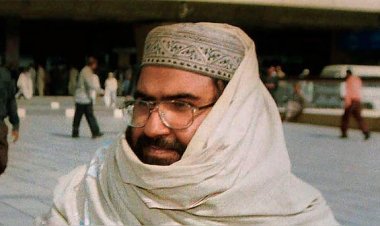
The turn of the millennium witnessed a technological mutation where the infrastructure of subversion shifted from analogue tapes to digital storage devices. Major Pakistan-based terror leaders, including Masood Azhar and Hafiz Saeed, began leveraging high-fidelity digital audio and video lectures to maintain an uninterrupted ideological connection with local operatives. Propaganda units under the command of deputies like Saifullah Kasuri digitised and compressed lengthy sermons onto CD-ROMs and USB pen drives, allowing couriers to hand-carry propaganda across heavily monitored borders. By the late 2000s, the proliferation of multimedia mobile phones gave rise to a resilient, unmonitored offline intranet. Graphic execution videos produced during the Iraq War, prominently featuring Abu Musab-al-Zarqawi firing machine guns alongside fiery speeches, were copied onto micro-SD cards and distributed locally via peer-to-peer Bluetooth transfers in local markets and campuses. This peer-to-peer digital ecosystem systematically reshaped cognitive priors of vulnerable youth, standardising extreme violence and aestheticising armed militancy through high-energy vocal nasheeds like Sabeelunah (Al-Jihad), all while completely bypassing state telecommunication monitoring and censorship frameworks.
The Smartphone Era and Participatory Propaganda
The arrival of affordable smartphones and ubiquitous mobile internet access transformed passive consumption of propaganda into an era of highly volatile participatory propaganda. This shift was epitomised in the mid-2010s by the glorification of commanders like Burhan Wani, who shattered the traditional paradigm of masked anonymity by posing unmasked in military fatigues for the smartphone camera. This visual content was specifically engineered for viral dissemination across global social media platforms, packaging the insurgent not as a terrifying guerrilla, but as a relatable, counter-cultural icon. Local youth rapidly transitioned from being mere consumers of information to becoming active co-creators of the narrative, utilising video editing tools to create motivational social media edits and crop images within their peer networks. The cognitive efficacy of this campaign was realised when Burhan Wani was neutralised in 2016, triggering a massive wave of romanticised public outrage, prolonged street unrest and a significant spike in localised militant recruitment, demonstrating that digital narrative dominance could directly drive physical instability.
The Modern Intelligentised Grid and Transnational Alliances
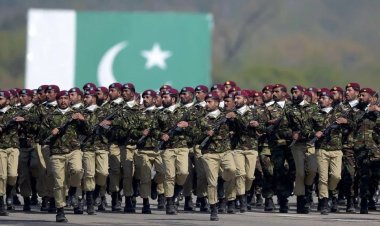
In the contemporary era, the war on conscience has evolved into an institutionalised, state-sponsored framework where the media wing of Pakistan’s armed forces, the Inter-Services Public Relations, functions as the central hub for conducting sophisticated influence operations. To maximise efficiency in the digital domain, the ISPR runs a dedicated internship scheme to recruit and train tech-savvy youth directly in the mechanics of cognitive warfare. The global scale of this mechanism was exposed in a June 2021 report by the analytics firm Graphika, which revealed that Facebook had removed an organised network of Pakistani-origin pages executing coordinated inauthentic behaviour. Graphika traced the coordination of this network to a Pakistan-based public relations firm operating with direct connections to the ISPR, demonstrating how covert operations weaponise digital space. This campaign targeted international and local perceptions by circulating curated news bulletins, fabricated photos and doctored media screenshots designed to elevate narratives of systematic human rights abuses in Jammu and Kashmir.
Furthermore, this cognitive offensive has expanded into a multilateral transnational alliance, pooling strategic resources with external state actors to isolate India diplomatically. A notable October 2022 research report revealed that Pakistan had formalised a covert agreement with Turkey to establish a specialised cyber army dedicated to manipulating global public opinion and launching coordinated attacks against Indian digital spaces. Under this project, approximately 6000 Pakistani police personnel were systematically trained by Turkish security elements to master digital social media amplification tools. This structural co-operation extended to the creation of a secret army of mercenary journalists, aggressively recruiting reporters from within Pakistan-occupied Kashmir to anchor internationalised disinformation campaigns. Concurrently, Turkish state media broadcasters, including TRT World and Anadolu Media, worked in tandem with their counterparts to flood the Gulf region with anti-India content. This is reflected in TRT World publishing over thirty long investigative stories specifically engineered to delegitimise the constitutional abrogation of Articles 370 and 35A, attempting to reshape cognitive perceptions across the wider Islamic world through continuous informational escalation. Modern operations have integrated generative artificial intelligence to launch automated hashtag storms and synthetic deepfakes, attempting to frame kinetic security incidents as state-staged events through manufactured algorithmic credibility.
Reclaiming the Narrative Battlespace
The historical and contemporary trajectory of this eight-decade siege proves that Pakistan’s influence in the region is not an accident of geography, but the direct result of a massive, systematic investment in the Kashmiri mind. When we ask why certain sections of the population harbour affinity for a foreign power or animosity toward India, the answer lies in the decades of meticulously curated literature, audio propaganda and digital narrative construction designed to make that perspective the default reality. By systematically reframing history, from the laundering of looters into liberators to the constant digital reinforcement of victimhood, Pakistan has occupied the cognitive space where local identity is formed. To reverse this, India must stop treating this as a temporary security challenge and start treating it as a permanent institutional requirement.
Reclaiming this battlespace of minds requires a profound strategic pivot from reactive debunking to proactive cognitive defence. Rather than merely fighting over the news of the day, India must implement a comprehensive framework that systematically deconstructs the foundational myths planted by adversarial networks. India should formalise an interdisciplinary body that synchronises intelligence, public diplomacy and digital technology experts to move beyond standard propaganda efforts. This body must be tasked with identifying and mapping the long-term narrative threads used by adversaries, such as the romanticisation of historical violence and neutralising them through persistent, localised counter-narratives that utilise the same vernacular and cultural conduits the adversaries themselves once occupied.
Drawing from the success of existing civil-military outreach, we must scale programs that empower local Kashmiri intellectuals, educators and community leaders to reclaim the historical record. This involves moving away from centralised, state-branded messaging toward supporting localised, peer-to-peer discourse that challenges the legitimacy of imported radical myths without resorting to external top-down imposition.
The defence of sovereign conscience lies in equipping the next generation with advanced analytical tools. Our education system in the region must integrate rigorous historical analysis and digital media forensics, enabling citizens to recognise the emotional triggers of manipulation, such as the romanticisation of armed actors and view them as artefacts of a manufactured reality rather than organic local sentiments.
Disclaimer: This paper is the author's individual scholastic contribution and does not necessarily reflect the organization's viewpoint.
The Author is an advocate practicing before the High Court of Jammu & Kashmir and Ladakh at Srinagar.