From Proxy to Partner: Turkey's Role in Reconstructing Syria's Military
 usanasfoundation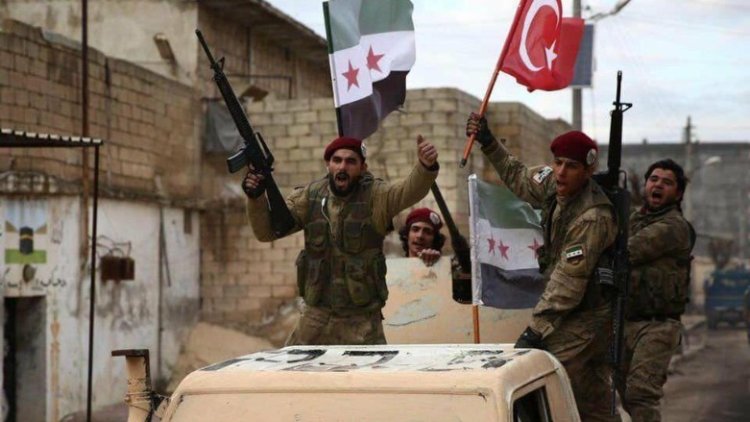
Analysis
By Preeti Khenta
When the Sunni rebels led by Ahmed al-Sharaa ascended to power in 2024, it resulted in a fundamental shift in the regional balance of power. The period of Assad, characterized by the dominance of the Iranian-Shiite axis, has now been replaced by a new Sunni forces-dominant paradigm, with heavy representation of Islamist-Jihadist elements. The vacuum left by the Iranian-Shiite Axis has been effectively exploited by Sunni -Turkey, which has emerged as a central player shaping the new Syrian Army.
Turkey is establishing itself as the primary ally of the al-Sharaa regime, while building the new Syrian Army, through professional training and by supplying weapons and military equipment. It is a strategic initiative by Turkey to solidify its influence over the country and strengthen the Sunni-State alliance in Damascus. Furthermore, it is the broader ambition to project Turkey’s power and pursue the neo-ottoman and Islamist agenda of Turkish President Erdogan. A crucial facet of this is to build a Syrian military that actively targets entities designated by Ankara, including internal factions such as the Kurdish Syrian Democratic Forces (SDF).
The Turkish assistance has manifested in many comprehensive aspects, from developing the Syrian army’s fighting capability to fully rehabilitating the security system. The military cooperation agreement, signed between Turkish Defence Minister Yaşar Güler and his Syrian counterpart Murhaf Abu Qasra in August 2025, is intended to address this objective.
It all started in 2016, when Turkey became involved in the Syrian conflict and launched Operation Euphrates Shield, a counterterrorism campaign against the Islamic State, which culminated in a strategic project that significantly altered the political and military dynamics in northern Syria. Additionally, it had a profound impact on changing the landscape for the Kurdish forces in north-eastern Syria.
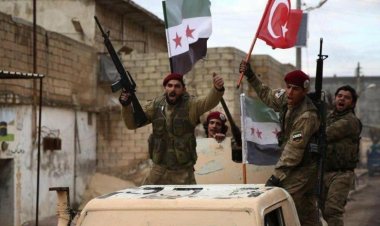
The Syrian National Army (SNA) was formed as a coalition of Free Syrian Army units, Islamist Brigades, and Turkmen militias. Turkey has developed the SNA into a loyal proxy force through a combination of funding, training and political oversight. In this process, Turkey has implemented its own military bureaucracy- brigade within SNA, including disciplinary committees, courts, police forces and cross-border supply chains. The SNA has not just policed Turkish-held areas in Syria but also been deployed to foreign theatres such as Libya and Nagorno Karabakh. By 2020, it had become a cornerstone of Turkey’s regional strategy.
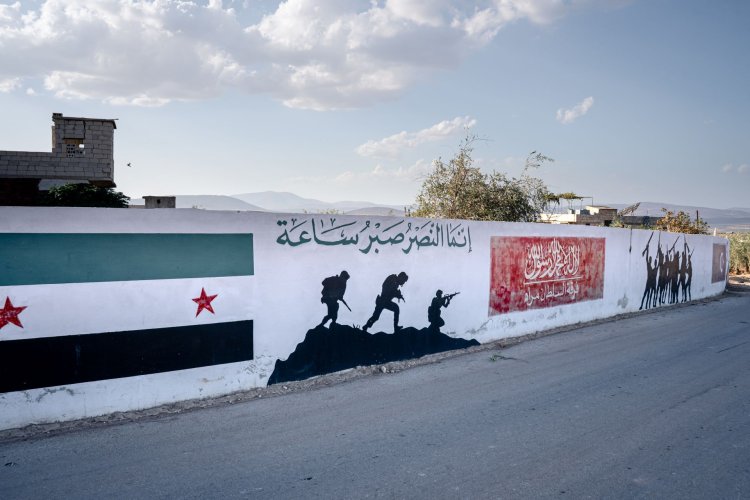
Fig 1: An abandoned base of the Sultan Murad faction close to the Turkish border above the village of Dayr Sawwan, right next to civilian houses. The base itself was the house of a Kurdish family, who were expelled in 2018
When the al- Sharaa government is formed in 2024. Ankara has announced that the SNA factions in Syria “would integrate under the new national army” of Syria, with al-Sharaa serving as its commander-in-chief. With this action, Ankara has endorsed the new government in Damascus and signalled that it can exert influence within Syria's emerging military framework. An agreement was signed in August 2025 in Ankara between the defence ministers of Syria and Turkey, which further solidified this partnership. This agreement has built a substantive Turkish presence in Syria’s defence architecture, extending beyond informal coordination or proxy support. The Syrian government has confirmed many times that this relationship is predicated on partnership rather than control, and emphasizing the cooperation with Turkey as one of collaboration rather than subordination.
Most of these high-profile appointments within the national army, comprising former leaders of the SNA, were made by Turkey, but not to serve an external power agenda. SNA will remain a patchwork for militias, varying in different sizes and influence, and often run in a personalized approach by an individual commander.
However, it is a balancing act to integrate the SNA fighters into the new Syrian Army. These fighters still have the familial, tribal and local bonds that once shaped their loyalty inside the SNA. Even if they have been reassigned together, they tend to create the same hierarchical structures within the new units that were once in the SNA Army. This preserves the local power structure rather than dismantling it entirely. While Turkey has made significant efforts to unify the SNA, it has never developed into a coherent institution.
The Syrian government integrated the SNA faction into its military structure. The smaller factions entered as brigades within Hayat Tahrir al Sham (HTS)-led divisions, while the larger groups became independent divisions. Influential commanders were awarded leadership positions within this framework. For Instance, the Suleiman Shah Brigade, rebranded as the 62nd Division and now in charge of security operations east of the city of Hama, remained under the command of al-Jassem. Concurrently, the personnel of the Sultan Murad and Mehmad al-Fatih brigades have largely retained their chains of command and local influence despite formal integration into Ministry of Defence divisions.
Initially, it was really the rebranding of various factions from different groups; however, over time, the army has begun to unify and institutionalize its structure. This development was observed in early January, when the government forces swept through Aleppo’s Kurdish neighbourhoods and the Arab majority areas previously administered by the Kurdish-led Syrian Democratic Forces (SDF). A formal agreement has been established where the SDF forces are integrating into the Syrian Army. However, there is a deep mistrust going on as the SDF does not trust the Syrian army and, more specifically, the SNA factions. The SDF is concerned that even if the SNA factions come under the Ministry of Defence, they will ultimately follow the order of Ankara and prioritize their own interests. The reason being that the presence of these factions is complicating the negotiations, as the Kurdish factions perceive that the Syrian Army led by the SNA factions, who once led operations against the Kurdish communities, would erode their fragile autonomy and derail the aspirations of the decentralization.
For Instance, the appointment of Abu Hatem Shaqra as the commander of the 86th Brigade of the army in Deir ez- Zor is noteworthy. He previously served as the leader of Ahrar al- Sharqiya, a faction implicated in the persecution of Kurdish people. In 2019, he was suspected of the execution of the Kurdish activist Hervin Khalafin in the north of Raqqa during a military operation.
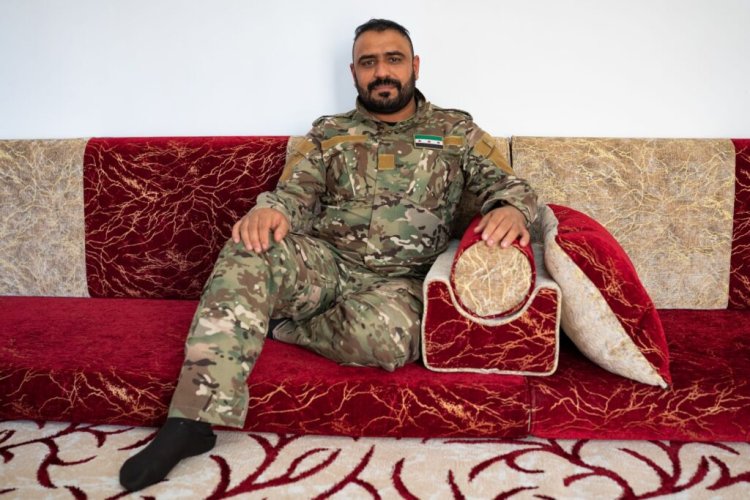
Fig 2: Mohammed al-Jassem, whose alias is Abu Amsha, former commander of the Suleiman Shah Brigade in the SNA and now a general in the Syrian army, in which he serves as commander of the 62nd Brigade based in Hama, his hometown. (Charles Cuau)
Another pertinent example is Mohammed al-Jassem, alias Abu Amsha, who is the former head of the Suleiman Shah Brigade and, now after integration into the Syrian Army, serves as the commander of the 62nd Brigade. His ascension to this position is widely attributed to favourable support from Ankara. He is a controversial figure, having been sanctioned by the US Department of the Treasury in 2013, for his involvement in acts of violence and forced displacement targeting the Kurdish population in Afrin. Additionally, Abu Amsha has been accused of committing sexual assault against the wife of a member of his brigade at gunpoint in 2018, with the victim and her family silenced under the threat of retaliation. Notably, he possessed a Turkish passport. His previous stronghold, Shaykh al-Hadid at the Turkish border, the headquarters still display the Suleiman Shah brigade emblem and retains the main position in the north after the integration.
In the past, SNA and HTS also fought with each other, hence there is a sense of deep mistrust between the two factions. However, some reports have indicated that after December 2024, there has been a potential reset in the relationship between the HTS and the northern factions. However, the old differences are still embedded in their identity, loyalty, and political vision. The HTS perceives itself as the disciplined core entity which has a central command that adheres to the leadership of al-Sharra. In contrast, former SNA factions view themselves as local power brokers, and each faction leader considers himself to be the head of his respective brigade and the sovereign authority within its authority.
The strong presence of the SNA factions in the Syrian army, including training and assistance with the logistics and ammunition, indicates that Turkey’s presence in Syria is likely to be sustained for the long term. Furthermore, Turkey wants Syria to be a regular customer for the Turkish defence industry and aims to cultivate a regional alliance. However, Syria will remain a battleground of multiple players. The ongoing conflict between the SDF and SNA factions is quite significant alongside the persistent threat posed by the Islamist Jihadist factions, which remain a slow simmering threat.
Disclaimer: This paper is the author's individual scholastic contribution and does not necessarily reflect the organization's viewpoint.