The Offensive Defence: Why India must shift its Strategic Buffer across the Line of Control
 usanasfoundation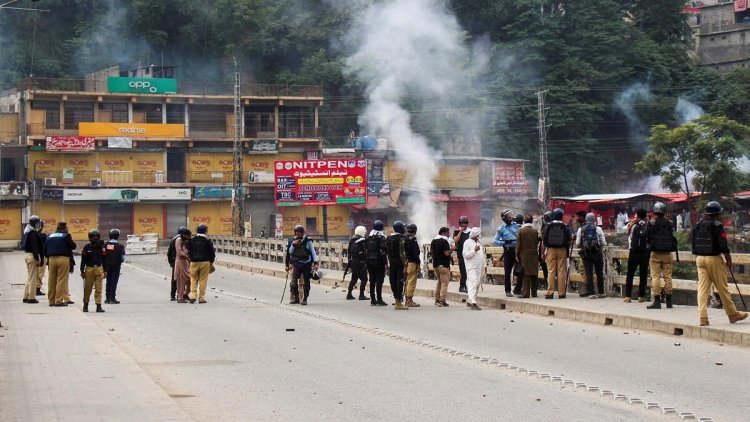
Opinion
By Ajmal Shah
The true measure of a nation-state’s strategic foresight lies in its capacity to dictate the precise geography of its own security. For over three decades, Jammu and Kashmir has served as India’s primary defensive buffer, acting as a geopolitical shock absorber for a relentless proxy war. By absorbing the immense kinetic and psychological trauma of cross-border terrorism, this defensive posture ensured national survival, but it simultaneously guaranteed perpetual conflict upon Indian soil. When a nation allows its own sovereign heartland to act as the friction zone, it treats only the symptoms of sub-conventional warfare while the adversary pays absolutely zero operational cost. To secure enduring national security, India must fundamentally recognise that its defensive buffer needs to be shifted across the Line of Control. It must embrace the sophisticated doctrine of Offensive Defence. This framework maintains a purely defensive ultimate objective, which is the absolute protection of the Indian mainland, but it utilises a decisively forward-leaning methodology. By proactively shifting the geopolitical and psychological buffer zone deep into the occupied territory, India can force the adversary to absorb the devastating friction of its own proxy war, securing its borders at their expense.
The Strategic Imperative for Shifting the Friction Zone
The necessity of this doctrinal pivot is conclusively validated by a tragic history of diplomatic betrayals. Operating under the assumption that genuine, lasting peace can be achieved with the Pakistani military establishment is a proven geopolitical illusion. Whenever India has extended a hand in magnificent good faith, Pakistan has utilised the cover of diplomacy to execute its overarching doctrine of bleeding India with a thousand cuts while hiding behind the cowardly shield of plausible deniability. The world solemnly remembers the optimism of the February 1999 Lahore Declaration, which was immediately shattered when Pakistan secretly infiltrated troops in J&K to spark the Kargil conflict. Similarly, the Agra Summit of July 2001 was followed mere months later by an assault on the Indian Parliament by state-backed terror proxies. Furthermore, the unannounced goodwill visit to Lahore in December 2015 was again answered almost immediately by devastating attacks at the Pathankot airbase and the Uri military camp. These undeniable historical truths confirm that Pakistan wields strategic ambiguity as a weapon. Therefore, traditional diplomacy is a fatal trap and robust fortification combined with shifting the strategic buffer is the only viable path to neutralise the terror launchpads at their source.
The Constitutional Authority to Relocate the Buffer
This transition in our strategic posture is decidedly not an exercise in territorial expansion, but rather a rigorous assertion of established constitutional sovereignty. The absolute legal foundation of this reality is permanently anchored in the Instrument of Accession executed by Maharaja Hari Singh in October 1947, a document that comprehensively integrated the entirety of the princely state into the Indian Union. Under the unyielding parameters of international law, the presence of the Pakistani military across the Line of Control constitutes an illegal occupation. Consequently, any territorial alterations executed by the occupying power remain entirely devoid of legal legitimacy. India has consistently institutionalised this sovereign reality by maintaining 24 vacant seats reserved specifically for these occupied territories within the J&K legislative assembly. This constitutional commitment provides New Delhi with an impregnable moral and legal high ground to aggressively advocate for the rights of the occupied population, granting India the sovereign right to project its strategic buffer into this territory.
How the Buffer Shift will enhance India’s National Security
The mechanics of shifting this strategic buffer directly address the core of India’s national security apparatus. The occupied territory currently functions as a secure staging ground for a vast network of proxy terror infrastructure, heavily relying on forward-deployed communication relays that allow militant groups to orchestrate cross-border infiltrations. By shifting the buffer zone, India would not launch a kinetic invasion. Instead, it would utilise the diplomatic and moral leverage to turn the local population against these proxy networks that its occupier and oppressor sponsors. When the indigenous civil society becomes fundamentally hostile to occupying groups like Lashkar-e-Taiba and Jaish-e-Mohammed, the terrain itself becomes a trap for the terrorists. Deprived of local logistical support, human intelligence cover and geographic sanctuary, the proxy launchpads structurally collapse from within. They will be organically forced to retreat westward into the Pakistani mainland of Punjab. This manoeuvre will neutralise the cross-border infiltration threat entirely, transforming Pakistan’s strategic staging ground into a massive internal liability without requiring Indian forces to fire a single shot across the Line of Control.
Transitioning from Defensive to Defensive Offensive
Shifting this strategic buffer fundamentally alters the kinetic posture of the armed forces on both sides of the LoC. Historically, Indian security forces within J&K have been structurally bound to a strictly defensive posture, perpetually tasked with reacting to infiltrations and neutralising threats upon domestic soil. By relocating the friction zone into the occupied territory, the overarching strategic burden would be entirely transferred to the adversary. The Pakistani military and intelligence apparatus, which historically devotes its immense resources to orchestrating infiltrations and planning terror attacks against India, will inevitably find itself completely consumed by the necessity of containing a massive internal uprising within its occupied region. When their primary operational mandate becomes suppressing a deeply hostile local population and managing a continuous domestic crisis, they would be stripped of both the time and the strategic bandwidth required to orchestrate sub-conventional attacks against the Indian mainland. This would effectively force the Pakistani establishment onto a permanent, desperate defensive footing. Consequently, India would successfully transition from a reactive defensive stance into a formidable defensive offensive posture, securing its sovereign borders by ensuring that the adversary is thoroughly paralysed by its own internal chaos and rendered entirely incapable of projecting terror outward.
The Historical Catalyst for the Buffer Shift
The most compelling opportunity for executing this buffer shift is currently unfolding organically within the occupied territories. History offers profound and often tragic lessons on the consequences of systemic political alienation. We quietly recall how a deep sense of political disempowerment and perceived systemic electoral manipulation in the late 1980s inadvertently laid the fertile groundwork for Pakistan to orchestrate Operation Tupac and start a tragic cycle of unrest within our own borders. Today, the occupying Pakistani state is aggressively repeating that exact historical error in the territories it illegally occupies. The core catalyst is the upcoming July 27 legislative elections, specifically the dispute over twelve highly controversial reserved refugee seats. The local population correctly recognises that these seats are a constitutional gerrymandering tool used by Islamabad to artificially install loyalist puppet governments, ensuring that true indigenous nationalists can never attain power. When the local judiciary ruled on June 7 that these seats could not be abolished, the state effectively sealed the democratic ballot box. This July 27 flashpoint is the ultimate moment of political disempowerment, presenting India with the perfect strategic window to let the enraged population dismantle the occupier’s proxy infrastructure.
The Internal Collapse of the Occupying State
Driven by this total political disenfranchisement, the local population, mobilised predominantly under the banner of the Joint Awami Action Committee, has risen against decades of systemic resource exploitation and crushing inflation. Rather than addressing genuine civic grievances, the occupying establishment has weaponised the Fourth Schedule of the Anti Terrorism Act. By designating legitimate civilian leaders as national security threats, the state apparatus has sought to justify a campaign of brutal military suppression. The situation deteriorated into an absolute humanitarian crisis throughout June. Following the assassination of prominent senior activist Shahzaib Habib, the region witnessed unprecedented civilian outrage. This culminated in a horrific state-backed massacre in Rawalakot on June 7 and 8, where paramilitary forces opened fire on grieving crowds. In a desperate attempt to restore control, Islamabad surged an estimated 14,000 extra paramilitary troops into the region and enforced comprehensive digital blockades. This volatile atmosphere was further ignited by the arrest of the central committee leader Shaukat Nawaz Mir, an act that effectively handed the civilian movement a living martyr and poured gasoline on the July 27 flashpoint.
The Public Unmasking of the State Proxy Nexus
The voices emerging from this besieged territory confirm unequivocally that the local population fully recognises the true nature of their oppressors, performing the exact counter terrorism work required to shift our strategic buffer. On July 2, during a massive public gathering of over 80,000 citizens at the Eidgah grounds in Rawalakot, regional leader Sardar Aman Khan delivered a devastating public indictment. In his widely circulated address, he explicitly stated that the military establishment originally handed guns to the people of J&K and PoJK decades ago and now possesses the audacity to label those exact same people as terrorists. He boldly exposed the hypocrisy of the local administration, recalling how officials recently provided extensive security to armed rallies organised by Jaish-e-Mohammed while simultaneously crushing unarmed civilian protests. Most significantly, he warned that the movement would escalate into a demand for Pakistan to vacate the occupied territory completely and explicitly threatened to seek stronger diplomatic engagement with India.
The Cross Border Appeal for Solidarity
The strategic reversal of the occupier’s narrative reached an unprecedented milestone just days before the massive July protests. In a powerful and widely circulated video message on July 4, Joint Awami Action Committee core member Sardar Aman Khan made a historic, direct appeal across the Line of Control. Addressing the citizens of Srinagar, Baramulla, Poonch, Rajouri, Jammu and Ladakh, he desperately urged the people of the Indian mainland to stand in absolute solidarity with the besieged residents of the occupied territory. By explicitly reaching out to the citizens of J&K for support against the extreme cruelty, starvation blockades and military aggression perpetrated by Islamabad, the leadership of the occupied territory completely shattered the foundational propaganda of the Pakistani state. This cross-border appeal proves unequivocally that the indigenous population views India not as an adversary, but as a natural ally against their actual oppressors. It provides India with an impregnable moral and political justification to diplomatically intervene on their behalf, accelerating the shift of the strategic buffer by uniting the voices across the Line of Control.
The Weaponisation of the Dead and Global Outrage
The horrifying severity of the occupation was further corroborated by diaspora activists, notably Dr. Amjad Ayub Mirza, who provided a chilling testimony from Glasgow. He documented that over 600 political workers have been detained amid a deliberate economic and medical blockade that has effectively placed the region under a medieval siege. He revealed the grotesque reality that state hospitals in Rawalakot are refusing to release the bodies of deceased protesters unless grieving families sign declarations falsely admitting their loved ones were terrorists. This catastrophic institutional overreach is a desperate attempt by the state to retroactively justify its violence. It has thoroughly alienated the population, prompting thousands to completely boycott the July 27 elections and transform the traditional July 5 Kashmir Solidarity Day into a massive global protest directed entirely against the occupying security forces.
Strategic Ambiguity and the Arsenal of Rebellion
In observing this organic uprising, India must recognise a profound strategic opportunity that operates powerfully below the threshold of direct kinetic intervention. There is already a massive proliferation of Kalashnikovs and illicit weapons circulating within the occupied regions as a direct, undeniable consequence of decades of state-sponsored militarisation. India does not need to distribute a single piece of arsenal to achieve its strategic objectives. Instead, New Delhi must master the delicate art of strategic ambiguity, providing overwhelming diplomatic and moral oxygen to the indigenous population. When a politically disempowered citizenry is pushed to the absolute brink, they naturally evolve into a formidable counter terrorism immune system. By elevating the voices of the oppressed at global forums, India must empower the local population to actively reject the terror infrastructure embedded in their communities, driving the buffer shift from within.
The Psychological Weapon of Developmental Asymmetry
This sophisticated cognitive offensive can be tremendously amplified by the undeniable developmental disparity existing visibly across the Line of Control. Prominent regional intellectuals, such as Professor Sajjad Raja, have courageously praised the rapid infrastructure expansion and the restoration of robust law and order in J&K, while lamenting the extractive exploitation rampant in the occupied territories. The contrast is spectacularly clear. India is executing monumental nation-building projects and driving immense agricultural prosperity in J&K. The establishment of elite educational institutions and advanced healthcare facilities stands in stark contrast to the occupied region, where citizens suffer from a total absence of tertiary healthcare and watch helplessly as their natural resources are relentlessly drained to power the occupier’s mainland. This stark contrast can serve as the ultimate psychological weapon that can pull the alienated population towards the promise of democratic integration.
Conclusion: The Multi-Pronged Blueprint for Enduring Peace
We secure the enduring peace of our homeland not by constructing taller fortresses on our own soil, but by ensuring that the occupying apparatus dissolves under the weight of its own systemic failures, definitively shifting the strategic buffer and transforming a historical battleground into an eternal testament to democratic resilience.
The preservation of our national security demands the rigorous execution of a highly sophisticated, multi-pronged strategy designed to permanently shift the defensive buffer into the occupied territory. This comprehensive blueprint must fundamentally redefine the global diplomatic narrative. For decades, the international community has grown accustomed to the adversary repeatedly raking up a fabricated Kashmir issue at global platforms. India must decisively dismantle this manufactured narrative by asserting a singular, uncompromising truth. J&K remains an integral, indivisible part of India and the only legitimate Kashmir issue that exists today is the ongoing illegal occupation of Indian territory by Pakistan. To resolve this singular issue, New Delhi must operationalise a coordinated diplomatic, legal, cognitive and developmental offensive. The diplomatic prong requires Indian representatives to relentlessly expose the administrative atrocities and the weaponisation of anti-terror legislation against unarmed civilians, presenting this undeniable evidence directly to the United Nations Human Rights Council. Concurrently, the legal prong necessitates sustained pressure on the international community to demand that the occupying military forces completely vacate the territory, thereby enforcing the sovereign realities established by the Instrument of Accession. The cognitive and moral prong involves providing strategic, unwavering support to the alienated diaspora and the indigenous civil rights leaders, utilising strategic ambiguity to amplify their voices so the global community hears directly from the victims of state-sponsored suppression. Finally, the developmental prong leverages the immense, undeniable economic triumphs of our own frontier, utilising the stark contrast in prosperity to accelerate the structural collapse of the adversary’s ideological legitimacy. By meticulously executing this multi-pronged strategy, India would empower the local population to organically purge the terror infrastructure from their communities, forcing the proxy launchpads to retreat into the mainland.
Disclaimer: This paper is the author's individual scholastic contribution and does not necessarily reflect the organization's viewpoint.
The author is an advocate at the High Court of Jammu & Kashmir and Ladakh, at Srinagar.