Deterring Transformation: The Strategic Logic of Covert and Overt Regime Change in Iran (1953 and 2026)
A Comparative Analysis of United States-Backed Regime Change Operations in Iran
 usanasfoundation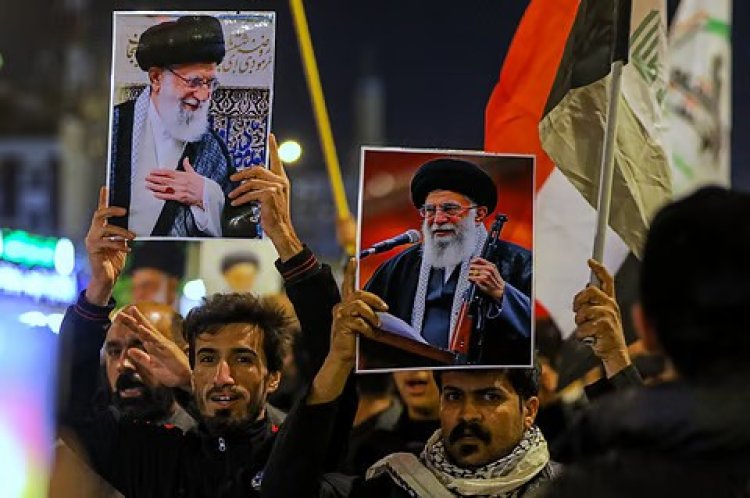
Analysis
By: Shivraj Singh Rathore
The 2026 Overt Regime Change and the Question of Power
On 28 February 2026, Iran’s Supreme Leader since 1989 and the Islamic world’s longest-serving head of state, Ayatollah Ali Khamenei, was killed in coordinated United States (US) and Israeli airstrikes. He became the first sitting Supreme Leader to be eliminated in a foreign military operation. Amidst the war, the focus has been on regime change in Iran. President Trump said in his speech, “Finally, to the great, proud people of Iran, I say tonight that the hour of your freedom is at hand…when we are finished, take over your government. It will be yours to take. This will probably be your only chance for generations.” Trump’s statement herein demands critical scrutiny. Claiming regime change to be ‘the hour of your freedom’ conceals a fundamental asymmetry, i.e., the Iranian people were not a party to the decision to act, the timing, and the terms of any post-Khamenei political order. The appeal (‘‘take over your government. It will be yours to take’’) simultaneously justified intervention and pre-emptively deflected accountability for the political vacuum it created. This is therefore strategic language as much as liberation language: a rhetorical device that shapes expectations of who bears responsibility for what follows.
This article examines a precise analytical question: why did the United States pursue covert regime change in Iran in 1953 but resort to overt military intervention in 2026? This article assumes that deterring transformations unfavourable to Western interests has been the underlying strategic objective for regime change (which remains constant) and hence asks: What explains the divergence in methods (covert and overt) of regime change? While the ongoing war has multifarious stated objectives, ranging from nuclear disarmament to regional security, this article focuses specifically on regime change. Regime change refers to overthrowing a government in a target country and installing a friendlier alternative to serve the intervening state’s interests. This can be carried out covertly (i.e., through coups, orchestrating popular uprisings, etc.) or overtly. In the case of covert regime change, the intervening state works clandestinely through strategic covert actions, which can range from propaganda and elite manipulation to paramilitary operations, and can be described as an activity midway between diplomacy and war. In the overt mode, regime change is achieved by inflicting a military defeat, eliminating or capturing the target state’s leadership, as happened with Iran’s Khamenei and Venezuela’s Nicolás Maduro, and installing a friendly successor authority.
Theoretical Lens: Regime Change as Deterrence of Transformation
The article uses two theoretical frameworks for its analysis: the Thucydides Trap and game theory. Named after the Greek historian’s stipulation that Athens’ rise alarmed Sparta to the extent that war became virtually inevitable, the Thucydides Trap describes a frequently seen dynamic in world politics, i.e., when a dominant power perceives its global influence under challenge (whether ideologically, economically, or in military terms), it resorts to covert or overt measures to preserve the status quo. The logic is preventive rather than expansionist: great powers intervene not simply to expand but to forestall decline and contain the rise of their rivals.
This structural logic provides an explanation as to why covert regime-change operations proliferated during the Cold War. Operations such as Operation Ajax (1953, Iran) and Operation Cyclone (1979–89, Afghanistan) were typical Thucydidean responses. In other words, they were instruments designed to contain Soviet influence without triggering direct global power confrontation. Graham Allison, the Harvard political scientist and former US Assistant Secretary of Defense who revived and popularised the Thucydides Trap concept in his book Destined for War: Can America and China Escape Thucydides’s Trap?, argues that even localised events could trigger disproportionate great-power reactions owing to the broader systemic fears of losing influence. Notably, the nationalisation of oil in Iran or an Afghan insurgency was thus never simply a local affair. It was rather a potential shift in the global balance, to which the dominant powers reacted on a war footing.
Building on this logic, Game theory complements it by explaining how states translate structural pressures into concrete strategic choices. The argument here is that instead of acting on instinct, strategic actors must ‘‘scan the entire matrix, evaluating each outcome, and attending to the preferences of others’’. Strategy, in Game theory, is inseparable from expectations: consequences depend on what one expects others to do, even on how one expects others to react to one’s own behaviour. Juxtaposing this to regime change, it means that covert intervention is not an emotional reaction to a perceived threat. Rather, it is a calculated move to alter the adversary’s incentive structure, specifically, to modify the ‘‘payoff structure’’, before open conflict becomes necessary.
This reframes covert regime change as an instrument of deterrence. As Schelling puts it, ‘‘threats, when they succeed, need not be carried out’’, their effectiveness, however, lies in altering the opponent’s expectations rather than in executing punishment. By demonstrating a capacity for intelligence penetration, elite manipulation, economic destabilisation, or paramilitary action, the intervening state modifies the target state’s anticipated incentives, reshaping its cost-benefit calculus before any crisis escalates.
This deterrent logic works across multiple domains. Politically, it can forestall ideological transformation, as in Cold War operations against communist movements. Economically, it can prevent national control over strategic resources: Operation Ajax was as much a response to Mossadegh’s oil nationalisation as to communist containment, just like the recent capture of Venezuela’s Nicolás Maduro prompted discussions about US plans for that country’s oil wealth. Structurally, it can deter the acquisition of transformative capabilities, such as nuclear weapons, that have the potential to erode the dominant state’s strategic advantage. In each of these dimensions, regime change operates less as an isolated act of aggression and more as a preventive deterrent against systemic shifts threatening existing power distributions.
The Thucydides Trap and game theory are theoretically complementary. The Trap explains the structural logic, i.e., rising transformations generate fear in dominant powers, which respond preventively. Game theory explains the mechanism, i.e. how states signal, calculate payoffs, manipulate constraints, and choose strategies that maximise advantage while minimising overt escalation. Crucially, as Schelling suggests, game theory ‘‘eliminates motive from the strategy of decision’’. Whether a rising state pursues communism, oil nationalisation, or nuclear capability is analytically secondary; what matters is whether that transformation alters the dominant state’s payoff structure. Covert regime change can thus be considered as a rational, game-theoretic instrument deployed under Thucydidean structural pressure. Overt regime change does away with concealment altogether, and Operation Epic Fury, 2026, represents the clearest recent expression of this logic taken to its overt conclusion.
Same End, Different Means: Why Covert in 1953 and Overt in 2026?
The 1953 covert regime change and the recent overt regime change might be similar in their ends; however, they differ to a great extent in their means. It is therefore important to understand why the United States orchestrated two regime changes in Iran, in 1953 and 2026, by such strikingly different means.
To begin with, Iran has been a testimony to various transformations, beginning with the turn towards Shiism during the Safavid rule (with a largely strategic rationale); the constitutional revolution from 1905 to 1911; the 1953 coup; the 1979 Islamic revolution; and the latest is the killing of Supreme Leader Khamenei. However, the 1953 and 2026 covert and overt regime changes, respectively, are counter-transformation acts, as discussed in the previous sections. However, it is the very nature of the transformations that explains why the US went for covert regime change in 1953 and overt in 2026.
The broad reasons for covert regime change in 1953 were to deter a political transformation, i.e., a communist takeover, which could have led to negative shifts in the political payoffs for the US, as well as an economic transformation, i.e., nationalization of oil fields, which could have led to negative shifts in the economic payoffs for the UK; hence, both countries came together to orchestrate this regime change to deter these negative shifts. These transformations were popular and were duly backed by the people of Iran. This is evident by the fact that on 22 July 1952, 61 out of 63 MPs present at the Majles (Iranian Parliament) voted in favor of Mosaddeq as the new prime minister. Thus, the popularity of these transformations made overt regime change untenable and drove the US and UK toward covert means. Let us look at the case study in detail.
Operation Ajax (1953): Covert Regime Change and Cold War Calculations
In August 1953, a coup was launched against Iran’s then prime minister, Dr. Mohammed Mossadegh, and he was overthrown from power, paving the way for the rule of Shah Mohammad Reza Pahlavi. According to the declassified documents, this coup was instigated by a covert operation by the Central Intelligence Agency (CIA), code-named Operation Ajax. On being asked about the CIA's role in the coup, Allen Dulles, the then director of the CIA, said, "The government of Mossadegh was overthrown by the action of the Shah. Now that we encouraged the Shah to take that action. I will not deny.’’ The US, as well as the UK, had their respective vested interests in overthrowing the Mossadegh government. The UK was affected by the nationalization of the Iranian oil reserves, affecting the British-owned Anglo-Iranian Oil Company (AIOC), reflecting a huge clash of economic interests between British imperialism and Iranian patriotism. The US, on the other hand, was suspicious of Iran taking the path to Communism. The language used in this context was much like what Ross and Wise write: “Mosaddegh connived with the Tudeh, Iran's Communist Party.” Kermit Roosevelt Jr., the Middle East specialist in the CIA, was the man of the moment for the Agency. He almost single-handedly called the pro-Shah forces onto the streets of Tehran. Both the coup and Operation Ajax were a success (for the Western powers at the very least), and the Shah was brought to power, providing significant relief for the US in the Cold War.
Operation Epic Fury (2026): Overt Intervention and Structural Transformation
The reasons for recent overt regime change, through Operation Epic Fury, are being given as protecting the Iranian people's rights and “to eliminate the imminent nuclear threat posed by the Iranian regime, destroy its ballistic missile arsenal, degrade its proxy terror networks, and cripple its naval forces.” The operation has been portrayed as a victory for the Iranian people as seen in Trump’s remarks (discussed in the beginning). The core reason behind this overt regime change is curtailing Iran's nuclear program, which has the potential to cause structural transformation in the global order. However, this regime change was undertaken overtly because the recent transformations, such as a sharp fall of Iran's currency, soaring inflation, state mismanagement of essential services, and worsening living conditions in Iran, were not popular and lacked public support, evident by the fact that around 36500 people were killed in protests, according to Iran International.
Conclusion: Popular Transformations, Western Interests, and the Logic of Intervention
To sum up, many transformations that Iran has undergone or at least tried to undergo have been perceived as threats by the West. One of the explanations regarding the difference in methods is the degree of domestic popularity of the transformation involving a political or an economic change. The Iranian leadership faced a long record of public discontent and repeated anti-regime protests in the country. Protesters' demands for a political system respecting their rights and dignity were given harsh treatment by the Iranian authorities. This has likely lowered the perceived political and operational costs of overt military intervention. However, it is also important to consider the limitations of this approach. The US actions in 2026 show, despite the killing of the Supreme Leader and existing public discontent, the regime change attempt has not been achieved. However, in 1953, during Mossadegh’s government, overt change was far more challenging. Therefore, covert action became a more preferred one.
However, developments since the beginning of the war have considerably complicated the ‘liberation’ framing with which Operation Epic Fury was announced and bear directly on the analytical argument advanced in this article. Firstly, Mojtaba Khamenei, the son of the slain Supreme Leader Ali Khamenei, was designated as the new ‘Ayatollah’ (bypassing traditional religious advancement) and Iran’s new Supreme Leader but has rarely appeared in public since assuming the title, leaving the succession deeply uncertain. Second, on 17 March 2026, in an Israeli airstrike, Ali Larijani, secretary of the Supreme National Security Council and de facto security coordinator after Khamenei’s death, was killed. Third, Iran closed the Strait of Hormuz, through which approximately twenty per cent of global oil supply transits, triggering acute disruption to global energy markets. As of August 2026, Iran’s Foreign Ministry denies any direct negotiations with the United States, while third-party-mediated indirect talks continue with uncertain prospects, thereby bringing the war to an on-and-off position.
These developments carry significant theoretical weight. The Iran Revolutionary Guard Corps (IRGC) has become a more dominant force in Iran’s security architecture; analysts note that the only viable ceasefire is one the IRGC endorses, and the organisation has consolidated rather than relinquished its grip. One might ask whether the regime has even changed effectively? It is widely argued that due to Ali Khamenei’s structuring of the IRGC, nothing has quite changed even after his elimination, and Iran has shown equal resilience against the US. Iran’s governmental structures remain largely intact, bolstered by the same ideology and institutional mechanisms as before the strikes.
This makes the claim of regime change debatable. If Ali Khamenei was himself the ‘regime’ (i.e. if the power was that centralised), then yes, the regime has been changed. However, if the IRGC together with the civilian leadership constitutes the regime, then regime change is an incomplete project as of now. Clearly, the latter is a stronger case.
That said, the argument advanced by this article, linking regime change to transformation deterrence and choosing overt regime change when the transformation is unpopular among the domestic population, is very much a reality when one looks at Iran during 1953 and in 2026. However, the continued hostility by both sides has taken the war to a rather different domain, putting the aspect of regime change on the back burner. One might argue that the US is still looking forward to a regime change in Iran and that achieving that will be the true victory for President Trump. However, to do so, the US will have to strike at Iran’s grand strategy, which, according to Vali Nasr, the author of the book Iran’s Grand Strategy: A Political History, is driven by a pragmatic pursuit of national survival and regional security, aiming to exhaust the US and push it out of the Middle East. However, the strategic posture of the US, showing readiness to negotiate with Iran’s (new) regime, reflects that President Trump has realised that he is not in Venezuela and Khamenei was not Maduro.
Disclaimer: The views expressed in this article are solely those of the author and do not represent the official positions of Usanas Foundation or South Asian University.
Author Bio: Shivraj Singh Rathore is a Master's student at the Faculty of International Studies, South Asian University, New Delhi, with research interests spanning across Intelligence studies, Terrorism Studies, War in International Relations, Culture and World Politics and associated domains. This article is adapted from his MA dissertation, supervised by Dr. Anmol Mukhia.