Mecca Pact: What does it mean for India and the world?
 usanasfoundation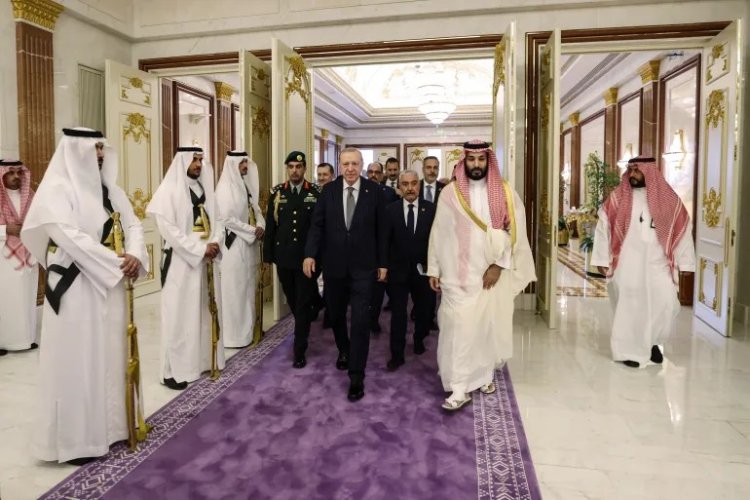
Analysis
By: Ameya Kulkarni
On 7 August 2026, Saudi Crown Prince Mohammed bin Salman, Turkish President Recep Tayyip Erdoğan and Pakistani Prime Minister Shehbaz Sharif signed a trilateral defence pact at Al-Safa Palace in Mecca, stating that an armed attack on any one signatory would be regarded as an attack on all three.
Coming on the heels of the Saudi–Pakistan defence agreement signed in September 2025, this Agreement adds a new regionally owned strategic layer to security, anchored by an idea of collective defence. Meanwhile, the Iran–United States (US)–Israel war has extended into its sixth month, currently characterised by a withering American willingness to keep militarily striking Iran versus Tehran’s increased appetite to incur damage in a bid to exhaust President Donald Trump’s administration from the region.
Indeed, the pact declares mutual defense as a duty of its three members—an attack on one will be considered an attack on all. But it does not establish a central command system, any paths to achieve greater interoperability, or clear obligations in terms of defense spending and procurement. It also does not mention the use of nuclear weapons.
The agreement was concluded following Sharif’s and Pakistan Army Chief Field Marshal Asim Munir’s Umrah pilgrimage in Mecca, during which they also met with Saudi and Turkish leaders. It came amid a wave of Iranian drone strikes on Saudi territory following the renewed 2026 Iran war, alongside growing concerns in Ankara and Riyadh over regional instability and the expanding scope of Israeli military operations. Pakistan’s foreign minister has characterised the pact as “purely defensive” and indicated that it remains open to other states that are willing to resolve disputes through peaceful means.
The demand for Middle Eastern states to assume greater responsibility for their own security has been developing for decades. Historically, however, the strategic importance of energy supplies provided the economic rationale for a sustained US military presence across the region. That rationale is becoming less compelling as Washington has moved towards energy independence and emerged as a major exporter of oil and gas. As a result, the traditional assumptions underpinning US policy in the Middle East are increasingly being questioned. The deaths of US soldiers in July 2026 during Iranian strikes against Jordan have further increased the political and military costs of the conflict for President Trump, who originally rose to power as a vocal critic of American military intervention abroad. He now finds himself deeply entangled in yet another prolonged conflict in the Middle East.
The Mecca Agreement, in essence, signals the gradual erosion of US influence in the Gulf and the broader Middle East. Iran’s response to US and Israeli strikes since 2025—including the assassination of Ayatollah Ali Khamenei in February 2026—initially reflected a state facing an existential crisis. However, Tehran now appears increasingly confident that the situation could present a rare opportunity to move up the escalation ladder and, if necessary, expand the conflict across the Persian Gulf. Its ultimate objective could be to push for the eventual withdrawal of the US from the region altogether.
This alliance between Saudi Arabia, Pakistan, and Türkiye is, therefore, not seen as a threat by Iran. Instead, it has argued that the trilateral defence agreement shows a “change in perception” towards the US.
Why this pact?
Capital, nuclear weapons, and a rapidly growing defence industrial and technology base (largely led by Türkiye’s successes with its home-grown defence manufacturing) are the three important variables on offer. After the Iran–Israel–US war started in February 2026, the Saudis maintained a balanced approach for quite some time. They did not mobilise against Iran, looked to preserve the Tehran–Riyadh normalisation brokered by China in 2023, and tried to package the conflict as one started by the US and Israel. These modalities are unlikely to change, despite the language used in the Mecca Agreement, which says that an attack on one of the signatories will be considered an attack on the others as well.
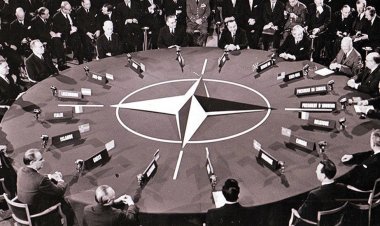
This trilateral agreement has already been bracketed under several variations—an “Islamic North Atlantic Treaty Organization (NATO)” and a “Sunni alliance,” amongst others. Similar language was used in the 2025 Saudi–Pakistan defence agreement as well. The addition of Türkiye into the mix seems to be an extension to the Riyadh–Islamabad pact. This argument is further strengthened by Türkiye suggesting that Egypt may join this consortium. This advent of ‘bloc politics’ in the Middle East is actively shaped by current geopolitical events, putting aside the historical, ideological, and sectarian baggage of the past.
To look at the Mecca pact solely as one aimed against Iran would be myopic. It is highly unlikely that Pakistan or Türkiye would get embroiled in a conflict with Iran. In fact, Türkiye in all likelihood played an important role in defusing a bubbling strategy in Washington some time ago, which relied on arming Kurdish militias inside Iran. There are around 16 million Kurds residing in Türkiye who have been highly politicised under the presidency of Recep Tayyip Erdoğan. For Islamabad, which now also enjoys a budding relationship with the Trump administration and is playing the role of mediator between Tehran and Washington, this presents an opportunity to reinstate itself as an Islamic power after spending a few years on the sidelines due to its continuing economic turmoil.
What each signatory brings to the table?
The pact brings together three very different kinds of powers: Pakistan brings the only nuclear arsenal in the Muslim world and operational experience; Saudi Arabia brings capital, energy leverage and regional diplomatic standing; Türkiye brings NATO's second-largest army and an increasingly self-sufficient defence-industrial base.
The agreement sits atop existing bilateral relationships — the Saudi–Pakistan Strategic Mutual Defence Agreement of September 2025, and years of expanding Turkish–Pakistani military-industrial cooperation, as well as large Turkish drone sales to Riyadh. The Mecca Pact merged two converging bilateral tracks under a single collective defence clause.
The disjoint-threat problem
Collective defence, however, works best when the threat is shared. In this case, it largely is not. Riyadh's principal concern is Iran. Ankara's is a wider contest with Israel and a bid for regional and religious standing. Islamabad's threat is Delhi. Each signatory is, in effect, buying insurance from two partners who each maintain working relationships with the very state that signatory considers its main adversary. That structural mismatch is the single most important fact for understanding what this pact can and cannot do.
Collective defence
When a security bloc's primary security concerns diverge across different theatres — Iran and Israel for Riyadh, the Eastern Mediterranean and Israel for Ankara, India and Afghanistan for Islamabad — the pact likely functions primarily as a deterrent of last resort and a strategic hedge. It probably signals to external adversaries that aggression could escalate unpredictably, but operationally, it likely remains restricted to localised support, arms transfers and political solidarity rather than total war-fighting unity.
Three signatories, three different calculations
Assume nothing about shared motive. Each government joined for reasons rooted in its own threat environment, and those reasons only partially overlap.
- A) Saudi Arabia- Security diversification under fire
Direct exposure to Iranian drone and missile strikes following the US-Israeli attack on Iran in February 2026 has exposed the limits of relying solely on US extended deterrence. The pact adds a second and third line of political and material backing without requiring Riyadh to abandon its American security relationship.
- Deterrence signalling toward Iran
- Hedge against a less predictable US security guarantee
- Continuity with the Sept 2025 Pakistan pact
- Regional leadership standing within the Islamic world
- B) Türkiye-Status contest, not just solidarity
Ankara's interests extend beyond backing an old partner. Erdoğan has long framed Türkiye as an alternative seat of leadership in the Islamic world, distinct from Riyadh, and the pact expands Turkish defence-industrial reach into the Gulf.
- Commercial upside for Turkish defence exporters
- Strategic-autonomy signalling relative to NATO
- A stake in West Asian security architecture
- Leverage toward energy and trade corridors linking Europe and the Indian subcontinent
- C) Pakistan-Economic lifeline, familiar posture
Pakistan's relationship with Gulf patrons is decades old. Islamabad's current deepening engagement in the region coincides with acute fiscal need. Riyadh's deposits and deferred-oil facilities help stabilise a currency and a balance of payments under sustained pressure.
- Continuity of Gulf financial support
- Export of military training and expeditionary capacity
- Diversification of external security relationships beyond the US and China
- Deeper military-industrial cooperation with Türkiye
- Creating standing within the Islamic world to counter India's diplomatic engagement
Shared interests vs. divergent interests
Shared: All three governments have an interest in a more multipolar Gulf security architecture that is not solely dependent on Washington, and all three benefit from the diplomatic weight of a formal collective-defence instrument.
Divergent: Riyadh's principal adversary (Iran) is a trading partner of Ankara's; Türkiye's principal rival (Israel) is a country Riyadh is still weighing formal normalisation with; and Islamabad's principal adversary (India) is a major economic partner of Riyadh's and a country Ankara has a difficult relationship with but no comparable stake in confronting. The treaty does not resolve any of these divergences.
What the pact does not guarantee
- Automatic combat deployment — the clause obliges a response, not a specific one.
- Integrated command — there is no standing joint force structure comparable to NATO's.
- Identical threat perceptions — see the disjoint-threat problem above.
- Common rules of engagement or automatic retaliation against a named aggressor.
- Military interoperability at the scale that would be required for joint combat operations.
- Political consensus on when a threshold for collective action has been crossed.
- Willingness to absorb serious economic cost on a partner's behalf.
Saudi Arabia has held a mutual-defence clause with the Gulf Cooperation Council since 2000, and a bilateral one with Pakistan since September 2025. Neither has ever produced NATO-style automatic mobilisation. The realistic expectation, therefore, is a pact that generates political and material support calibrated to circumstance, not an on/off switch.
Implications for India and its Strategic Interests
The pact evoked both disconcertion and skepticism in India's strategic circles. The official reaction, delivered by the spokesperson of India’s External Affairs Ministry, to the sudden unveiling of what is being increasingly referred to as an “Islamic NATO” was one of quiet concern.
Still, most of the country’s strategic community was more openly alarmed. Although many have dismissed the agreement as more optics than substance, the pact is seen by some as a master stroke by Pakistan, India’s arch-rival.
It may be time for New Delhi to recalibrate its approach to the Gulf, a region of immense economic and strategic importance. Approximately 8.8 million Indian nationals reside in the region. The Gulf Cooperation Council (GCC) is India’s largest regional-bloc trading partner, comprising 15.4 percent of India’s total trade. India and the GCC signed a free trade agreement in February this year.
India ranked fourth in the GFI – behind the U.S., Russia, and China – and has 1.4 million active personnel, a defense budget of $86 billion, 343 naval assets, 3,913 tanks, and 2,183 military aircraft. However unlikely, a crisis invoking the Mecca pact against India could test New Delhi’s capabilities.
The Mecca pact isn’t targeted against a single adversarial nation. Barring Israel, at least hypothetically, there is no common enemy that all three pact countries could foresee defending themselves against. The pact seems, instead, to be more about hedging and signaling.
It could be the Saudi way of signaling that it no longer trusts the U.S. security umbrella. Contrary to U.S. President Donald Trump‘s expectation (however far-fetched) that the Saudis would join the Abraham Accord and forge relations with Israel, Riyadh is probably closing the door on any such possibility. Similarly, Turkiye, which has severed all its ties with Israel, could be doing the same with regard to its position within NATO. And Islamabad, euphoric about being in the Trump administration’s good graces, gained at least in part through its role as a mediator in the ongoing war in Iran, could be conveying the message that its economic vulnerability does not limit its military outreach.
Turkish materiel and Saudi financing reach Pakistan in peacetime and help sustain it through a short conflict — the most likely near-certain effect across every India-related scenario in this model. Neither flow adds troops to India's own borders; both extend how long Pakistan can absorb economic and military pressure before its position becomes untenable. India–Pakistan remains the one relationship in this matrix the pact does not soften: it is the defining rivalry among the three signatory-adjacent pairings, and nothing in the treaty text changes the underlying dispute.
India's commercial relationship with Riyadh — trade, energy, a large expatriate workforce, and a growing investment pipeline — sits atop Saudi Arabia's own reluctance to be drawn into a nuclear-armed regional rivalry it has no stake in escalating. The Customer Brake mechanism is the strongest single restraint in this entire model, and it specifically targets Riyadh. Saudi Arabia has, historically, maintained a neutral stance in India–Pakistan conflicts: in the 1965, 1971 and 1999 (Kargil) wars, Riyadh extended financial and diplomatic support to Islamabad but never deployed forces against India — a precedent worth weighing when assessing how the pact might operate in a future crisis. Past behaviour is a relevant data point, not a guarantee: it does not establish that Riyadh will remain neutral again, only that neutrality has been its consistent pattern to date.
Ankara has no commercial relationship with India large enough to discipline its behaviour the way Riyadh's does, and it has already supplied Pakistan with materiel and reported technical support during past India–Pakistan crises. Türkiye is the signatory whose actions merit the closest independent tracking.
A wider security architecture in flux
The pact intersects with Saudi–Iran tension, the durability of the US security umbrella, and the interests of the UAE and Qatar, both of which have their own reasons to avoid a Riyadh–Ankara–Islamabad bloc consolidating without them. That intra-Gulf competition is itself a variable India can watch rather than try to manufacture.
Strategic constraint
Two additional capitals now carry a treaty-based argument for early de-escalation into Washington and Beijing during any India–Pakistan crisis, which can compress India's own punitive decision window.
Diplomatic complication
A trilateral Islamic-world defence bloc adds a forum, alongside the OIC and its member states, through which Pakistan and Türkiye could potentially contest India's domestic political narrative internationally — particularly around Kashmir and India's Muslim-minority policy. This channel already existed bilaterally; the pact gives Islamabad and Ankara a standing reason to consult each other before using it, not a new capability to do so.
The Mecca pact has been welcomed by Trump for seemingly myopic strategic reasons – possibly as a manifestation of his desire for security burden-sharing by countries overtly dependent on the U.S. This makes little sense in the larger geostrategic scheme of things, however, as the pact is bound to attract more members from the Islamic World in the coming years. This will not bring stability but unease, especially where India is concerned.
It is not just that the rise of an “Islamic NATO” will affect India’s ability to carry out cross-border counterterrorism strikes. India’s proximity to Israel could potentially sound the death knell on ambitious projects such as the India-Middle East-Europe Economic Corridor (IMEC). An emboldened and still hostile Pakistan, enjoying close ties with Ankara and Riyadh, could impact India’s search for a zero-terrorism future. A wait-and-see attitude can thus hardly serve New Delhi’s long term interests. It is in such complexities that the bankruptcy of Trump’s strategic miscue is on full display.
New Delhi needs to accept that its approach to the Gulf, upon which its economic dependence has grown immensely, needs an overhaul. So far, India’s West Asia policy has been anchored to its strategic ties with the UAE and Israel, often functioning through minilateral frameworks such as the I2U2 group (India, Israel, UAE, and the United States). The Mecca pact potentially exposes the limitations of such a lash-up, especially as the commitment of the U.S. to a credible strategic posture in Asia is on the wane. Indian military diplomacy centered on defense and intelligence cooperation needs to find more partners among the Gulf countries.
New Delhi’s role as a major diplomatic and economic player in the region could be buttressed by an equally affirmative security presence to actualize its “Link and Act West” policy. Its strategic partnerships with a handful of the Gulf countries such as Oman, Kuwait, and Qatar mean little unless its military reach in the region gains greater depth. In short, India needs to upgrade its existing relationship with individual countries of the region by security and defense relationships, which would be in sync with India’s main regional defense and security aim of ensuring the open and free sea lines of communication through the Gulf of Aden, the Red Sea and the Gulf of Oman.
What this network costs India, in three flows
Flow 01 · Money
Saudi capital into Pakistan
Central-bank deposit renewals and deferred-oil facilities help keep Islamabad's balance of payments solvent — the single largest external lever sustaining Pakistan's fiscal position. Because that support runs through Riyadh, any outside actor with real commercial weight there has some indirect ability to influence how readily it continues.
Flow 02 · Materiel
Turkish equipment into Pakistan
Drone families, loitering munitions and naval cooperation running through a NATO member's defence-industrial base — a resupply channel distinct from, and additional to, Pakistan's relationship with China.
Flow 03 · Deployment
Pakistani forces into the Gulf
Squadron rotations and air-defence detachments garrisoned in Saudi Arabia since mid-2026 are the one flow that has already crossed from commitment into actual deployment — and the clearest tripwire linking the Gulf theatre to any India-facing crisis, should those forces be recalled.
While the fine print of the Mecca agreement has yet to surface and its practical implications not yet worked out, the pact envisages bringing together three countries – a GCC member, a NATO member, and a South Asian country that happens to be the only Islamic nuclear power – under a collective deterrence mechanism. The aggregate matrix of all three countries, according to the Global Firepower Index (GFI) 2026 that evaluates 145 modern military entities, could produce a significant fielding of military might, consisting of 1.4 million active personnel, more than 6,000 tanks, 3,415 military aircraft, 844 naval assets, and defense spending of more than $124 billion.
Impact on the Global System
- United States: A hedge, not a rupture
Riyadh and Ankara both remain deeply tied to US security architecture. The pact reads as diversification rather than a rejection of that relationship. Washington still has real leverage over Pakistan, through IMF influence and F-16 sustainment, and that remains a live constraint on Islamabad's behaviour even inside the pact.
- China: Interested, not obligated
Beijing's strategic partnership with Pakistan, and strong commercial ties to both Saudi Arabia and Türkiye, give it every reason to welcome a more autonomous regional security order — without formally committing Chinese capabilities to it.
- Iran: The pact's most direct addressee
Tehran is the actor most responsible for the pact's Saudi-facing rationale. Its own calculus is one of the more consequential open questions in this model. Does it treat the pact as containment requiring a response, or as a structure it can quietly work around via its own ties to Ankara and Islamabad?
- Israel: Watching Türkiye, not just the pact
Israeli concern centres less on the treaty clause itself than on Turkish drone proliferation and Ankara's expanding regional posture. This is an area where India and Israel share an analytical, if not necessarily coordinated, interest.
- Russia: A quiet beneficiary
Moscow's OPEC+ coordination with Riyadh and its energy relationship with Ankara both benefit from a Gulf order less dependent on Washington. None of this requires any Russian commitment to the pact itself.
- UAE & Qatar: Adjacent, not aligned
Both states have their own reasons to avoid simply folding into a Saudi–Turkish–Pakistani bloc: intra-Gulf competition with Riyadh, and independent defence-industrial and diplomatic tracks of their own. That keeps the wider Gulf security picture more fragmented than a single "axis" framing suggests.
Challenges
One challenging arena for this new alliance could be against the non-state militant actors where stakes are relatively low. While expectation from them is of mobilising against the Houthis, targeting the militia in Iraq may be an easier ask. The Saudis have already struck targets inside Iraq along with the US, and technical backing by Ankara and Islamabad may be a realistic application of the Agreement. However, any expectation of Saudi F-15s and Turkish and Pakistani F-16s doing cooperative bombing runs in the region remains more likely in a Hollywood film.
Conclusion
The Mecca Agreement is indeed a transformative one. Countries in the region, including Saudi Arabia and Türkiye that also continue to be regional rivals, are restructuring risk away from the American security umbrella. This does not mean that regional rivalries and fissures will disappear; it suggests that strategic interests have been realigned more realistically, based on geographic and economic realities, rather than ideological, theological, or sectarian fissures. Moving forward, risk management, not conflict resolution, is the game to be played.
The pact's significance may lie less in whether it creates an immediate new military bloc and more in whether it institutionalises a durable pattern of security cooperation among regional powers operating with greater autonomy from Washington.
More importantly, the Mecca pact, whatever its practical weight turns out to be, marks a structural shift in Gulf security architecture that New Delhi cannot afford to view through the narrow lens of India-Pakistan rivalry alone. India’s stakes in the Gulf are too vast and too vital to its energy security, diaspora, trade, and connectivity ambitions. The Mecca pact should serve as a stark reminder that in a region being reshaped by shifting alliances, India needs to scale up from being a valued economic partner to becoming an indispensable security stakeholder.
Disclaimer: This paper is the author's individual scholastic contribution and does not necessarily reflect the organization's viewpoint.