Pakistan Relations in the Gulf Falter After Failure to Deliver on Defense Pacts
 usanasfoundation
Analysis
By Sierra Knoch
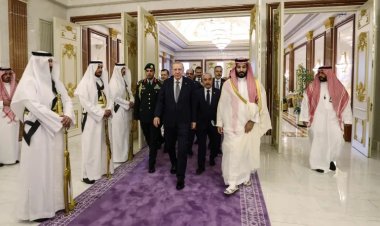
This week, news broke that the UAE is demanding repayment of a $3.5B loan from the Pakistani government. The UAE hasn’t given any one reason for why they are asking for repayment now, after years of the loans being rolled over. However, this news comes as Saudi Arabia is also reportedly demanding a return of a $6.5B loan from Pakistan due to their failure to deliver on the bilateral defense agreement signed in September 2025. Taken in the context of the ongoing Iran war, where both the UAE and Saudi Arabia have been hit heavily by Iranian missiles, this indicates Pakistan’s budding ties in the region may be faltering.
Background
The UAE and Saudi Arabia have historically provided Pakistan with loans, while Pakistani elites have similarly enjoyed shadow real estate investments in Dubai and Riyadh. Remittances from the Pakistani diaspora in both countries also provide a significant revenue stream for the Pakistani government. However, larger defence ties and government cooperation projects were only recently starting to emerge between the three nations. Pakistan, a nuclear-armed state, signed the SMDA with Saudi Arabia in September 2025, which initially was reported to provide Saudi Arabia with access to Pakistan’s nuclear umbrella and related technologies. However, later reporting indicated that the agreement was limited to traditional defense capabilities. Notably, it included a mutual defense agreement where the states agreed to treat an attack on one as an attack on both. It’s unclear what changed to remove the nuclear umbrella from the agreement, but intervention from the US or other influential powers may have been involved in order to limit the proliferation of nuclear weapons technology across an already volatile region. A significant portion of the $6.5B loan from Saudi Arabia to Pakistan was given simultaneously at the signing of the SMDA, although the figure is made up of Saudi offers to rollover previous loans and invest in an oil refinery.
What Actually Happened
Perhaps Pakistan underestimated the possibility of a crisis like the current Iran war form happening anytime soon. As they were completely unprepared to deliver on the SMDA agreement stipulations when the UAE and Saudi Arabia were attacked with Iranian missiles. Since the war started on February 28th 2026, Iran has targeted Gulf States with 85% of its missile launches while only 15 per cent were aimed at Israel, according to an Al Arabiya report. Of those, reports estimate that 300 missiles went to Saudi Arabia while over 1,797 went to the UAE. Notably, civilian infrastructure has been targeted in Saudi Arabia, not just US military installations. Major Saudi civilian infrastructure targeted by Iran includes: Ras Tanura refinery, Shaybah oil field, US Embassy in Riyadh, residential areas in Al-Kharj and Al-Sufil. Under the SMDA, after these strikes, Pakistan would have been required to provide defence cooperation, such as deploy Pakistani naval ships to protect Saudi ports and vessels, and allow attacks on Iran from Pakistani soil or grant airspace for surveillance missions. Although not part of the Saudi-Pakistan defense agreement, the UAE also made similar requests to Pakistan after facing major civilian infrastructure targeting from Iran. Pakistan provided none of these services to either the UAE or Saudi Arabia. The Pakistani government has focused on presenting itself as a mediator for Iran and the US, prioritizing its ties with Tehran in order to facilitate discussions in Islamabad. Pakistan also receives 35-40% of its total diesel fuel supply smuggled from Iran making it nearly impossible for the country to sever ties with the regime. Additionally, Pakistan found itself unable to deliver on many of these defense requests for the first part of the Iran war due to its ongoing military conflict in Afghanistan.
What’s Happening Now
Pakistan has since started mediation talks with Afghanistan; however, it still has not provided defence cooperation against Tehran to any of the Gulf States, who have moved closer to the US and Israel as the Iran conflict has progressed. Reportedly, the UAE is one of the strongest voices pushing Washington to finish the job in Iran, now openly supporting military retaliation against the Islamic Regime. At the same time, the Gulf states are prioritising protecting their own infrastructure and building up their defence networks to support US actions in the region. This could be one reason we are seeing the UAE and Saudi Arabia suddenly demanding repayment of the loans, but one has to wonder if Pakistan’s failure to deliver on the SMDA isn’t a factor here.
Will Pakistan Repay the Loans?
At this point, the major question is whether Pakistan will even be able to repay the loans within the timeline proposed by the UAE and Saudi Arabia. Both countries reportedly demanded immediate repayment by the end of April. The Pakistani government released a public statement on Friday, confirming they will repay the 3.5B to the UAE by the end of April emphasizing that the loan repayment plan is about delivering on agreements rather than souring ties between the two nations. The UAE, however, has not publicly agreed with this characterisation.
Neither Pakistan nor Saudi Arabia have issued a public statement regarding the $6.5B repayment plan. But given Pakistan’s historical financial troubles and its status with the IMF as a high-risk non-repayment state, it is clear they will not be able to repay both loans in the same month. Will Saudi Arabia ever see their money returned after the SMDA deal fell through so publicly? Pakistan is currently receiving an Extended Fund Facility and Resilience and Sustainability Facility loan from the IMF. They are also borrowing from China, who has recently demanded Pakistan clear around $220M in overdue payments to the Chinese-owned energy firm UEP. It seems Pakistan has run out of funds from Peter and can’t pay Paul.
In the context of the broader Iran war, Pakistan is facing major financial challenges, and regional ties with Gulf States are suffering as the Iran war has emboldened the Gulf States to demand more loyalty and honesty from their partners. And this new treatment isn’t limited to Pakistan either. Recently, the UAE withdrew from a 5B Euro program to fund the next gen of French Rafale fighter jets after France refused to share technology, and recently refused the US use of its airspace to conduct operations in Iran. The French government, suffering its own financial challenges, will have a hard time finding the funding to replace the UAE’s contributions.
It remains to be seen how Gulf relations may turn out once hostilities have ended, but this truly seems to be a new chapter in Pakistan-Gulf relations, as the Gulf States have been pushed to adopt more hardline stances regarding their defence, security, and investments.
Disclaimer: This paper is the author's individual scholastic contribution and does not necessarily reflect the organization's viewpoint.
Sierra Knoch is an Adjunct Professor at Point Loma University