The Nepal Jihad Nexus: Pakistan’s ISI, Turkish Funding and a Growing Communal Fault Line
 usanasfoundation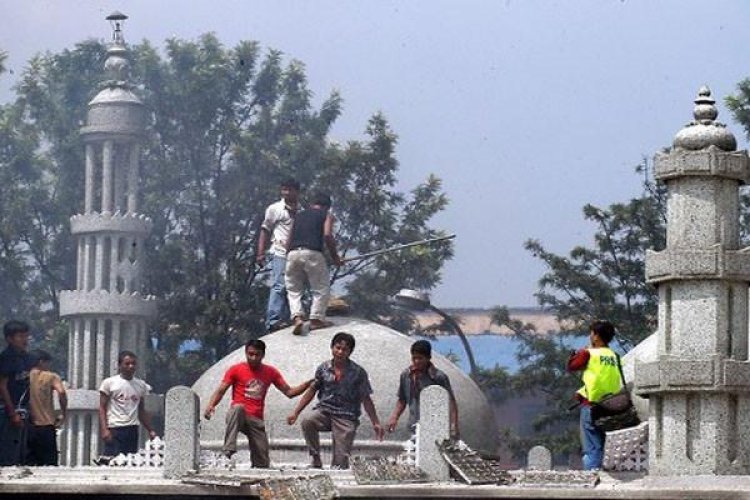
Analysis
By Preeti Khenta and Umer Iqbal
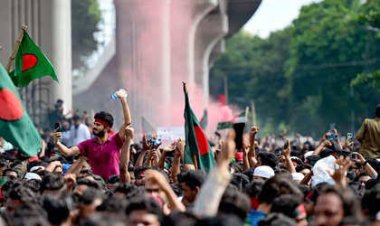
Once again, Nepal finds itself at the crossroads marked by violence. However, this time it is not a protest led by Gen Z; instead, it is a disturbing outbreak of communal violence. It all started on July 26 when a Hindu procession called the Bol Bam festival was marching towards Kaptangunj Chowk in Sunsari District. The procession was allegedly halted by the Muslim Community, leading to a disagreement over the DJ's loud sound and religious flags. This disagreement culminated in violent clashes involving stone pelting between the two groups. As the event unfolded and circulated on social media, more and more people joined, exacerbating the violence overnight. In an attempt to control the situation and disperse the crowd, police opened fire with live ammunition into the crowd, resulting in four people being shot dead in the clashes. The violence did not cease but spread to the neighbouring district as well, such as Saptari, Siraha, Dhanusha and Parsa. This prompted fresh curfews, further protests and heightened security deployment. Several public and private properties were damaged during the upheavals. On July 30, in Janakpurdham, a massive protest was organised by several Nepali Hindu organizations. Protesters occupied key areas of the city, raised slogans, and burned effigies of the Nepali Prime Minister and Home Minister. In response, local police intervened using tear gas and subsequently imposed a curfew in the area to prevent further escalation.
The occurrence of violent clashes in Nepal’s southern district is not the first time. The Terai region, particularly in Madhesh, the southern region of Nepal bordering India, has experienced a recurring pattern of communal violence. The answer lies in the fact that the Terai plains have the largest concentration of Muslims in Nepal. Around 96 per cent of the Muslims live in the Terai plains, compared to 4-5% of people living in the hills and urban centres like Kathmandu. Consequently, Muslims in the Madhesh represent a solid demographic bloc with notable socio-political power. The year 2026 itself began with a series of communal violence incidents, initiated by a provocative TikTok video shared by two Muslim youths. In response, Hindus vandalized a mosque and Muslim households and even allegedly burned copies of the Quran. Furthermore, in the same month on January 26, a clash broke out in Paroha Municipality during a Hindu procession intended for a ritual immersion of a Saraswati idol. The Muslim community responded with stone pelting, which followed the same method: a local dispute that rapidly escalated into a broader conflict necessitating security deployment, imposition of curfews and eventual restoration of a fragile calm. However, this raises a pertinent question: why do these communal violence incidents continue to recur? The phenomenon also indicates that there is a trend of increasing radicalization of the Muslim community in Nepal.
Threat of Grassroots Islamism
The government of Nepal has been worried about the rapid demographic changes due to religious conversion despite having an anti-conversion law under the new constitution. Apart from Christianity, there have been reports of Hindus converting to Islam. The proliferation of Wahhabi madrasas and mosques along the Nepal-India border has contributed to the growing influence of Wahhabism in the Terai region, directly stemming from the presence of these institutions.
Some reports suggest that a significant number of mosques and guesthouses have been constructed near the India-Nepal border. For Instance, a two-storey guesthouse has been built in Nepalgunj to accommodate the guests of Dawat-e-Islami (Del), a transnational Islamic missionary which has an origin in Pakistan. Del will be bearing all the costs of the construction and the congregation. Although it claims to be an apolitical body, it promotes Islamism to its fundamentalist interpretation of Islam. They openly criticize polytheism and idolatry (as shirk) and despise the practices of Hinduism.
In the Terai region, which has a huge Muslim population, the activities of Tablighi Jamaat have been on the rise. In mid-February 2020, the International TJ Conclave (Alami Tablighi Ijtima) in Bodebarsain, Saptari (Province No. 2) witnessed massive footfall from the Indian subcontinent (Bangladesh, India, and Pakistan) and beyond (Saudi Arabia, Malaysia, Kuwait, Qatar). Despite the government having tried to ban these large annual gatherings yet they failed to stop the three-day event.
Similar to the Tablighi Jamaat and Del, there are over 15 Islamic missionary organizations operating in Nepal, including Jamaat-e-Millat-e-Islamia; the Nepal Islamic Yuba Sangh; the Nepal Muslim League; the Nepal Muslim Ekta Sangh; and the Democratic Muslim Welfare Association. These organizations are reportedly getting regular funds from many Muslim countries such as Pakistan, Turkey, Saudi Arabia and Qatar. The iqna.ir (International Quran News Agency), 2017, quoting a Turkey-based newspaper, reported that there is an increasing surge of Muslims in Nepal in the past few years. They have quoted Maulana Khurshid Alam Islahi, who mentioned that some 100,000 Nepalese embraced Islam over the past 15 years, and this number is expected to rise even further in the coming years.
A haven for Terrorists
Turkey has been one of the major donors to the promotion of Islam in Nepal through aid and scholarships aimed at fostering religious education through the Turkey Diyanet Foundation (TDF). Dr Abhinav Pandya, Security Expert, in his article for Usanas Foundation, has mentioned these findings that the Himalayan Education and Welfare Society has reportedly received an annual sum of $200,000 from foreign Islamist charities, including iHH Humanitarian Relief Foundation from Turkey. Moreover, local Islamist organization such as Islami Sangh Nepal have also affiliated with iHH to sponsor the construction of mosques, Islamic seminaries, orphanages and Islamic centres. These centres serve as outposts for logistics, communication, shelter and infiltration of jihadis and criminal elements across India through a porous India-Nepal border.
Nepal has been used by Islamist terrorist outfits, largely due to its ease of escape and movement between India and Nepal, facilitated by the open border system. This accessibility is further facilitated by the significant presence of Muslim clusters in the border region of both nations. The proliferation of mosques and madrasas in the region has contributed significantly. Historically, there has always been anti-India sentiment among the political parties in Nepal, which these transnational terrorist groups have always exploited. They take advantage of the visa-on-arrival as well as the porous border with India for their activities without much hindrance.
India and the US State Department have repeatedly highlighted that Nepal has become a hub to carry out terrorist activities against India since 2015. In a 2018-2019 report, they explicitly mentioned that the Indian Mujhaideen maintain ties with other terrorist entities, including Pakistan-based Lashkar-e-Taiba (LeT), Jaish-e-Mohammed (JeM) and Harkat ul-Jihad Islami (HuJI), to operate from Nepal against India. These terrorist groups take shelter in the dominated areas of southern districts like Mahottari, Rautahat, Parsa, Kapilvastu, Sunsari, Banke and Bara that share borders with India.
There have been several notable instances of arrests pertaining to terrorism and counterfeit currency, such as the arrest of Indian Mujhaideen terrorists such as Yashin Bhatkal and Ariz Khan from the Terai region and LeT terrorist Mohammed Umer Madani. Furthermore, Yunus Ansari, the son of former Minister Salim Miya Ansari and a key figure in the Fake Indian Currency Notes (FICN) network, was initially arrested in 2014 for his connections to the D-group and the Inter-Services Intelligence (ISI). Despite a temporary release, he was re-arrested in May 2019 on similar charges, alongside three Pakistani nationals. Salim Miya Ansari has also been appointed as the Chairperson of the Muslim Commission; he allegedly played a crucial role in facilitating Rohingya refugees taking shelter in Nepal, while their own Home Ministry called Rohingyas a long -term threat to Nepal.
Nepal's open border with India, thin immigration screening at Kathmandu's Tribhuvan International Airport, and a tourism-driven visa regime created a structural gap that Pakistan's Inter-Services Intelligence exploited from the late 1980s. Indian intelligence assessments, corroborated by a 1997 US Embassy cable later released through WikiLeaks, describe ISI-run networks using Kathmandu to move Khalistani and Kashmiri militants, along with explosives, into India through the 1990s. The US State Department's Country Reports on Terrorism for 2004 assessed that Nepal's weak border controls could make the country a convenient transit and logistics point for outside militants, a judgment repeated in later editions, underscoring a vulnerability that predated and outlasted the 1990s insurgency.
The clearest documented instance involves the Jammu and Kashmir Islamic Front, an ISI-created group named in that 1997 cable, which describes Kathmandu-based operative Javed Krawah and ISI handler Colonel Farooq organising the May 1996 Lajpat Nagar bombing in Delhi that killed thirteen people, with the RDX used reportedly brought from Kathmandu. Separately, Azizuddin Sheikh, an ISI-linked gangster arrested near the India-Nepal border in June 1999, told investigators that a madrassa in Nepal's Kapilvastu district was used by Dawood aide Chhota Shakeel to store rifles for smuggling into India. Nepali parliamentarian Mirza Dilshad Beg, assassinated in Kathmandu in 1998, was reported to have used his border constituency to facilitate arms trafficking and shelter fugitives from the 1993 Mumbai bombings.
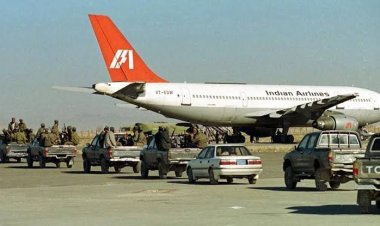
The most consequential escape-and-infiltration case remains the hijacking of Indian Airlines Flight IC-814, seized shortly after it left Kathmandu for Delhi on 24 December 1999. Indian investigators identified the five hijackers as Pakistani nationals linked to Harkat-ul-Mujahideen; the aircraft was flown to Kandahar, where India secured the hostages' release by freeing Masood Azhar, who later founded Jaish-e-Mohammed. The Kathmandu-Delhi route was not incidental. A warning letter written months earlier, describing a plot to hijack a plane from Kathmandu, later surfaced but had gone unactioned, according to reporting by The Wire. Nepal also served as a return route for trained militants: the BBC reported the 2012 arrest of a Kashmir militant who had crossed into Pakistan in 1992 and recently re-entered India via Nepal to recruit fighters, noting that Nepal's rehabilitation policy had allowed many former militants similar passage.
Nepal's role as a corridor extended beyond Kashmir-focused militancy. In August 2013, Delhi Police arrested Lashkar-e-Taiba bomb-maker Abdul Karim Tunda near the India-Nepal border in Uttarakhand, carrying a Pakistani passport; he was later convicted for a 1996 bombing in Sonepat. Days later, Indian Mujahideen co-founder Yasin Bhatkal was arrested at the Bihar-Nepal border; the National Investigation Agency said he had associates in Pakistan, Nepal and the Middle East while evading capture for bombings in Delhi, Pune and Hyderabad between 2008 and 2013. Parliament was told that counterfeit currency financing such networks, partly based on Tunda's own statements, was also routed through Nepal. India's Ministry of Home Affairs, in annual reports for 2004-05 and 2005-06, recorded logistic links between Nepalese and Indian Maoist groups, though a home secretary later called the connection mainly ideological.
These cases show a recurring pattern of exploitation rather than a single conspiracy. Nepal was not itself the principal source of anti-India terrorism; rather, its geography, open border, weak controls and, in some cases, compromised or politically connected individuals created opportunities that Pakistan-linked networks exploited. There is no compelling evidence that the Nepalese state systematically sponsored such activity, but the historical record does point to episodes of official vulnerability, tolerance and individual-level complicity. Indian parliamentary records, for example, documented repeated arrests of Pakistani Embassy personnel in Kathmandu carrying RDX and counterfeit Indian currency. U.S. diplomatic reporting also highlighted Nepal’s weak institutional capacity, poor financial controls and difficulty tracking illicit networks. Successive U.S. State Department reports continued to identify the open India–Nepal border and inadequate airport security as structural vulnerabilities, even as terrorism within Nepal itself remained limited. At the same time, India and Nepal have since expanded joint border policing, and several major arrests, including Tunda and Bhatkal, followed directly from that cooperation, marking a narrower, better-documented Nepal-India security relationship than in the 1990s. The evidence therefore suggests neither complete Nepalese complicity nor simple institutional innocence, but a more complicated environment in which militant networks exploited genuine security gaps, while certain individuals and networks within the country could facilitate or tolerate their activities.
It is important to recognize that in the coming years, the challenges of Islamic radicalization are likely to escalate, particularly due to the influx of foreign aid from Muslim countries. Nepal has already become a safe haven for terrorists from Pakistan, which raises significant concerns. This situation represents a critical moment for Nepal, especially regarding how India will protect itself, given that the Muslim-majority regions are located along its border. Furthermore, India's territorial disputes complicate its relationship with Nepal. In the wake of the Gen-Z protests, the new government led by Balen Shah faces the task of addressing communal violence and preventing the spread of Islamic radicalization, or risk being overshadowed by foreign influences.
Disclaimer: This paper is the author's individual scholastic contribution and does not necessarily reflect the organization's viewpoint.
Preeti Khenta is an Associate Fellow, Usanas Foundation. She is a PhD scholar at the Jindal School of International Affairs, O.P Jindal Global University. She holds a Master's degree in Diplomacy, Law and Business and a bachelor's degree in Forensic Science. Her research areas include Islamic Theology, Terrorism and Peace and Conflict studies.
Umer Iqbal is a Research Intern at Usanas Foundation.