Pakistan’s Middle East Gambit: A New Strategic Challenge for India and Israel?
 usanasfoundation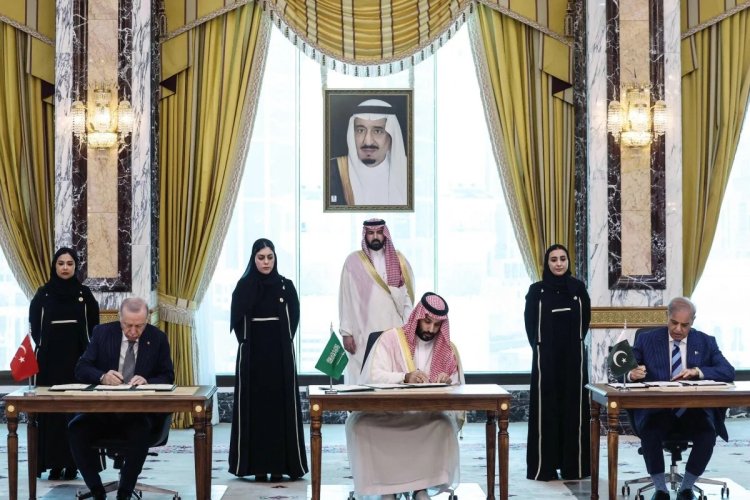
Analysis
By: Dr Abhinav Pandya
Amidst the ongoing chaos, confusion and mayhem in the Middle East’s post-Cold War regional security architecture, resulting from the off-and-on conflict in the Middle East, courtesy of Trump’s whims and fancies, one thing seems certain: a burgeoning sense of insecurity and distrust of the US among the Gulf States and ventures to explore alternative security guarantees beyond the US. In this security vacuum, Pakistan has expanded and strengthened its diplomatic and military footprint in the region.
Pakistan has nurtured strategic and defence ties with the Gulf for decades, training the military and air force pilots of the Gulf countries, conducting joint exercises and advising the governments on military matters. Pakistan joined the Baghdad Pact in 1955, known as the Central Treaty Organisation after Iraq’s withdrawal in 1958, with Iran, Israel and the US as its other key pillars. In some rare examples, Pakistan forces actively participated in military operations. In the violent conflict between the Jordanian forces and Palestinian guerrillas, known as the Black September conflict of 1970, the then Brigadier Mohammad Zia ul Haq, later Pakistan’s military dictator, stationed in Jordan in an advisory capacity, helped King Hussain’s forces in operational and tactical matters, directly leading some counter-offensives. Reportedly, 20,000 Palestinians perished in that conflict, including thousands of civilians. Further, Pakistan’s elite commandos of the Special Service Group assisted the Saudi forces in the assault during the siege of the Mecca Mosque; however, the claims remain contested, with contrarian voices suggesting that Pakistan’s role was confined to intelligence, planning and tactical support. Since the 1980s, Saudis have hosted Pakistani forces on their soil for guarding the Saudi royal family, and render advice and assistance in operational, technical and training roles.
However, the recent geopolitical churnings in the Middle East beginning in the aftermath of Hamas’ October 7 attack have turbo-charged Pakistan’s strategic leap in the region. Pakistan’s arsenal of 170 nuclear warheads, though primarily built for its arch-rival India, also enhances its strategic value. The Strategic Mutual Defence Agreement signed with Saudi Arabia on September 17, 2025, transformed the ties from informal cooperation to collective defence, i.e. aggression against either country would be considered aggression against both. This agreement has raised questions about the extension of Pakistan’s nuclear umbrella to the Saudis. However, it remains ambiguous as the Saudi authorities have included all “military means” to deter the enemy while the Pakistanis have denied any mention of nuclear deterrence.
Following the Saudis, Kuwait has widened the scope of its 2023 defence cooperation pact by ratifying the broad five-year defence cooperation agreement with Pakistan in July 2026. Likewise, Bahrain and Jordan have also shown interest in some form of strategic defence arrangement with Islamabad.
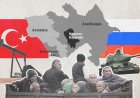
On August 7, 2026, Pakistan’s strategic partner, Turkiye, joined the Saudi-Pakistan bilateral defence pact, now known as the Mecca Joint Deterrence Agreement, a bold assertion of its Islamist overtones. The trilateral pact with collective defence aims to synergise Turkiye's technological edge in drones, naval platforms, jets, etc., with Pakistan’s military capacity and Saudi Arabia’s financial prowess. Another likely addition to this trilateral framework can be Egypt. Though there is not yet a formal mutual defence treaty between Egypt and Pakistan, the two countries conducted joint special forces exercises in April 2026 in Pakistan, and Egypt has joined Pakistan, Turkiye and Saudi Arabia in a four-country consultative mechanism, i.e. R4, convened to deliberate upon de-escalating the Iran war. Following the broader trend of Middle Eastern powers hedging their bets by diversifying their defence guarantees beyond traditional Western frameworks, Qatar is also close to joining the trilateral framework mentioned above, in addition to a comprehensive mutual defence agreement with Islamabad.
Except for the Turkiye-Pakistan-Saudi trilateral defence pact, none of the above arrangements includes a provision for collective defence. Though they mostly focus on institutional military capacity building, including intelligence sharing, cyber-security collaboration, joint military exercises, special military training, drone technology and defence production cooperation, these emerging frameworks do appear like prototypes of a future Islamic North Atlantic Treaty Organisation.
Do the Arab states expect Pakistan to seriously counter Iran and its proxies- Houthis and Iraqi militias? Pakistan’s attitude reflects strategic ambiguity. It is yet to be seen whether Pakistan will take the bait or not, given its long border with Iran and a strong Shia population. Further, given its strained ties with the Taliban and India, Islamabad is unlikely to stir up trouble on the Iranian border.
However, India and Israel should be concerned with Pakistan’s strengthening foothold in the Middle East. Emboldened by its robust ties with the US, China and Russia and growing Middle East partnerships, Pakistan can pressurise New Delhi, diplomatically and militarily, in the event of a future war-like confrontation. Faced with internal ethnic Baloch insurgency, the Pakistan Taliban’s terrorist threat, unrest in Pakistan-occupied Jammu and Kashmir and the Taliban’s ire, Islamabad has all the required reasons to initiate a war-like situation with India and escalate it, to diffuse the internal crises, consolidate public support on religious and anti-India sentiments and regain the military’s credibility. Also, India’s situation becomes highly vulnerable on its North-Eastern borders, due to growing American, Chinese, Turkish and Pakistani inroads in Bangladesh amidst intensifying Jihadist radicalisation and anti-India sentiment. Further, Islamabad can leverage these Gulf partnerships to sabotage India’s crucial oil supplies from the Middle East and maritime trade and connectivity during wartime. These Gulf partnerships will empower Pakistan in the multilateral forums and anti-India propaganda war, which has always been India’s Achilles' heel. Finally, the emergence of an Islamic ‘NATO’-like structure under Pakistan’s stewardship will embolden Muslims in the Indian hinterland, already undergoing a sweeping radicalisation, to mobilise on jihadist lines and create internal disruption during war with Pakistan.
For Israel, Pakistan’s Gulf inroads are also worrisome. Pakistan is a highly radicalised society. Even the Pakistan Army, though a professional force, is heavily infested with Islamic extremists and Israel haters. Pakistan Army will export this extremism, hatred and Jihadist sentiment to the Middle East, making a major dent in the decades-old process of normalising Arab-Israeli ties. Secondly, the Pakistan Army has decades of experience in nurturing proxy Jihadi terrorist groups and transnational groups like Al Qaeda and Islamic State. Notably, now even Hamas gets huge traction in Pakistan, with its leaders appearing on public forums and meeting prominent political, religious and social leaders, hinting towards strong covert links with Pakistan’s army and intelligence. With Pakistan’s increasing role in Middle Eastern affairs, it will likely enable a vast array of terror outfits, including Lashkar-e-Toiba, Jaish-e-Mohammad, Islamic State Khorasan Province, etc., to strengthen their foothold in the region. Further, their penetration in the Pakistan Army puts them in close range of accessing Pakistan’s tactical nuclear weapons or technology that they can use to build at least a dirty bomb. Last but not least, Pakistan will be a Chinese and Russian proxy, in addition to Iran, detrimental to Jerusalem’s interests.
Despite knowing that Pakistan’s historic ties with Tehran and its strong Shia population will most likely prevent it from directly countering Tehran in any counteroffensive, why are the Gulf states aligning with Pakistan, known to be a terror sponsor and an American-Chinese lackey?
The Arab attempts to diversify their defence arrangements indicate a fundamental shift in the security architecture of the region, due to eroding faith in American capabilities and growing resentment against the perceived Israeli dominance under the US tutelage. Additionally, this fundamental shift reflects Arab states’ perception of their strength and vulnerabilities. Apparently, the Arab states perceive Pakistan as a country that can help bring a modus vivendi with an increasingly aggressive Iran, close to building a nuclear bomb, and also open covert channels with Moscow and Beijing. It seems that the Gulf States have chosen pragmatism and swapped their Arab pride and Sunni ideology for economic and political stability. Finally, it is pertinent to mention that even if it is a Sunni alliance with all the outer trappings of an anti-Iran/Shia grouping, it signals a major shift in the regional security architecture- declining American footprint, mounting security challenges for Israel, rising China and Russia and more agency with regional actors, precisely what Iranians have always aspired for.
Disclaimer: This paper is the author's individual scholastic contribution and does not necessarily reflect the organization's viewpoint. The abridged version of this article was first published in the Middle East Forum.
Dr Abhinav Pandya is a Security and Foreign Expert. He is the CEO& Founder of Usanas Foundation.