No Need to Overreact, But India Must Have a Global Strategy to Counter Mecca Pact
 usanasfoundation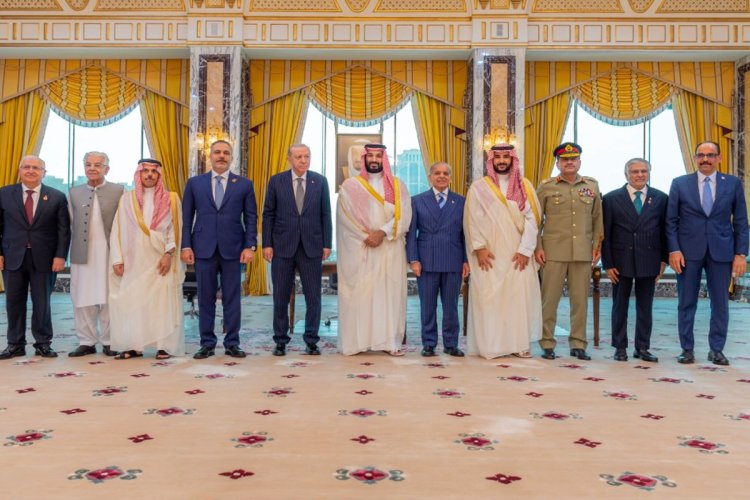
Analysis
By: Dr. Abhinav Pandya
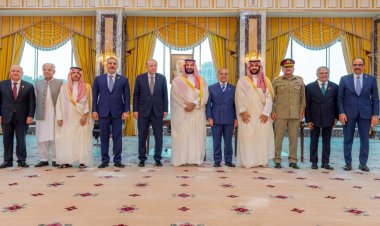
Though centred on changing the fundamentals of the Middle Eastern security architecture, the Mecca Agreement, a trilateral defence framework between Pakistan, Türkiye and Saudi Arabia with a collective defence provision, has serious ramifications for South Asia’s regional security framework. India’s strategic establishment, including government agencies, former intelligence and defence veterans, diplomats, and think tanks, has so far dismissed it as a trivial aggregation of countries with disjointed geopolitical objectives.
Although it may appear ambiguous and vague in the application of its collective defence clause and incoherent in its common objectives, it is likely to invite more Islamic countries in the future, intensify the arms race in the Middle East, strengthen Pakistan’s military, financial and diplomatic heft and unleash Saudi Arabia and Turkey as nuclear actors. Additionally, it is likely to strengthen Jihadist proxies from the Middle East to South Asia, and if Bangladesh joins, which looks highly probable given Dhaka’s proclivities towards Ankara and Islamabad, it can pose serious internal security challenges to India in the hinterland and its restive North East. Hence, Jerusalem and New Delhi need to focus on a joint long-term strategic, tactical and intelligence roadmap to counter it.
Containing and countering the Mecca Agreement requires activating pressure points for each member by crafting a wider network of formal and informal counter-alliances. The Hexagon of Alliances network, proposed by Israel, can be one of the most crucial frameworks to checkmate the Mecca alliance. The proposed network includes Israel, India, Greece, and Cyprus as key pillars, along with Arab and African states such as the United Arab Emirates and Somaliland. Most member states share values and strategic interests. Greece and Cyprus can provide an effective bulwark against Turkey’s expansionism in the Mediterranean. Somaliland, situated at the critical meeting point of the Red Sea and the Indian Ocean, with its long coastline along the Gulf of Aden and proximity to Bab-al-Mandeb, has immense strategic value for monitoring and controlling the chokepoints. Hence, the Hexagon of Alliances members need to build a robust strategic partnership, bilaterally and multilaterally. This needs to be formalised through a proper secretariat, defence, technological, economic, and cultural cooperation, frequent military exercises aimed at interoperability, and think tank and people-to-people exchanges. However, the proposed framework remains a geopolitical vision and has yet to see the daylight.
In the Middle East, Jerusalem and New Delhi can leverage the India-Israel-United States-United Arab Emirates (I2U2) to tighten the noose around the Mecca Agreement. Currently, this minilateral group, focused on investments and economic and technological cooperation, needs a booster dose of intelligence and defence frameworks to become an effective strategic bulwark against the emerging Sunni axis.
Further, India and Israel need to strengthen their diplomatic and defence footprint in the South Caucasus. In the South Caucasus, Armenia is the best bet for New Delhi and Jerusalem, despite its military weakness and recent defeats in wars with Baku. Though Yerevan, realising its limited options and lack of friends that can serve as strategic counterweights to Ankara and Baku, has changed tack and resorted to compromise and accommodation with Turkey and Azerbaijan through its Crossroads of Peace project, it seems more like a tactical arrangement. Trump Corridor, linking Azerbaijan with Nakhchivan, its enclave in Armenia and Turkey, is the manifest result of such compromise. However, it still carries Turkey and Azerbaijan’s expansionist intent underneath, with Islamabad’s backing. Modi and Bibi must understand these nuances and structure their South Caucasus outreach roadmap accordingly.
In South Asia, strengthening the Taliban, Baluchistan, and an array of anti-Pakistan non-state civilian and military actors can keep Pakistan’s mighty generals hemmed in and occupied with addressing internal disruptions, leaving much fewer resources to focus on foreign ambitions. Lately, the Baloch rebels, who call their struggle a freedom movement rooted in secular and democratic ideals, have dealt a severe blow to Pakistan’s integrity and its powerful army, resulting in their capture of a significant part of Balochistan and casualties of hundreds of Pakistan Army soldiers. The defence establishment in Pakistan is rattled and searching for desperate measures to contain the Baloch insurgency, lest it ends up carving out another state from Pakistan. Islamabad’s vulnerability is India and Israel’s gain. Americans can also add value, as a disturbed Balochistan is not congenial to the China-Pakistan Economic Corridor, a key pillar of China’s Belt and Road Initiative. China, which imports a major share of its crude oil through the Indian Ocean, aims to reduce its vulnerabilities at the Malacca chokepoints through Balochistan’s Gwadar project. If Beijing succeeds, it disrupts Washington, D.C.’s strategic calculus; hence, Baloch insurgency is also critical to American strategic interests.
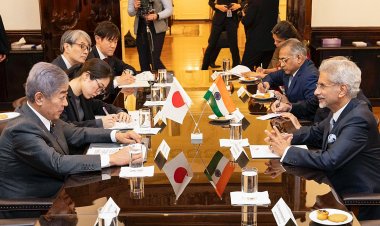
The last front to activate must be in the Indo-Pacific to contain and exhaust the latent Chinese overtures underlying the great-power rivalry in the Middle East, of which the emerging Sunni Axis is likely to be a central pillar, and to hit the American strategic footprint in the region. Japan can be its key node. India-Israel-Japan-US axis, rooted in robust defence and intelligence partnerships, needs a vibrant push.
India’s status quoist and conservative diplomatic cadre may find most of the suggestions outlined above unrealistic. However, they are not to be blamed. India’s weak economic, military, technological, industrial, and intelligence fundamentals do not align well with lofty, ambitious grand strategy in geopolitics. Historically, India has been a defensive, South Asia-centric player, overly preoccupied with Pakistan and China. Moreover, over the years, India’s political class has declined in intellectual depth and educational qualifications. Mostly, the political class is election-centric, lacking depth on national security issues and obsessed with social media and political gimmicks; foreign policy and security experts are in acute shortage, military leadership emulating their bureaucratic masters and career diplomats with a turf mindset not only resist external expertise but also nurture a conservative, defensive mindset. Many of them have inherent hatred for Israel, bias against the US and a soft corner for Islamism. In such a state of affairs, it is almost impossible for any visionary approach to find traction in the policy circles. However, if India refuses to overhaul its fundamental national philosophy, it will miss the bus.
Further, internal frictions between the main stakeholders, i.e. India, Israel and the US, and particularly, US’ tactical engagements with Turkey and Pakistan, based on a flawed comprehension of these nations strategic mindset, capabilities, history and ambitions can deter the joint efforts; however, the initiatives outlined above must be thought in a terms of a long term strategic moves within the framework of the larger process of the changing of the world order.
Disclaimer: This paper is the author's individual scholastic contribution and does not necessarily reflect the organization's viewpoint. The abridged version of this article was first published here.
Dr. Abhinav Pandya is the CEO & Founder of Usanas Foundation