Brick by Brick: India and BRICS
 usanasfoundation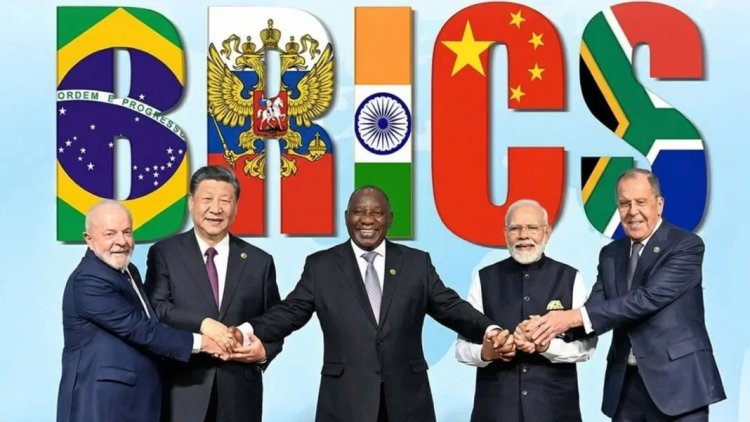
Analysis
By: Angana Guha Roy
Amid ongoing efforts to normalize bilateral ties, Indian policymakers are carefully managing China’s participation in the 18th BRICS summit. According to a press statement issued by Ministry of External Affairs spokesperson Randhir Jaiswal, China-India relations are moving positively. This is preceded by recent high-level military commander talks in Arunachal Pradesh following the Special Representatives dialogue that took place in Beijing last month. Lingering border disputes ranging from Doklam to Galwan remain a challenge for future stability of BRICS.
Strategic analysts are monitoring these dynamics to assess long-term implications. Practitioners caution that trading long-term strategic interests for fleeting diplomatic optics or short-term gains is ultimately self-defeating. Furthermore, it's a persistent truth that diplomatic collaboration within multilateral platforms like BRICS and the Shanghai Cooperation Organisation (SCO) does not automatically translate into border de-escalation, which must be treated as a separate process.
The summit theme corresponds to the BRICS acronym: Building for Resilience, Innovation, Cooperation, and Sustainability. The agenda prioritizes development issues such as secure supply chains, health systems, climate resilience, artificial intelligence, digital public infrastructure, and green finance. Through initiatives like the Chennai Consensus, trade ministers have pushed to preserve the multilateral trading system, while agriculture ministers have released declarations affirming food security. Despite these functional efforts, some experts critically view the current theme as overly abstract, arguing that once India's presidency concludes, it is unlikely to leave a lasting mark.
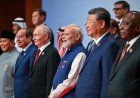
Bilateral complexities mark President Xi Jinping's first visit to India in seven years. Sparking intense debate among strategists who regard this as a sign of pragmatic thaw or diplomatic reset. Irrespective of the border issues, common points of convergence have anchored China and India’s dynamics within BRICS. Compartmentalizing security issues, India and China have collaborated on initiatives like the New Development Bank (NDB) and satellite agreements within BRICS.
In the backdrop of ongoing geopolitical turbulence, consensus-building is fundamental to the BRICS forum. Hence, while India strictly prioritizes national security and territorial integrity when engaging with China, the expectation of reaching a full border resolution at a single summit is unlikely. India aims to foster political space for steady normalization of bilateral differences.
While China remains an influential force in BRICS, agenda-setting must be collective without diluting the institutional relevance and interests of other BRICS participants.
A prominent section of the strategic fraternity in Delhi doesn't look at the ongoing developments as a genuine thaw, arguing that China’s expansionist tendencies and ambition to be a unipolar hegemon in Asia will continue to persist. In an interview with the author, Brig. Sanjay Aggarwal, a former security adviser, suggested that Beijing's positive engagement with India is well timed and tactically planned, responding to US secondary sanctions to prevent India from gravitating towards Washington's anti-China posture. He notes that BRICS expands Beijing's methodical strategy to push the anti-Western narrative while diluting India’s influence within the BRICS forum.
Another prevalent viewpoint is that India must leverage the opportune moment as diplomatic optics against Western isolationism in the recent past. While leveraging this counterbalance, maintaining bilateral caution is important to navigate greater points of convergence on development priorities. It will optimize shared interests without compromising national interest priorities.
India aims to retain a non-Western temperament in BRICS instead of demonstrating an anti-West narrative privy to Russia and China. India has so far opposed radical anti-West proposals, including de-dollarization. India instead advocates internationalization of the Indian rupee, utilizing the local currency system and digital payment settlement systems to lower cross-border transaction costs with partners like Russia, Sri Lanka, and African nations.
India prioritized development and growth-driven initiatives building on digital payment frameworks while backing the Contingent Reserve Arrangement (CRA) and National Development Bank (NDB). NDB-supported projects have found their way into Indian metropolitan cities such as Chennai, Indore, and Mumbai, as well as the Delhi-Ghaziabad-Meerut Regional Rapid Transit System (RRTS) and Namo Bharat high-speed trains.
India’s reputation of a democratic political system, open-mindedness for reforms, anti-bloc posturing, ability to balance partners, principles, and interests makes it an ideal agenda setter of the Global South as well as a voice for its shared challenges and concerns. But to be an effective bridge builder between BRICS, the Global South, and Western developed nations, India has to be more nuanced and objective towards its approach towards the diverse nature of countries in the Global South. Given the fact that China has heavily invested in Global South countries, it gives it a natural advantage to be an agenda-setting power and influencer in the region.
Besides the complex inter-dynamics of bilateral ties of founding members within BRICS, fissures among the other member countries are emerging in expanded BRICS compounded by disputes involving Iran, Israel, and the UAE and territorial tensions in Africa. The most recent example being the UAE and Iran’s disagreement over wording prevented the forum from issuing a joint statement during the Middle East crisis. Hence, internal cohesion remains an integral challenge within BRICS. In such circumstances, India’s longstanding partnership with Russia will, to a certain extent, add value to the aspired cohesion the forum needs for consensus building.
Early this year, India’s National Security Adviser Ajit Doval highlighted the potential and value the Forum holds in the backdrop of ongoing geopolitical turbulence, acknowledging its persistent commitment towards institutional reforms and issue-based cooperation.
Given India’s targeted objective of holding an impactful, outcome-oriented BRICS summit, India will have to balance many facets of China's problem tactically, address trade deficit issues with Russia, manage regional differences, and purposefully amplify the Global South agenda to ensure BRICS continues to inherit its multipolar idealism, prioritizing development over divisive security frameworks that benefit all the member countries.
Disclaimer: This paper is the author's individual scholastic contribution and does not necessarily reflect the organization's viewpoint